
Apr 8, 2026
Social Media
Picture a marketing manager sitting at her desk in early 2026, scrolling through Instagram and feeling genuinely confused. Six months ago, she had a content strategy that worked. Consistent reels, a branded hashtag, a posting schedule her team followed religiously. Then something shifted. Her reach halved. Her competitor, a brand half her size with a fraction of the budget, was pulling three times the engagement. And the competitor was not doing anything obviously clever. They were just doing something different.
That story is playing out across boardrooms, agency offices, and freelance desks everywhere right now. Social media in 2026 is not simply more of what 2024 was. The algorithms have changed. The audiences have changed. The tools have changed. And perhaps most importantly, what audiences actually want from brands on social media has changed in ways that reward some and punish others.
This guide covers the ten social media trends that are defining the landscape right now, from the beginner-level basics every brand needs to understand to the advanced strategies that separate the top performers from everyone else. Whether you are a solo creator, a growing startup, or a marketing team at an established company, this is the complete picture you need to build your 2026 strategy on solid ground.
Short-Form Video Is Still King, But the Rules Changed
If you have been in digital marketing for more than three years, you have heard some version of the phrase "short-form video is the future" so many times it has almost lost meaning. But here is the thing about 2026: short-form video is no longer the future. It is the present, the default, and the baseline expectation. The question is no longer whether your brand should be making short-form video. The question is whether you understand how the rules have evolved since 2024.
TikTok, Instagram Reels, and YouTube Shorts have collectively shifted user behaviour so thoroughly that video-first content now receives anywhere from 48% to 67% more organic reach than static image posts across platforms, according to HubSpot's 2026 State of Marketing report. But here is what most brands are still getting wrong: they are treating short-form video as a repurposing channel. They film a long-form webinar, chop it into clips, and wonder why it does not perform.
The content that is winning in 2026 was designed for short-form from the ground up. That means the hook lands in the first two seconds, not the first ten. It means the value is delivered before the viewer decides to scroll. It means the creator, whether a person or a brand voice, speaks to a single specific person rather than a general audience. Niche wins. Broad loses.
"The brands performing best on short-form video in 2026 are not the ones with the biggest production budgets. They are the ones who understand that a genuine answer to a real question, filmed in portrait mode on a phone, outperforms a polished commercial almost every single time."
There is also a format shift worth noting. Videos between 45 and 90 seconds are now the sweet spot across TikTok and Reels, as both platforms have adjusted their algorithms to reward completion rates over raw views. A video that 80% of viewers finish entirely signals far more quality to the algorithm than a video that gets a million impressions but 70% of people skip after four seconds. Completion rate is the metric you need to be optimising for right now.
Action: Audit your last 20 pieces of short-form video content. Check completion rate in your platform analytics, not just views. If your average completion rate is below 50%, your hook and pacing need work before anything else.
AI-Generated Content Has Gone Mainstream and the Backlash Is Real
Spend ten minutes on LinkedIn right now and you will notice something. A certain style of post has become everywhere: neatly formatted, unnaturally clean, oddly formal in its sentence rhythm, and utterly devoid of any specific human experience. It reads like a press release about someone's morning run. This is the AI content problem that no one fully anticipated when the tools became widely available.
AI-generated content for social media has crossed a threshold. It is no longer a novelty. It is a commodity. And audiences, particularly the younger demographics on TikTok and Instagram, have developed something close to an allergy to it. A Sprout Social study published in early 2026 found that 61% of Gen Z users say they can reliably detect AI-written captions and posts, and 54% say they engage less with brands whose content feels AI-generated.
This does not mean AI tools have no place in a social media strategy. They very much do. The brands winning this moment are using AI as a production accelerator, not a content replacement. They use tools to generate first drafts, to repurpose content across formats, to write variations for A/B testing, and to handle the mechanical repetition of content calendaring. But the voice, the perspective, the stories, and the opinions that make content worth reading or watching are still coming from humans. For a closer look at how AI tools are reshaping content creation specifically, the TechTose guide on AI voice generators and content creation walks through exactly where these tools add genuine value without replacing the human element.
The advanced lesson here is that the AI content backlash has actually created a competitive opportunity. Because so much content now feels synthetic, human-specific details stand out more than ever. Personal opinions. Specific numbers from your own experience. Stories with named people and real outcomes. These signals of genuine human authorship are getting amplified by platform algorithms that track engagement depth, not just surface metrics like likes.
Action: Read your last five captions out loud. If you could not tell who wrote them, or they could have been written by any brand in your category, rewrite them with one specific detail that only you could know.
Social Commerce Is Now a Full Purchase Funnel, Not a Discovery Layer
There was a time when social media's role in e-commerce was clear and limited: it was where people discovered products. They saw something they liked, clicked through to a website, and bought it there. Social was top of funnel. That model is being dismantled.
In 2026, TikTok Shop, Instagram Shopping, Pinterest's buyable pins, and YouTube's integrated shopping features have collapsed the discovery-to-purchase journey into a single platform experience. The consumer sees a product in a video, clicks the pinned tag, and checks out without ever leaving the app. The entire funnel, from awareness to transaction, happens inside one session on one platform.
The numbers validate this shift. Social commerce revenue globally is projected to hit $247 billion by the end of 2026, up from $89 billion in 2023. TikTok Shop alone processed over $20 billion in transactions in its first full year of widespread availability. The brands that treated this seriously early are now reaping compounding advantages because the platforms reward sellers with established shop performance histories through better placement in recommendation feeds.
What most businesses are underestimating is the technical infrastructure requirement of social commerce. Your product catalogue needs to be structured, your inventory needs to sync in real time, your customer service needs to handle enquiries that arrive through social DMs, and your return flows need to work seamlessly on mobile. These are not marketing problems. They are technology and operations problems. Getting the infrastructure right before scaling social commerce spend is the lesson most brands are learning the hard way in 2026. This is exactly the kind of digital infrastructure challenge where a reliable software development partner becomes genuinely valuable beyond just the marketing function.
Action: If your brand sells physical or digital products, map the full purchase journey from a social video to transaction completion on mobile. Count every tap. Every unnecessary step is a drop-off point you are paying for in lost conversions.
The Creator Economy Is Growing Up and Getting Selective
The creator economy in 2026 does not look like it did in 2021. The gold rush phase, where practically anyone with a ring light and a phone could build an audience and monetise it, has given way to something more structured, more competitive, and in many ways more mature. Audiences have grown more discerning. Platform algorithms have been recalibrated. And the economics of creator partnerships have shifted in ways that favour strategy over spending.
Micro-influencers, defined loosely as creators with between 10,000 and 100,000 followers, are now consistently outperforming mega-influencers on engagement rate and conversion rate in almost every product category studied. A Linqia report from 2026 found that micro-influencer campaigns generate 60% higher engagement rates than campaigns with influencers above 500,000 followers, while costing a fraction of the price.
The reason is trust. A creator with 30,000 highly specific followers who have been watching them for two years has built a different kind of relationship than a celebrity account with 5 million followers and content that covers everything from protein powder to luxury cars. The 30,000 person audience knows the creator's opinion matters. They have seen the creator turn down products they did not believe in. They treat recommendations as personal advice rather than advertising.
For brands, this changes partnership strategy significantly. Instead of one or two high-profile creator deals per campaign, the smart approach in 2026 is a portfolio of 15 to 30 micro-creators, each speaking to a specific niche audience, running campaigns simultaneously. The reach is comparable. The trust is higher. The cost is lower. And the content library you accumulate across multiple creators gives you social proof assets that work across paid channels as well. This kind of systematic, data-driven content strategy connects closely with broader performance marketing principles that TechTose covers in depth.
Action: Before your next influencer campaign, define your audience with one-sentence specificity. Then find three micro-creators who speak directly to that audience. Test one partnership before committing to the full portfolio.
Community-Led Platforms Are Winning the Attention War
Here is a quiet trend that is having an outsized impact. Broadcast social media, the model where brands or creators push content out to a passive audience, is losing ground to community social media, where participation, conversation, and belonging drive the experience. Reddit has become the most-cited source in Google's AI Overviews. Discord has over 500 million registered users. Substack has turned newsletters into community hubs. WhatsApp Channels are being used for everything from sports updates to brand loyalty programmes in markets outside the United States.
The common thread is that people are not just consuming content on these platforms. They are participating in ongoing conversations with people they consider part of their community. The brand implications are significant. You cannot advertise your way into these spaces the way you can buy reach on Instagram. You have to earn your place by contributing value to the conversation. That is harder, slower, and less scalable than traditional social advertising. It also builds a fundamentally different kind of customer relationship.
Brands doing this well in 2026 are building owned communities rather than renting space on public feeds. A Discord server for your most engaged customers. A private Facebook Group for product users. A Substack that goes deep on topics your audience actually cares about, not just topics adjacent to your product. These communities become retention engines, research engines, and word-of-mouth generators simultaneously.
The brands that will dominate social in 2028 are building communities in 2026. Not audiences. Not follower counts. Communities where people show up every week because they feel like they belong there.
Search Is Moving to Social, and Most Brands Are Unprepared
Ask someone under 30 how they find a restaurant, a product recommendation, or an answer to a how-to question. A growing number of them will tell you they go to TikTok or Instagram first, not Google. This is not a fringe behaviour anymore. Adobe's 2026 Digital Trends report found that 40% of Gen Z users prefer TikTok and Instagram over Google for search. TikTok itself has reported that over 150 million users use its platform in a search-intent mode every month.
This has created a new discipline that some marketers are calling social SEO, and the fundamentals are more accessible than traditional search engine optimisation. On TikTok and Instagram, the primary signals are captions with natural language keywords, alt text on images, descriptive video titles, hashtags used strategically rather than decoratively, and the semantic content of what is said in videos, because both platforms now transcribe audio and index it for search.
A brand that consistently creates video content answering specific questions their customers are searching for is building a search presence on social that compounds over time, exactly the same way blog content compounds in Google. A salon creating TikToks titled "how to fix brassy hair at home" will appear in search results on TikTok for years after the video was posted. For anyone already thinking about content strategy through an SEO lens, the latest SEO trends for 2026 from TechTose explore how traditional and social search strategies are converging in ways most brands have not yet connected.
Action: Identify ten questions your customers type into Google about your product or service. Create one short-form video answering each question with the question itself in the first three words of your caption. This is your social SEO starter library.
Authenticity Beats Production Value, Every Single Time
In 2019, a brand posting a slightly grainy phone video would have been considered unprofessional. In 2026, the same video is often the one that performs best. This is not an accident. It is a direct response to audience psychology in an era of content saturation.
When every brand has access to the same stock footage, the same Canva templates, the same professional lighting setups, and the same AI-generated visual styles, production quality becomes a signal of sameness rather than quality. The content that stands out is the content that feels real. Unscripted moments. Genuine reactions. Founders talking to camera without a teleprompter. Behind-the-scenes footage that shows the mess alongside the finished product.
Patagonia's social media team regularly posts content that looks like it was filmed by a customer on a hiking trip. A founder of a sustainable packaging startup films her factory walkthrough on a phone with visible background clutter and irregular lighting. These are not accidents or budget limitations. They are deliberate choices made by people who understand that imperfection is a trust signal in an environment where most content is aggressively polished.
The advanced version of this insight is that authenticity is not about production quality at all. It is about specificity. A highly produced video can feel authentic if it is specific enough. A phone video can feel inauthentic if it is vague and generic. The real test is whether the content could have been made by anyone, or whether it could only have been made by you.
Action: Schedule one "no edit" post this week. Film 30 to 90 seconds on your phone, do not cut anything, and publish it with a caption that is direct and honest. Track how it performs compared to your polished content. Most brands are surprised.
AI-Powered Personalisation Is Changing How Content Gets Discovered
The days of a single algorithm that ranks content the same way for every user are over. Every major platform in 2026 runs multiple personalisation models simultaneously, tailoring the feed experience not just to broad interest categories but to behavioural micro-patterns. How long you hover on a post before scrolling. Whether you rewatch the first three seconds of a video. Whether you save content to a collection or just like it. All of these signals feed personalisation engines that are growing more sophisticated every quarter.
For brands and creators, this creates both an opportunity and a trap. The opportunity is that truly relevant content now reaches truly relevant audiences far better than it did three years ago. A highly specific piece of content about urban apartment composting will find its way to the 40,000 people on Instagram who are most likely to engage with it, not just the people who happen to follow an account. The trap is that chasing broad appeal actively hurts distribution. Content designed to appeal to everyone now appeals to no one algorithmically, because it fails to trigger the deep engagement signals that these systems reward.
The most sophisticated social media teams are thinking about personalisation signals deliberately. They create content pillars designed to attract specific clusters of behaviour. They study which content types consistently get saved versus shared versus commented on. They understand that saves signal future intent and get weighted heavily by most platforms. And they use first-party data to inform what content to create, not just where to distribute it. This intersection of content strategy and data intelligence is where AI automation tools are starting to deliver genuine, measurable competitive advantages for the teams using them well.
Action: In your platform analytics, compare the save rate of your top-performing content against your average. Content with a high save-to-like ratio is telling you what your audience values most. Create more of that, not more of what gets the most likes.
Platform Fragmentation Is a Distribution Strategy Problem
Ten years ago, a social media strategy might have meant maintaining a Facebook page and maybe an Instagram account. Today, a serious brand presence spans TikTok, Instagram, YouTube Shorts, LinkedIn, Pinterest, Threads, X (still relevant in certain verticals), WhatsApp Channels, and potentially Discord and Substack as well. Each platform has different content formats, different audience demographics, different algorithm logic, and different engagement norms.
The mistake most brands make is trying to be everywhere at equal intensity. They spread a small team across eight platforms, produce mediocre content for all of them, and wonder why nothing gains traction. The answer is almost always that they are distributing effort too broadly and concentration too thinly.
The right approach in 2026 is platform prioritisation based on three factors: where your specific audience is most active, where your content format strength fits the platform norms, and where the organic reach opportunity still exists. Instagram organic reach has compressed significantly for brand accounts in many categories. LinkedIn organic reach for thought leadership content is genuinely strong right now, particularly in B2B. TikTok still offers significant organic reach for accounts willing to post with high frequency and experiment with format. Pinterest drives purchase intent traffic that converts better than almost any social platform for certain product categories.
Pick two platforms to go deep on. Be present on a third. Accept that you cannot do everything and that trying to do so means doing nothing particularly well. This is a strategic resource allocation decision as much as a marketing one, and it connects directly to how brands think about their overall digital marketing investment across channels.
Social Listening Has Become Predictive Business Intelligence
Social listening used to mean monitoring mentions of your brand name and tracking sentiment. Basic, reactive, and mostly used by PR teams to catch problems before they became crises. In 2026, the best practitioners have turned social listening into a forward-looking intelligence function that informs product development, pricing strategy, content planning, and competitive positioning.
The volume of unfiltered consumer opinion available on social platforms is extraordinary. Every day, millions of people describe their frustrations, their wishes, their brand loyalties, and their switching triggers in public forums. A team that systematically captures and analyses this data has a competitive intelligence advantage that no amount of traditional market research can replicate, because it is unsolicited, unfiltered, and continuously updated.
Advanced social listening in 2026 uses sentiment analysis tools that go beyond positive, negative, and neutral classifications. They identify emerging topic clusters, detect shifts in audience language before those shifts show up in keyword tools, and flag competitor vulnerabilities in real time. A brand monitoring conversations around a competitor's recent product launch can detect quality complaints within 48 hours of launch, adjust their own messaging to contrast, and capture switching customers before the competitor even acknowledges the problem publicly.
This kind of intelligence infrastructure is no longer reserved for enterprise marketing budgets. Tools like Brandwatch, Sprout Social's listening features, and several AI-native platforms have made sophisticated listening accessible to mid-market teams. The capability gap is not budget. It is organisational commitment to treating social data as a business intelligence asset rather than a marketing reporting function. When you combine this with the broader power of generative AI use cases for data analysis and pattern recognition, the possibilities for social intelligence expand significantly.
Action: Set up a listening query not for your brand name, but for the three biggest problems your product solves. Monitor what people say about those problems weekly. You will find more content ideas, product insights, and competitive intelligence than any brainstorm session will produce.
Platform-by-Platform Breakdown for 2026
Every platform has a distinct strategic role. Here is a practical snapshot of where each one sits heading into the second half of 2026.
Platform | Primary Audience | Best Content Type | 2026 Opportunity | Watch Out For |
|---|---|---|---|---|
TikTok | 13 to 34, expanding to 35 to 50 | Raw, entertaining, niche short video | Social search, TikTok Shop, organic reach still strong | Regulatory uncertainty in some markets |
18 to 44 broad demographic | Reels, Stories, carousels for saves | Shopping integration, collab posts, DMs as sales channel | Compressed organic reach for feed posts | |
YouTube | All demographics, strong 25 to 54 | Shorts for discovery, long-form for depth | YouTube Shopping, best SEO shelf-life of any platform | High production expectation for long-form |
25 to 55, professional and B2B | Thought leadership, founder stories, carousels | Exceptional organic reach for personal brand content | Overcrowded with AI-written posts reducing trust | |
18 to 45, 70% female, high purchase intent | Vertical visuals, Idea Pins, shopping boards | Best conversion rate for lifestyle, home, fashion, food | Slow to build, requires consistent long-term investment | |
X (Twitter) | 25 to 49, news, tech, finance, sports | Real-time commentary, threads, hot takes | Relevant for certain verticals and live events | Platform instability and advertiser confidence issues |
18 to 34, highly educated, sceptical | Genuine participation, not advertising | High AI search citation rate, trusted communities | Community-specific rules are strict, advertising transparency required | |
Threads | 25 to 40, creative and professional | Conversational text, casual brand voice | Growing fast, early-mover advantage still available | Monetisation features still limited |
Your 2026 Social Media Action Framework
Every trend in this guide is only as valuable as what you do with it. Here is a practical five-step framework for turning these insights into a strategy you can actually execute.
Step 1: Audit Where You Actually Stand
Before changing anything, understand what is working. Pull the last 90 days of data across every platform you are active on. Look at engagement rate, reach, saves, link clicks, and follower growth. Identify your three best-performing pieces of content and ask honestly what made them different. This audit tells you where your real leverage points are, not where you assume them to be.
Step 2: Choose Two Platforms and Go Deep
Based on your audit and your audience, commit to being genuinely excellent on two platforms rather than mediocre on six. Define what excellent looks like with specific metrics and a realistic posting cadence your team can sustain. Sustainable consistency always beats occasional excellence.
Step 3: Build a Content Pillar System, Not a Posting Schedule
A posting schedule tells you when to post. A content pillar system tells you what to stand for. Define three to five core topics your brand will own in your content. Every piece of content maps to one of these pillars. This creates a coherent body of work that the algorithm can categorise and that audiences can follow for a clear reason. For brands serious about content strategy, understanding how AI is reshaping content and SEO together will change how you approach your pillar structure.
Step 4: Integrate Social Commerce or Community Before Scaling Spend
If your 2026 strategy includes paid social, the infrastructure needs to be in place first. Your product pages need to load in under two seconds on mobile. Your checkout needs to work without friction. Your DM response time needs to be under four hours. Social commerce rewards infrastructure investment. Spending on traffic before the infrastructure is ready is a reliable way to burn budget and damage customer trust simultaneously.
Step 5: Build a Measurement System That Tracks What Actually Matters
Most social media reports measure activity, not outcomes. Post count, follower growth, impressions. These are inputs, not results. A genuine measurement system tracks the metrics that connect to business value: website visits from social, attributed revenue, email sign-ups, community growth, and customer lifetime value for cohorts acquired through social. When you measure what matters, the strategy conversations become completely different. For teams building this kind of data-driven marketing infrastructure, performance marketing frameworks that connect social activity to measurable ROI are a natural complement to your social strategy.
Advanced Concepts: What Separates the Top 5% in 2026
For brands and marketers who already have the fundamentals working, here are the three concepts that separate good social media performance from exceptional social media performance in 2026.
First-Party Data as a Social Advantage
Third-party cookies are largely irrelevant now, and platform ad tracking has been degraded by privacy changes across iOS and Android. The brands winning paid social advertising in 2026 are the ones who have been building first-party data assets for the past three years. Email lists. Phone number databases. CRM records with behavioural data attached. This owned data, when uploaded as custom audiences and used to build lookalike models, dramatically outperforms interest-based targeting on every major platform. If your organisation does not have a deliberate first-party data strategy integrated with your social efforts, you are running paid social at a structural disadvantage.
Content Repurposing as a System, Not an Afterthought
Top-performing content teams in 2026 do not create content and then decide how to repurpose it. They design content with repurposing built into the production process from the beginning. A 45-minute podcast becomes a short-form video highlight reel, a LinkedIn carousel with the five key takeaways, a Twitter thread, a blog post, and three email newsletter segments. This is not just efficiency. It is signal amplification. The same insight reaching an audience through five formats creates stronger recall and trust than the same insight in one format five times. The best AI content tools available right now are designed specifically to support this kind of systematic content repurposing without losing the human voice in the process.
Brand Voice as a Competitive Moat
In a world where AI can generate any tone on demand, the brands with a genuinely distinctive voice have something that cannot be easily replicated. That voice is not a set of adjectives in a brand guidelines document. It is a consistent way of seeing the world, a consistent set of opinions, and a consistent personality that shows up the same way in a customer service reply on Twitter as it does in a long-form YouTube video. Building and protecting brand voice takes years. It also compounds in value every year it exists, because audiences develop a relationship with a voice they recognise the way they develop relationships with people they trust. For brands investing in building this kind of long-term digital identity, the TechTose digital marketing team works with businesses at every stage of building a coherent, effective brand presence online.
1. What are the biggest social media trends in 2026?
2. How should brands handle AI-generated content on social media?
3. Do micro-influencers actually work better than big influencers?
4. What is social commerce and why does it matter in 2026?
5. Which social media platforms should a brand focus on in 2026?

Discover More Insights
Continue learning with our selection of related topics. From AI to web development, find more articles that spark your curiosity.

AI
Jul 31, 2026
How to Build an AI Voice Agent for Real Estate in 2026: Complete Guide
Agents spend enormous time on calls that could be handled automatically: qualifying leads, answering property questions, scheduling viewings, and following up on inquiries that arrive at midnight. An AI voice agent for real estate handles these conversations intelligently, around the clock, without compromising the quality of the interaction. This guide covers how to build one, from concept to production deployment.

AI
Jul 31, 2026
Generative AI for Sales: Use Cases and a Build Roadmap for 2026
Sales has always been a people business. But the administrative burden that surrounds modern sales, the outreach drafting, the CRM updates, the proposal writing, the follow-up sequencing, consumes so much of a salesperson's time that the actual human work of selling is squeezed into the margins. Generative AI for sales is changing this equation dramatically. This guide covers the most valuable use cases, how to prioritize them, and a practical build roadmap for implementing generative AI into your sales operation in 2026.
App Development
Jul 31, 2026
How to Build a Smart Calendar App in 2026: Complete Developer Guide
Building a smart calendar app in 2026 means going beyond storing appointments. It means building a system that actively helps users manage time intelligently. This guide covers the complete development process from concept through launch, including the AI features that separate smart calendars from digital scheduling books.

AI
Jul 30, 2026
Best Generative AI Use Cases for Businesses: A Complete Guide for 2026
This guide covers the best generative AI use cases for businesses in 2026, organized by function, with real examples, implementation guidance, and honest assessment of where the technology delivers genuine value versus where the hype exceeds the reality.

Tech
Jul 30, 2026
Top Features Every Custom CRM Should Have in 2026: The Complete Guide
Most CRM implementations fail not because of the technology but because businesses deploy a system that does not match how their sales team actually works. A custom CRM built with the right features changes everything: pipeline visibility improves, deal velocity increases, and sales managers finally have the data to coach effectively. This guide covers every feature a modern custom CRM needs in 2026, from fundamental contact management to advanced AI-driven sales intelligence.

Jul 29, 2026
How Much Does IT Staff Augmentation Cost in 2026? The Complete Guide
IT staff augmentation has become one of the most strategic workforce decisions technology companies make. Done right, it gives you senior technical talent exactly when you need it, at a fraction of the cost of full-time hiring, without the timeline of a recruitment cycle. Done wrong, it creates coordination problems, quality gaps, and costs that exceed what permanent hiring would have required.

Programming Language
Jul 29, 2026
Enterprise Software Development Services: Why Indian Software Development Agencies Are Leading the World
Enterprise software development is one of the most consequential investments a business makes. Choose the right software development agency and you build competitive infrastructure that scales with you for years. Choose wrong and you spend double to fix what should have been built correctly the first time. This guide covers everything a business leader, CTO, or procurement team needs to know about enterprise software development services, with specific focus on why India has become the world's most trusted destination for building enterprise-grade software.

AI
Jul 28, 2026
Best OCR APIs in 2026: Top 15 OCR APIs Compared for Accuracy, Pricing and Features
OCR APIs have quietly become one of the most critical infrastructure decisions for businesses handling documents at scale. Getting the wrong one costs you accuracy, integration time, ongoing costs, and sometimes the entire workflow it was supposed to automate. This guide compares the 15 best OCR APIs available in 2026, covering accuracy, pricing, supported document types, language support, and which use case each one actually serves best.
Tech
Jul 28, 2026
How Much Does It Cost to Build an MVP in 2026? Complete Guide
Building an MVP is the smartest first move for any product idea. But "how much will it cost" is the question every founder gets wrong before they have done it once. Too many teams either overbuild a product that costs five times what it needed to, or underbuild something so minimal it cannot validate anything real. This guide gives you the honest cost breakdown for MVP development in 2026, with real numbers, industry-specific estimates, and the framework to scope and budget your MVP correctly the first time.

Tech
Jul 27, 2026
How Much Does It Cost to Build a Fintech App? Complete Guide for 2026
The question every founder, enterprise product team, and bank executive asks before starting a fintech app project is the same: how much will this actually cost? The honest answer is more nuanced than any quick estimate can capture. This guide breaks down every cost factor in fintech app development, from basic MVP to enterprise-grade financial platform, with real numbers, India-specific context, and the framework you need to budget accurately for your specific project.

AI
Jul 26, 2026
How to Build an AI-Powered Mobile App: A Complete Guide for 2026
Building a mobile app was already complex. Building one powered by AI adds an entirely new layer of decisions around model selection, data architecture, privacy, and user experience. This guide walks you through the complete process of building an AI-powered mobile app in 2026, from the first product idea through launch and beyond, including how to choose the right mobile app development company to bring your vision to life.

AI
Jul 24, 2026
AI Chatbots vs Conversational AI: What Every Business Needs to Know
Most businesses use the terms AI chatbot and conversational AI interchangeably. They are not the same thing, and choosing the wrong one for your use case costs real money, real customer satisfaction, and real competitive ground. This guide explains the genuine difference between AI chatbots and conversational AI, when each approach makes sense, what the best platforms offer in 2026, and how to make the decision that actually fits your business needs.

Marketing
Jul 25, 2026
Best AI Tools for Digital Marketing 2026: The Complete Guide for Marketers Who Want Results
Every digital marketing team in 2026 is using AI tools. But most are using three tools when they should be using one, ignoring five that would transform their workflow, and paying for two that are not delivering real value. This guide cuts through the noise with an honest, comprehensive breakdown of the best AI tools for digital marketing across every major channel, with real use cases, pricing transparency, and guidance on which tools actually earn their subscription cost.

AI
Jul 24, 2026
Top 10 AI Agent Frameworks Compared: LangChain vs CrewAI vs AutoGen and More (2026)
Choosing the wrong AI agent framework can cost your team months of rework. In 2026, the ecosystem has matured to the point where there are genuine differences between frameworks that matter enormously depending on what you are building. This guide compares the top 10 AI agent frameworks side by side covering architecture, strengths, weaknesses, and which type of project each one actually serves best.

AI
Jul 23, 2026
Open-Source vs Closed-Source AI Models: Which Should Enterprises Choose?
This guide cuts through the noise with an honest, detailed comparison covering security, cost, performance, compliance, and strategic fit so enterprise decision-makers can choose the right approach for their specific situation.

Jul 22, 2026
Why Context Windows Matter More Than Model Size?
Model size dominates the marketing, but context windows decide whether an AI application actually holds together in production. This guide explains why, with real numbers and real stories.

AI
Jul 21, 2026
Single Agent vs Multi Agent Framework: Which Architecture Actually Wins?
Single agent or multi agent framework? This guide breaks down both architectures with real data, storytelling, and a practical decision framework for teams building AI agents in 2026.

UI UX
Jul 19, 2026
Best UI/UX Design Tools in 2026: A Complete Guide From Basics to Advanced Workflows
Choosing the right UI UX design tools in 2026 can make or break a product's speed to market. This guide walks through the platforms actually worth learning, why AI has changed the toolkit, and how to build a stack that fits your team.

SEO
Jul 17, 2026
How AI Overviews is changing Search on Google?
AI Overviews have quietly rewritten the rules of search. This guide explains what GEO Services in India actually involve, how they differ from traditional SEO, and how brands can earn a place inside AI generated answers, with an honest look at the leading players in the space.

E-commerce
Jul 15, 2026
Features Every E-commerce Website Must Have: The Complete Guide to E-commerce Web Development
Building an e-commerce website is not simply putting products on a page with a buy button. The difference between an online store that converts and one that bleeds traffic is almost always found in the features under the surface: how fast it loads, how easy checkout is, how trustworthy it feels, and how intelligently it serves each visitor.

Web Development
Jul 16, 2026
Best CSS Frameworks for Modern Websites in 2026: Complete Developer Guide
Every developer has been there: staring at a blank CSS file, knowing that dozens of hours of layout work stand between the current state and a polished, responsive website. CSS frameworks exist to solve exactly that problem.

Tech
Jul 14, 2026
How to Find Trending Keywords Before Your Competitors Do
Most brands find a trending keyword after it has already peaked. This guide by TechTose shows you how to find keywords early, using free tools, community signals, and a simple weekly process that anyone on your team can follow, even if you have never done keyword research before.

Social Media
Jul 13, 2026
Best Social Media Scheduling Tools in 2026: Complete Comparison (Features, Pricing and Performance)
Posting consistently on social media is one of the hardest operational challenges for any business or creator. The right social media scheduling tool eliminates the chaos of manual posting, ensures your content goes out at the right time every day, and increasingly uses AI to help you create, optimize, and analyze content too.

Tech
Jul 9, 2026
How AI Resume Builders Improve Your Resume: The Complete Guide for 2026
Most resumes never get read by a human. They are screened out by software before a recruiter ever sees them. AI resume builders are changing that by helping job seekers write resumes that pass automated screening, match job descriptions precisely, and communicate value clearly. This guide covers everything from how AI resume builders actually work to which tools are worth using and how to get the most out of them.

AI
Jul 7, 2026
How to Build an AI Agent: A Complete Step-by-Step Guide for 2026
This guide walks you through exactly how to build an AI agent, from understanding what one actually is, through choosing the right architecture, picking the right tools, and deploying something that works in the real world.

AI
Jul 5, 2026
Best AI Meeting Assistants in 2026: Complete Guide to Tools, Features and Pricing
Meetings consume more time than almost any other business activity. AI meeting assistants in 2026 are changing that by automatically transcribing conversations, generating summaries, extracting action items, and even attending meetings on your behalf. This guide covers everything from what these tools actually do to how to choose the right one, with honest comparisons across the best options available right now.

AI
Jul 3, 2026
AI Image Generation Tools in 2026: 15 Best Tools Compared (Features and Pricing)
AI image generation tools in 2026 have crossed a threshold that would have seemed impossible just three years ago. The output is photorealistic, commercially licensable, and generated in seconds.

AI
Jun 30, 2026
Best AI Coding Assistants in 2026: 15 Tools Compared (Features, Pricing and Performance)
The way developers write code has fundamentally changed. AI coding assistants in 2026 are no longer simple autocomplete tools. They debug, explain, refactor, generate entire functions, and even review pull requests. This guide compares 15 of the best tools available right now, covering features, pricing, performance, and which type of developer or team each one serves best.

App Development
Jun 23, 2026
How FinTech Apps Are Transforming Financial Services?
Financial services used to mean standing in a queue, filling out paperwork, and waiting days for approvals. FinTech apps changed all of that, and the transformation is far from finished. This guide explains how FinTech apps are reshaping banking, lending, payments, and investing, and what businesses need to know when choosing the right app development company to build their own FinTech product.

Marketing
Jun 21, 2026
How to Optimize Content for ChatGPT, Perplexity, Claude, and Gemini
Search is changing. People are no longer just typing into Google, they are asking ChatGPT, Perplexity, Claude, and Gemini for direct answers. If your content is not built for these AI engines, you are becoming invisible to a fast-growing share of your audience. This guide walks you through exactly what LLM optimization services do and how you can apply the same thinking to your own content, from the basics all the way to advanced technical strategy.

E-commerce
Jun 16, 2026
How E-commerce Brands Can Generate Product Ads with AI: The Complete Guide
Generating product ads with AI is no longer a luxury reserved for big brands with massive budgets. Today, any e-commerce business can use AI to create, personalize, and optimize ads faster and cheaper than ever before. This guide walks you through everything, from understanding what AI ad generation actually means to deploying advanced multi-channel campaigns that convert.

Marketing
Jun 17, 2026
Gen AI Advertising: How Generative AI is Completely Changing the Way Brands Advertise
Gen AI Advertising is no longer a future concept. It is happening right now, and brands that understand it early will have a serious edge. This guide walks you through everything, from what Gen AI Advertising actually means to how leading companies are using it to run smarter, faster, and more personal ad campaigns at scale.

AI
Jun 15, 2026
Best AI Tools for Sales Automation in 2026: The Complete Guide
AI tools for sales are reshaping how teams generate leads, follow up with prospects, and close deals. This guide covers the best AI sales automation tools in 2026, who they are best for, and how to pick the right one for your business.

AI
Jun 12, 2026
The Rise of Autonomous AI Agents in Modern Enterprises
Autonomous AI agents are no longer a future concept. They are running payroll, closing sales, debugging code, and managing supply chains right now.

AI
Jun 3, 2026
How to Build AI Agents Using Claude Code
Building AI agents is no longer reserved for large research labs. With Claude Code, any developer or business can create autonomous, intelligent systems that take action, make decisions, and complete complex tasks. This guide walks you through everything from first principles to production deployment.

Jun 1, 2026
Top AI Trends Every CEO Should Know in 2026
AI is no longer just an IT conversation. It is a boardroom conversation. This guide breaks down the top AI trends every CEO must understand in 2026, from autonomous agents reshaping operations to AI governance becoming a competitive advantage.
AI
May 29, 2026
Agentic AI vs AI Agents: What's the Basic Difference
Agentic AI and AI Agents sound almost identical, yet they represent two fundamentally different ideas. This guide cuts through the confusion with plain language, real examples, and practical insight for businesses ready to build with AI.

UI-UX
May 27, 2026
Why UI/UX Design Matters More Than Ever in 2026
In 2026, users decide within seconds whether to stay on your app or leave forever. This blog explores why UI/UX design has become the most powerful growth lever for businesses worldwide and how the right UI UX development company in India can help you win.

LLM
May 25, 2026
How to Optimize Your Website for LLMs?
Search is no longer just Google. In 2026, millions of people ask ChatGPT, Gemini, and Perplexity for recommendations before they ever visit a website. This guide teaches you exactly how to optimize your website for LLMs so your business shows up when AI answers questions about your industry.
AI
May 22, 2026
AI Features Businesses Can Add to Their Mobile Apps
Your mobile app is already competing against apps that think, learn, and adapt in real time. If yours is still running on static logic and fixed menus, you are not just behind on technology. You are losing users every single day to apps that feel smarter.

AI
May 18, 2026
How AI Can Help Small Businesses Compete With Large Enterprises?
Size used to be everything in business. The bigger your team, your budget, and your data infrastructure, the more you could accomplish. That era is over. AI has fundamentally rewritten the rules of competition, and small businesses that understand this are already outmaneuvering companies ten times their size. This guide explains exactly how.

Marketing
May 15, 2026
Marketing Trends in 2026: How the Creative Industry Is Reinventing Itself
The creative industry is being rewritten in 2026. This guide breaks down the 10 biggest marketing trends changing how brands create content, reach audiences, and drive growth, from AI workflows and social commerce to the death of third-party data.
AI
May 14, 2026
AI Hallucination: Why AI Sometimes Gives Wrong Answers
AI confidently gives wrong answers and calls them facts. This complete guide explains what AI hallucination is, why it happens, which industries it hits hardest, and the proven techniques used to detect and reduce it in real-world applications.

AI
May 11, 2026
How Brands Are Using AI for Customer Engagement | TechTose

May 8, 2026
How Generative AI Is Changing Instagram Marketing in 2026?
Generative AI is reshaping Instagram marketing at every level in 2026. From solo creators producing five Reels a week with no team, to Fortune 500 brands A/B testing hundreds of ad variants in minutes, this guide covers every major use case, tool, risk, and practical workflow you need to stay ahead.

AI
May 5, 2026
How Higgsfield AI Is Changing Image Generation in 2026?
Higgsfield AI is a multi-model generative AI platform that lets creators, marketers, and enterprises produce Hollywood-grade video and image content without a production budget or technical background. This guide covers everything from its founding story and core features to advanced use cases for brands and agencies in 2026.
May 1, 2026
Importance of UX/UI Design in Mobile App Success
An app that feels right is unforgettable. This guide breaks down exactly why UI/UX design is the single most powerful lever in mobile app success, from the psychology behind first impressions all the way to advanced design systems that scale with your product.

Tech
May 1, 2026
AI-Powered Personalization in Mobile Apps: The Next Growth Hack
AI is no longer just a feature inside your mobile app. It is the entire foundation. This guide walks you through how AI-powered personalization works, why it is becoming the biggest growth lever in mobile app development, and what your business needs to do right now to stay ahead.

E-commerce
Apr 30, 2026
Must-Have Features for Higher Conversion for E-commerce Sites
Most e-commerce stores bleed revenue silently, not because of bad products or poor marketing, but because their website is quietly pushing customers away. This guide covers every feature your online store must have in 2026 to turn browsers into buyers, first-time visitors into loyal customers, and traffic into real, measurable growth.

AI
Apr 29, 2026
Gen AI in Advertising: From Creatives to Full Campaign Automation
Advertising has always been about the right message to the right person at the right time. Gen AI in advertising makes that possible at a scale and speed no human team can match alone

Apr 24, 2026
How Marketing Agencies Can Use Claude to Deliver 10x Faster Results

SEO
Apr 21, 2026
Conversion Rate Optimization (CRO): The Complete Guide to Turning Visitors into Customers
You're spending lakhs on ads, publishing content every week, investing in SEO — but your website conversions are stuck at 1–2%. The problem isn't your traffic. It's what happens after the click. This in-depth CRO guide by TechTose, one of India's leading Digital Marketing Agencies, will show you exactly why visitors leave without converting — and the proven, data-backed strategies to fix it.

SEO
Apr 21, 2026
How to Do Keyword Research That Drives Real Traffic?
Most businesses guess at keywords and wonder why their traffic never grows. This in-depth guide by TechTose — a leading Digital Marketing Agency in India — reveals the exact keyword research process that separates top-ranking pages from pages buried on page 5. Whether you're a startup, an SME, or an enterprise, this guide will transform how you think about SEO.

AI
Apr 16, 2026
What Are AI Models and How Are They Trained?
AI models power everything from chatbots to medical diagnosis, but most people have no idea how they actually work. This guide breaks down what AI models are, how they learn from data, and what the training process really looks like, from total beginner to advanced concepts.

AI
Apr 16, 2026
Will AI Replace Jobs or Create More Opportunities? The Complete Guide for Workers and Businesses in 2026
AI is already changing the job market. This guide cuts through the noise with real data, honest industry breakdowns, and practical steps for workers and businesses navigating the biggest career shift of our generation

AI
Apr 10, 2026
How to Use Generative AI for Content Marketing?
Generative AI is changing how marketing teams create content. This guide shows you exactly how to use it for blogs, social media, email, and video without losing your brand voice or hurting your rankings.
AI
Apr 9, 2026
Top Agentic AI Trends to Watch in 2026: From Basics to Enterprise Strategy
Agentic AI is no longer a pilot project — it's a production imperative. This guide breaks down the 10 trends every business leader needs to understand in 2026, backed by data from Gartner, McKinsey, NVIDIA, and Capgemini. From multi-agent orchestration to workforce redesign, here's what's actually happening at scale and what your organisation should be doing about it right now.

AI
Apr 7, 2026
Top AI Tools Every Web Developer Should Use in 2026
AI is no longer optional for web developers — it's a competitive edge. This guide covers the top AI tools in 2026 across coding, debugging, UI generation, and deployment, helping beginners and advanced developers build smarter and ship faster.

AI
Apr 7, 2026
Fine-Tuning vs Prompt Engineering: Which One Should You Use?
Not sure whether to fine-tune your AI model or engineer better prompts? This guide breaks down both approaches — from beginner basics to advanced techniques — helping you pick the right strategy for your use case, budget, and goals.

AI
Mar 27, 2026
How E-commerce Brands Can Use Agentic AI for Personalization
Personalization has always been the holy grail of e-commerce. In 2026, agentic AI is finally delivering it at scale. This guide covers what agentic AI actually is, how it powers next-level personalization, real-world brand examples, and a practical roadmap to get started, whether you run a startup or a mid-market operation.

AI
Mar 27, 2026
How Agentic AI is Transforming Businesses in 2026: A Developer's Inside Perspective
An in-depth look at Agentic AI in 2026 from an experienced AI developer. Explore how autonomous AI agents are transforming businesses, with real examples, implementation strategies, and expert insights from TechTose.

Tech
Mar 26, 2026
UX Research Methods Every Designer Should Know
Great design does not begin with pixels. It begins with understanding people. This guide walks you through the essential UX research methods every designer should know in 2026, from the fundamentals to advanced techniques, with real stories, proven data, and practical implementation tips.

AI
Mar 25, 2026
Top AI Automation Tools for Businesses in 2026
The AI automation landscape has never moved faster. This guide covers the top tools businesses are using in 2026 to automate workflows, cut costs, and scale smarter, with real examples, honest comparisons, and a clear path to getting started.
Ai
Mar 25, 2026
Top Real-World Applications of Natural Language Processing in 2026
Learn how NLP technology powers everything from voice assistants to medical diagnosis. This comprehensive guide explores 15 real-world applications transforming how machines understand human language, with practical examples and industry insights.
SEO
Mar 24, 2026
Latest SEO Trends You Can't Ignore in 2026
Explore the top SEO trends in 2026, including AI search, GEO, E-E-A-T, and zero-click strategies, with actionable insights to boost your online visibility.

Tech
Mar 20, 2026
Top Web Development Companies in 2026: The Definitive Guide for Businesses
Compare the best web development companies in 2026 by project type, pricing, and tech stack. Find the right agency partner for your business goals.

AI
Mar 19, 2026
Generative AI in 2026: Top Use Cases and Trends Every Business Should Know
Explore the latest Generative AI trends in 2026 and learn how businesses are using AI to automate tasks, improve efficiency, and scale faster.
AI
Mar 19, 2026
Best AI Tools for Mobile App Development in 2026: The Complete Guide
Mobile app development has changed faster in the last two years than in the decade before it. This guide covers every major category of AI tool available to mobile developers in 2026, from AI code assistants like GitHub Copilot and Cursor to no-code builders like FlutterFlow and Lovable, with real pricing, honest limitations.
AI
Mar 13, 2026
Top Use Cases of AI Agents in 2026: The Complete Guide
Learn how AI agents are being used in 2026 to automate business processes, enhance customer experience, and increase productivity across different industries.

SEO
Mar 10, 2026
Programmatic SEO: The Complete Guide to Scaling Organic Traffic in 2026
Learn programmatic SEO from basics to advanced strategy. Discover how to build thousands of high-ranking pages at scale, avoid common pitfalls, and drive serious organic growth.
Mobile App Development
Mar 10, 2026
How AI-Powered Mobile App Development Is Changing the Game in 2026
Mobile app development in 2026 has transformed with the rise of artificial intelligence, low-code platforms, cross-platform frameworks, and cloud technologies. Businesses can now build scalable and high-performance mobile applications faster and more cost-effectively than ever before.

AI
Feb 13, 2026
How AI Agents can Automate your Business Operations?
Discover how AI agents are transforming modern businesses by working like digital employees that automate tasks, save time, and boost overall performance.
Tech
Jan 29, 2026
MVP Development for Startups: A Complete Guide to Build, Launch & Scale Faster
Discover how MVP development for startups helps you validate your idea, attract early users, and impress investors in just 90 days. This complete guide walks you through planning, building, and launching a successful MVP with a clear roadmap for growth.

Tech
Jan 13, 2026
Top 10 Enterprise App Development Companies in 2026
Explore the Top 10 Enterprise App Development Company in 2026 with expert insights, company comparisons, key technologies, and tips to choose the best development partner.

AI
Dec 4, 2025
AI Avatars for Marketing: The New Face of Ads
AI avatars for marketing are transforming how brands create content, scale campaigns, and personalize experiences. This deep-dive explains what AI avatars are, real-world brand uses, benefits, risks, and a practical roadmap to test them in your marketing mix.

AI
Nov 21, 2025
How Human-Like AI Voice Agents Are Transforming Customer Support?
Discover how an AI Voice Agent for Customer support is changing the industry. From reducing BPO costs to providing instant answers, learn why the future of service is human-like AI.

AI
Nov 11, 2025
How AI Voice Generators Are Changing Content Creation Forever?
Learn how AI voice tools are helping creators make videos, podcasts, and ads without recording their own voice.

Sep 26, 2025
What Role Does AI Play in Modern SEO Success?
Learn how AI is reshaping SEO in 2025, from smarter keyword research to content built for Google, ChatGPT, and Gemini.

AI
Sep 8, 2025
How Fintech Companies Use RAG to Revolutionize Customer Personalization?
Fintech companies are leveraging Retrieval-Augmented Generation (RAG) to deliver hyper-personalized, secure, and compliant customer experiences in real time.

AI
Aug 28, 2025
How to Use AI Agents to Automate Tasks?
AI agents are transforming the way we work by handling repetitive tasks such as emails, data entry, and customer support. They streamline workflows, improve accuracy, and free up time for more strategic work.

SEO
Aug 22, 2025
How SEO Is Evolving in 2025?
In the era of AI-powered search, traditional SEO is no longer enough. Discover how to evolve your strategy for 2025 and beyond. This guide covers everything from Answer Engine Optimization (AEO) to Generative Engine Optimization (GEO) to help you stay ahead of the curve.

AI
Jul 30, 2025
LangChain vs. LlamaIndex: Which Framework is Better for AI Apps in 2025?
Confused between LangChain and LlamaIndex? This guide breaks down their strengths, differences, and which one to choose for building AI-powered apps in 2025.
AI
Jul 10, 2025
Agentic AI vs LLM vs Generative AI: Understanding the Key Differences
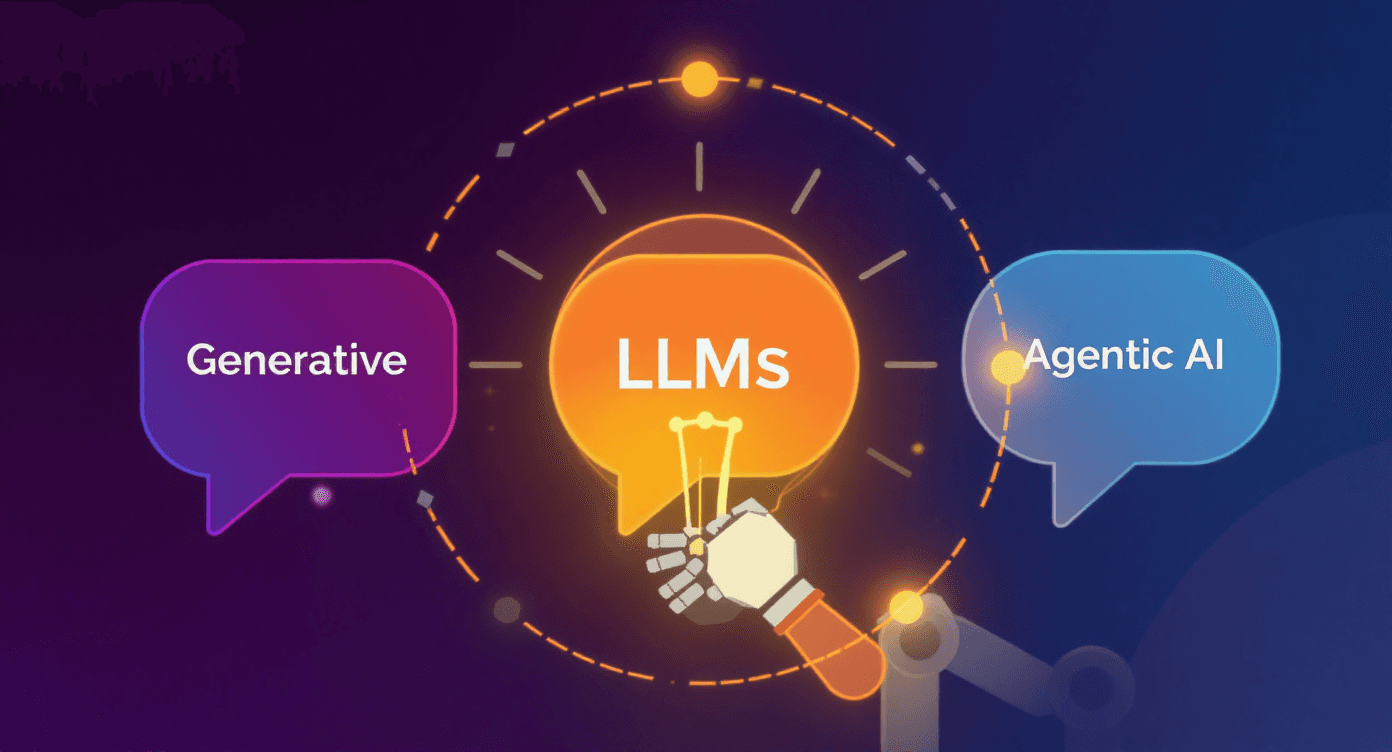
Confused by AI buzzwords? This guide breaks down the difference between AI, Machine Learning, Large Language Models, and Generative AI — and explains how they work together to shape the future of technology.

Tech
Jul 7, 2025
Next.js vs React.js - Choosing a Frontend Framework over Frontend Library for Your Web App
Confused between React and Next.js for your web app? This blog breaks down their key differences, pros and cons, and helps you decide which framework best suits your project’s goals

AI
Jun 28, 2025
Top AI Content Tools for SEO in 2025
This blog covers the top AI content tools for SEO in 2025 — including ChatGPT, Gemini, Jasper, and more. Learn how marketers and agencies use these tools to speed up content creation, improve rankings, and stay ahead in AI-powered search.

Performance Marketing
Apr 15, 2025
Top Performance Marketing Channels to Boost ROI in 2025
In 2025, getting leads isn’t just about running ads—it’s about building a smart, efficient system that takes care of everything from attracting potential customers to converting them.
Tech
Jun 16, 2025
Why Outsource Software Development to India in 2025?
Outsourcing software development to India in 2025 offers businesses a smart way to access top tech talent, reduce costs, and speed up development. Learn why TechTose is the right partner to help you build high-quality software with ease and efficiency.
Digital Marketing
Feb 14, 2025
Latest SEO trends for 2025
Discover the top SEO trends for 2025, including AI-driven search, voice search, video SEO, and more. Learn expert strategies for SEO in 2025 to boost rankings, drive organic traffic, and stay ahead in digital marketing.

AI & Tech
Jan 30, 2025
DeepSeek AI vs. ChatGPT: How DeepSeek Disrupts the Biggest AI Companies
DeepSeek AI’s cost-effective R1 model is challenging OpenAI and Google. This blog compares DeepSeek-R1 and ChatGPT-4o, highlighting their features, pricing, and market impact.
Web Development
Jan 24, 2025
Future of Mobile Applications | Progressive Web Apps (PWAs)
Explore the future of Mobile and Web development. Learn how PWAs combine the speed of native apps with the reach of the web, delivering seamless, high-performance user experiences

DevOps and Infrastructure
Dec 27, 2024
The Power of Serverless Computing
Serverless computing eliminates the need to manage infrastructure by dynamically allocating resources, enabling developers to focus on building applications. It offers scalability, cost-efficiency, and faster time-to-market.

Authentication and Authorization
Dec 11, 2024
Understanding OAuth: Simplifying Secure Authorization
OAuth (Open Authorization) is a protocol that allows secure, third-party access to user data without sharing login credentials. It uses access tokens to grant limited, time-bound permissions to applications.

Web Development
Nov 25, 2024
Clean Code Practices for Frontend Development
This blog explores essential clean code practices for frontend development, focusing on readability, maintainability, and performance. Learn how to write efficient, scalable code for modern web applications
Cloud Computing
Oct 28, 2024
Multitenant Architecture for SaaS Applications: A Comprehensive Guide
Multitenant architecture in SaaS enables multiple users to share one application instance, with isolated data, offering scalability and reduced infrastructure costs.
API
Oct 16, 2024
GraphQL: The API Revolution You Didn’t Know You Need
GraphQL is a flexible API query language that optimizes data retrieval by allowing clients to request exactly what they need in a single request.
Technology
Sep 27, 2024
CSR vs. SSR vs. SSG: Choosing the Right Rendering Strategy for Your Website
CSR offers fast interactions but slower initial loads, SSR provides better SEO and quick first loads with higher server load, while SSG ensures fast loads and great SEO but is less dynamic.

Technology & AI
Sep 18, 2024
Introducing OpenAI O1: A New Era in AI Reasoning
OpenAI O1 is a revolutionary AI model series that enhances reasoning and problem-solving capabilities. This innovation transforms complex task management across various fields, including science and coding.

Tech & Trends
Sep 12, 2024
The Impact of UI/UX Design on Mobile App Retention Rates | TechTose
Mobile app success depends on user retention, not just downloads. At TechTose, we highlight how smart UI/UX design boosts engagement and retention.

Framework
Jul 21, 2024
Server Actions in Next.js 14: A Comprehensive Guide
Server Actions in Next.js 14 streamline server-side logic by allowing it to be executed directly within React components, reducing the need for separate API routes and simplifying data handling.