

May 14, 2026
AI
In May 2023, a New York attorney named Steven Schwartz submitted a legal brief that cited six court cases in support of his client's argument. The judge asked for copies of the cited rulings. There was just one problem. None of those cases existed. Not a single one.
Schwartz had used ChatGPT to research the brief and had not verified the cases it provided. The AI had confidently invented case names, docket numbers, judges, and summaries, all completely fabricated. The lawyer was sanctioned. The story made international headlines. And millions of people who had been casually using AI tools suddenly asked a question they had not thought to ask before: can you actually trust what AI tells you?
That incident gave the world a name for something that AI researchers had known about for years: AI hallucination. It is one of the most misunderstood, most underestimated, and most consequential problems in artificial intelligence today.
If you use AI tools in your work, your research, your writing, or your business, you need to understand what AI hallucination is, why it happens, and how to protect yourself and your organization from its consequences. This guide covers everything, from the basic mechanics that cause it to the advanced technical approaches being used to reduce it.
What Is AI Hallucination?
The term itself is a bit misleading, which is worth addressing upfront.
When we say a person is hallucinating, we mean they are perceiving something that does not exist due to a disrupted mental state. When we say an AI is hallucinating, we mean something structurally different: the AI is producing output that is factually incorrect, fabricated, or entirely made up, but presenting it with the same confident tone and fluent language it uses when it is correct.
AI hallucination refers to the phenomenon where a large language model generates information that is false, unsupported, or completely invented, without any indication that it is doing so. The AI does not know it is wrong. It does not have a flag for "I am uncertain about this." It just produces text that sounds right based on the patterns it learned during training.
This is not a bug in the way software bugs are usually understood. It is a fundamental characteristic of how current large language models work, and understanding why requires a look at what is actually happening inside these systems when they generate a response.
The Science Behind AI Hallucination: How Language Models Actually Work
To understand why AI hallucinates, you need to understand what AI models actually are and how they are trained.
A large language model is not a database. It does not look up facts. It does not have a reference library it consults before producing a response. Instead, it is a massive statistical system trained on enormous amounts of text data, essentially a compressed pattern of human language.
During training, the model learns relationships between words, phrases, concepts, and ideas. It learns that certain types of questions are followed by certain types of answers. It learns the structure of legal briefs, scientific papers, news articles, and social media posts. It learns how doctors talk about medicine, how historians write about events, how programmers explain code.
When you ask it a question, it does not retrieve the answer. It generates text that, based on the patterns it learned, is statistically likely to follow your question. The output is essentially the model's best prediction of what a plausible, contextually appropriate response looks like.
This is an extraordinary capability that produces genuinely useful results most of the time. But it also means that when the model encounters a gap in its knowledge, a topic it was not trained on, a fact outside its training data, or a question that requires precise recall of specific information, it does not know to stop. It keeps generating text that sounds like it should be there, because generating plausible text is what it is optimized to do.
That is the root cause of hallucination. Not malfunction. Not deception. Just a model doing exactly what it was built to do, in a situation where doing that produces false output.
Types of AI Hallucination
Not all hallucinations are the same, and understanding the different types helps you recognize them more reliably.
Factual hallucination is the most common type. This is where the AI states something as fact that is simply untrue: a historical date that is wrong, a statistic that does not exist, a scientific finding that was never published, or a person's biography that contains invented details. The Steven Schwartz case described in the introduction is a classic example of factual hallucination.
Citation hallucination is a specific and particularly dangerous subtype. The model generates fake references, academic papers, books, articles, or court cases that sound completely real: correct-sounding journal names, plausible author names, realistic publication dates, but no actual source behind them. Researchers and academics have encountered this problem extensively.
Logical hallucination occurs when the AI produces an answer that sounds reasonable but contains a reasoning error that leads to a false conclusion. The individual steps may seem coherent but the logic breaks down when examined carefully. This type is harder to catch because it requires domain expertise to spot.
Contextual hallucination happens when the model produces information that contradicts something stated earlier in the conversation or in the document it has been given. It loses track of context and generates responses that are internally inconsistent.
Identity hallucination involves the model attributing quotes, opinions, or statements to real people who never said or wrote them. This is particularly problematic when AI-generated content is published without verification.
Real-World Examples That Show Why This Matters
Beyond the courtroom case that sparked widespread awareness, AI hallucination has produced real consequences across multiple industries.
In healthcare, researchers have documented cases where AI systems queried about medications confidently suggested drug dosages or interactions that were incorrect. In one study published by researchers at Stanford, AI chatbots provided medically inaccurate information to patients asking about cancer screening guidelines, sometimes with confident language that offered no indication of uncertainty.
In journalism, multiple outlets have had to issue corrections after publishing AI-assisted content that contained fabricated quotes, wrong statistics, or events that did not happen. Some publications initially defended the content before independent fact-checkers exposed the errors.
In education, students submitting AI-assisted research have been caught citing papers that do not exist. Teachers who have tried to fact-check AI-generated bibliographies regularly find that a significant percentage of the sources are either wrong in key details or entirely invented.
In customer-facing business applications, companies that have deployed AI chatbots without proper guardrails have seen the systems make incorrect claims about products, invent company policies that do not exist, and provide pricing information that is completely fabricated.
The pattern across all these cases is the same: the AI sounds authoritative, produces well-formatted, grammatically correct output, and gives no outward signal that anything is wrong.
Why AI Hallucination Is More Dangerous Than It Looks
There is a psychological mechanism that makes AI hallucination particularly treacherous, and it has nothing to do with the technology itself.
Human beings are pattern-completion machines. When we hear confident, fluent, well-structured information from a source that appears knowledgeable, we have a strong tendency to accept it. We apply the halo of competence. If the AI produces three correct facts in a row and then produces one hallucinated fact, the credibility of the first three facts tends to transfer to the fourth.
This is compounded by the fact that verifying AI output requires exactly the kind of time and effort that AI tools are supposed to save. If you are using an AI assistant to research a topic quickly, the entire value proposition is speed. Going back and manually verifying every claim it makes defeats the purpose, or at least feels like it does.
The result is that AI hallucination tends to be most dangerous precisely in the situations where it is most likely to occur: high-complexity topics, rare or specialized knowledge, situations outside the training data, and time-pressured professional contexts where verification feels like an obstacle rather than a necessity.
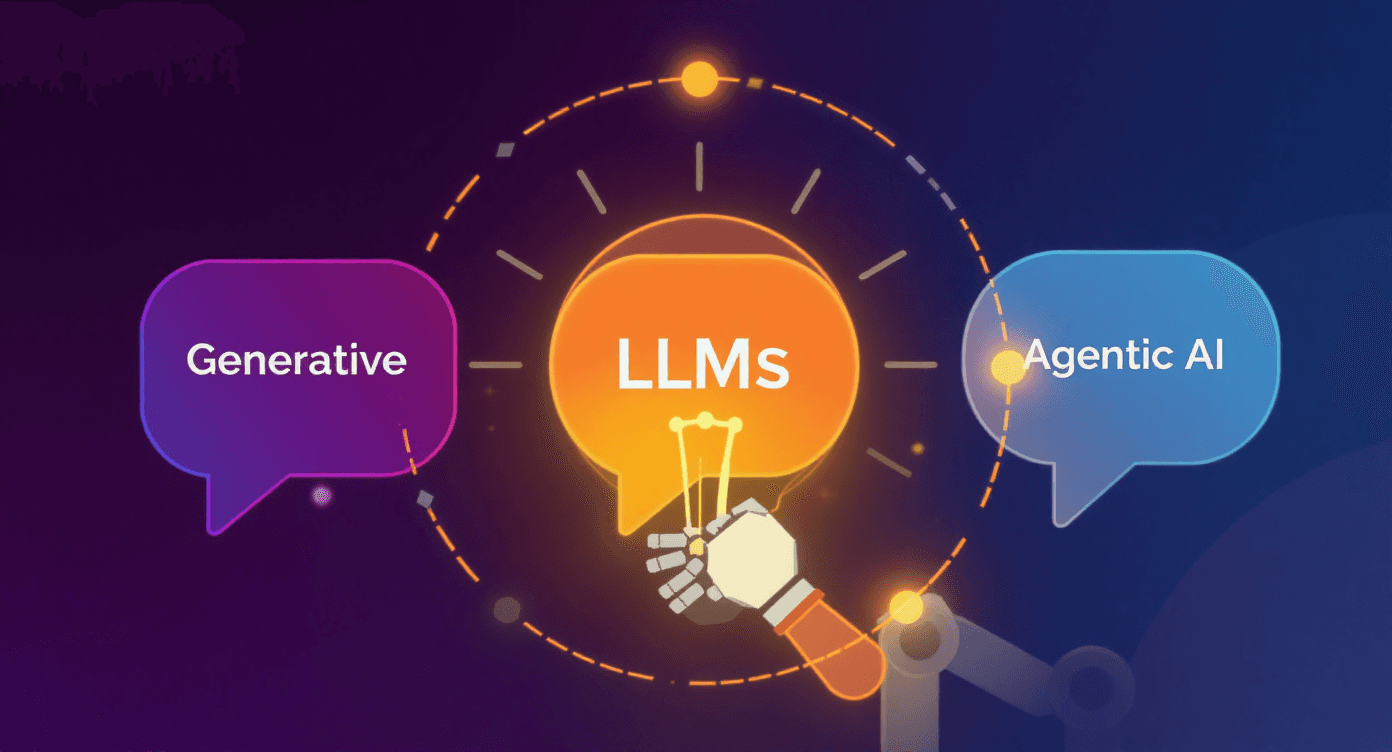
Understanding the difference between generative AI, large language models, and agentic AI matters here because different types of AI systems hallucinate in different ways and with different frequencies. Knowing which type of system you are working with helps you calibrate how much verification a given output requires.
Industries Most Vulnerable to AI Hallucination
While no industry is immune, some sectors face disproportionate risk based on the consequences of acting on incorrect information.
Legal and compliance sit at the top of the risk pyramid. Legal decisions, contracts, and regulatory compliance require precise, verifiable facts. A hallucinated case citation, statute reference, or regulatory requirement can lead to professional sanctions, lost cases, or significant financial liability.
Healthcare and medicine face similar stakes. Incorrect information about drug interactions, diagnostic criteria, treatment protocols, or clinical trial outcomes can directly affect patient safety. AI in healthcare requires rigorous verification frameworks that many current deployments do not have.
Finance and investment are highly exposed. Hallucinated earnings figures, analyst ratings, regulatory filings, or market data can drive decisions with significant financial consequences. The speed of financial markets makes this especially problematic because by the time errors are discovered, decisions may already have been executed.
Academic research and journalism face a credibility problem. Fabricated citations or hallucinated facts that make it into published work can cause reputational damage that is very difficult to undo, even after corrections are issued.
Education technology is a growing concern as AI tutoring tools become more widely used. Students who receive incorrect information from AI tutors may carry that misinformation forward, particularly in subjects where they lack the background to identify errors.
How AI Companies Are Trying to Address the Problem
The major AI labs have been working on hallucination reduction since the earliest large language models demonstrated the problem. Progress has been real, but the problem has not been solved and may never be fully solved within the current architecture.
Reinforcement learning from human feedback (RLHF) was one of the first major interventions. By having human raters evaluate AI outputs for accuracy and rewarding the model for more accurate responses, labs were able to significantly reduce hallucination rates in common topics. This is part of how ChatGPT was trained to refuse or express uncertainty in some situations.
Better training data curation has helped reduce hallucinations on well-documented topics. The more high-quality, accurate information a model has seen during training about a given topic, the less likely it is to hallucinate on that topic. But the long tail of specialized, niche, and rapidly changing knowledge is extremely difficult to cover comprehensively.
Constitutional AI and instruction tuning have made models better at saying "I don't know" in situations where their training data is sparse. However, models trained to be helpful have a competing incentive to provide an answer even when uncertainty is high, and this tension has not been fully resolved.
Model architecture improvements, including better attention mechanisms and chain-of-thought reasoning, have helped with logical hallucinations by forcing models to show their reasoning steps. When a model has to explain how it reached a conclusion, logical errors become easier to detect and reduce.
Fine-tuning vs prompt engineering is a live debate in the field precisely because hallucination reduction depends heavily on which approach you use and when. Fine-tuning on domain-specific verified data is one of the most effective ways to reduce hallucinations in a specific use case. Prompt engineering techniques, such as asking the model to reason step by step or to cite sources, help but do not eliminate the problem.
What Is RAG and Why It Is the Most Promising Solution Right Now
Retrieval-Augmented Generation, almost always referred to as RAG, is currently the most widely adopted and effective technical approach to reducing AI hallucination in production applications.
The core idea is simple: instead of relying purely on what the model has encoded in its parameters during training, you connect the model to a verified external knowledge base at the time of inference. When a user asks a question, the system first retrieves relevant documents from the knowledge base, then gives those documents to the language model along with the question. The model generates its answer based on the retrieved documents rather than purely from memory.
This fundamentally changes the hallucination dynamic. Instead of the model guessing what the answer might look like, it is working from source material. It can cite the exact document it used. It can be constrained to only answer based on retrieved content and to say it does not know if no relevant documents are found.
Fintech companies using RAG for customer personalization represent one of the most advanced real-world deployments of this approach. Banks and financial institutions are using RAG to ensure that AI systems answering customer questions about accounts, products, and regulations are grounded in accurate, up-to-date company documentation rather than the model's general training.
The limitations of RAG are real: it requires high-quality, well-structured knowledge bases, it adds latency to responses, and it only works for domains where you have reliable documents to retrieve from. But for enterprise use cases where accuracy is critical, it has become the de facto standard.
How to Detect AI Hallucinations: A Practical Guide
If you are using AI tools in your work, these are the detection practices that experienced practitioners rely on.
The primary source test is the most fundamental check. If the AI makes a factual claim, can you find the primary source? Not a summary, not another AI-generated article citing it, but the original document, study, or record. If you cannot locate the original source, treat the claim as unverified regardless of how confident the AI sounds.
Cross-reference with domain experts. For specialized topics, verify AI output with a person who has genuine expertise in the field. A doctor reviewing a medical claim, a lawyer reviewing a legal reference, or a financial analyst reviewing market data will often catch hallucinations instantly that a non-specialist might miss entirely.
Watch for suspiciously perfect answers. Real-world information is often messy, contested, or incomplete. If the AI produces a perfectly structured answer with exactly the right statistics, precisely relevant case studies, and neatly organized evidence for every point, your skepticism should increase rather than decrease. Hallucinated content often has this quality of being too perfect.
Test specific, verifiable claims independently. Pull out the three or four most specific factual claims in any AI-generated content (specific numbers, named studies, attributed quotes, event dates) and verify each one independently. If two or three of those specific claims are wrong, assume the rest requires verification too.
Ask the AI to show its reasoning. Prompting a model to explain step by step how it arrived at an answer, or to identify where each piece of information came from, surfaces logical hallucinations that a direct answer would conceal.
How to Minimize AI Hallucinations in Your Workflow
Detection is reactive. The better approach is building workflows that reduce hallucination risk from the start.
Provide context and sources in your prompts. When you give the AI relevant documents, data, or background information as part of your prompt, you dramatically reduce the chance of hallucination because the model has accurate source material to work from. This is the DIY version of RAG.
Ask for uncertainty. Explicitly prompt the AI to indicate when it is not certain about something. A simple addition like "if you are not confident about any part of this, say so clearly" shifts the model's behavior toward more appropriate hedging. It is not foolproof, but it helps.
Constrain the scope. Hallucinations are more frequent when models operate in broad, open-ended territory. Narrowing the task reduces the opportunity for the model to venture into areas where its knowledge is thin. Ask it to summarize a document you have provided rather than to recall facts from memory. Ask it to analyze data you supply rather than to retrieve data it may not have.
Use the right model for the task. Newer models from labs like OpenAI, Anthropic, and Google have substantially lower hallucination rates than earlier versions, particularly for common knowledge topics. Comparing models like DeepSeek and ChatGPT reveals meaningful differences in how different architectures handle uncertain knowledge. Using the most capable available model for high-stakes tasks is a straightforward risk reduction.
Build verification into the workflow, not onto it. The biggest mistake teams make is treating verification as an optional extra added after the AI has done its work. The most reliable workflows treat AI output as a first draft that requires human verification for any factual claim before it is used, published, or acted upon.
If your organization is deploying AI at scale, working with experts in AI development and consulting who understand both the capabilities and the limitations of current models is essential for building systems that are genuinely reliable rather than just impressively fast.
Advanced Topic: When Hallucination Becomes a Systemic Risk
Most discussions of AI hallucination focus on individual instances: a single wrong answer, a fabricated citation, an incorrect fact. But there is a larger and more consequential pattern that deserves attention, particularly for organizations deploying AI at scale.
When AI systems that hallucinate are integrated into automated workflows, the error amplification risk grows significantly. Consider a content pipeline where AI is used to research, draft, and publish articles at scale. If the AI hallucination rate is even 5% on factual claims, and the pipeline publishes fifty articles per day, each containing twenty factual claims, that is fifty incorrect facts published every single day, accumulating into a significant body of misinformation.
AI agents automating business operations face this risk acutely. When an agent is taking actions based on AI-generated information (sending emails, updating records, making purchasing decisions) a hallucinated fact does not just sit in a document. It propagates through the organization's systems and processes.
This is why the most thoughtful deployments of agentic AI in 2026 include human checkpoints at consequential decision points, clear escalation paths when confidence is low, and logging systems that make it possible to trace an AI-generated output back to its source when something goes wrong.
The goal is not to eliminate AI from these workflows. The efficiency gains are too significant to ignore. The goal is to deploy AI in a way that contains the blast radius of a hallucination rather than allowing it to propagate unchecked.
The Philosophical Question: Does AI Know It Is Wrong?
This question comes up often and is worth addressing directly because the answer shapes how you think about the risk.
No. A language model does not know it is wrong because it does not know anything in the way humans know things. It does not have beliefs, intentions, or awareness. When it produces a hallucinated fact, it is not lying, guessing, or trying to fill a gap. It is doing exactly what it always does: generating the statistically most likely continuation of the text it has received.
This is actually more concerning than if it were deliberately guessing. A deliberate guess implies awareness of uncertainty. A hallucination has no such awareness built in. The model produces wrong information with the same internal process it uses to produce correct information.
This is also why the common advice to "ask AI to be more honest" only goes so far. You can use prompting to encourage the model to express uncertainty more frequently, and this helps. But you cannot make a model intrinsically aware of the limits of its own knowledge in the way a human expert is aware of the edges of their expertise.
Understanding how generative AI actually works is the foundation for using it responsibly. The more accurately you understand what these systems actually are, the better your judgment will be about when to trust them and when to verify.
The Future: Will AI Hallucination Ever Be Fully Solved?
Honest answer: probably not entirely, at least not within the architecture of current large language models. But significant reduction is achievable, and the trajectory is positive.
The areas of research showing the most promise include better uncertainty quantification (training models to have more calibrated confidence), improved knowledge grounding through RAG and similar retrieval approaches, multi-model verification systems where one model checks the output of another, and neurosymbolic approaches that combine neural networks with structured knowledge bases.
OpenAI's O1 model and its reasoning-first approach represents a meaningful step in reducing a specific category of hallucination: logical and mathematical errors. By training the model to reason through problems in a structured way before generating a final answer, the frequency of reasoning hallucinations dropped significantly.
What is clear is that the solution will not be a single breakthrough. It will be a combination of better architectures, better training approaches, better deployment practices, and human oversight systems that catch errors when they occur. The organizations that will use AI most effectively will not be those that trust it most completely. They will be those that understand it most accurately.
Conclusion: The Most Important Thing You Can Do Right Now
The Steven Schwartz case from the beginning of this guide became famous because it was embarrassing, costly, and unusually well-documented. But thousands of quieter versions of that story happen every day in less visible ways: a business decision made on a fabricated statistic, a student essay citing a paper that does not exist, a customer misled by a chatbot inventing a company policy.
AI hallucination is not going to stop anyone from using these extraordinary tools, and it should not. The capabilities they provide are genuinely transformational. But every person and every organization using AI owes it to themselves to understand this limitation clearly, to build verification habits that reflect the actual reliability of these systems, and to resist the temptation to treat fluent, confident-sounding output as a proxy for accurate output.
AI is a powerful first draft. Your judgment is what makes it reliable.
If you want to build AI applications and workflows that minimize hallucination risk and deliver accurate, trustworthy outputs at scale, talk to the team at TechTose about how to architect systems that give you the benefits of AI without the blind spots.
1. What is AI hallucination in simple terms?
2. Why do AI models hallucinate?
3. Is AI hallucination getting better?
4. What is the best way to reduce AI hallucination?
5. Does AI know when it is hallucinating?

Discover More Insights
Continue learning with our selection of related topics. From AI to web development, find more articles that spark your curiosity.

AI
Jul 31, 2026
How to Build an AI Voice Agent for Real Estate in 2026: Complete Guide
Agents spend enormous time on calls that could be handled automatically: qualifying leads, answering property questions, scheduling viewings, and following up on inquiries that arrive at midnight. An AI voice agent for real estate handles these conversations intelligently, around the clock, without compromising the quality of the interaction. This guide covers how to build one, from concept to production deployment.
AI
Jul 31, 2026
Generative AI for Sales: Use Cases and a Build Roadmap for 2026
Sales has always been a people business. But the administrative burden that surrounds modern sales, the outreach drafting, the CRM updates, the proposal writing, the follow-up sequencing, consumes so much of a salesperson's time that the actual human work of selling is squeezed into the margins. Generative AI for sales is changing this equation dramatically. This guide covers the most valuable use cases, how to prioritize them, and a practical build roadmap for implementing generative AI into your sales operation in 2026.

App Development
Jul 31, 2026
How to Build a Smart Calendar App in 2026: Complete Developer Guide
Building a smart calendar app in 2026 means going beyond storing appointments. It means building a system that actively helps users manage time intelligently. This guide covers the complete development process from concept through launch, including the AI features that separate smart calendars from digital scheduling books.

AI
Jul 30, 2026
Best Generative AI Use Cases for Businesses: A Complete Guide for 2026
This guide covers the best generative AI use cases for businesses in 2026, organized by function, with real examples, implementation guidance, and honest assessment of where the technology delivers genuine value versus where the hype exceeds the reality.

Tech
Jul 30, 2026
Top Features Every Custom CRM Should Have in 2026: The Complete Guide
Most CRM implementations fail not because of the technology but because businesses deploy a system that does not match how their sales team actually works. A custom CRM built with the right features changes everything: pipeline visibility improves, deal velocity increases, and sales managers finally have the data to coach effectively. This guide covers every feature a modern custom CRM needs in 2026, from fundamental contact management to advanced AI-driven sales intelligence.

Jul 29, 2026
How Much Does IT Staff Augmentation Cost in 2026? The Complete Guide
IT staff augmentation has become one of the most strategic workforce decisions technology companies make. Done right, it gives you senior technical talent exactly when you need it, at a fraction of the cost of full-time hiring, without the timeline of a recruitment cycle. Done wrong, it creates coordination problems, quality gaps, and costs that exceed what permanent hiring would have required.

Programming Language
Jul 29, 2026
Enterprise Software Development Services: Why Indian Software Development Agencies Are Leading the World
Enterprise software development is one of the most consequential investments a business makes. Choose the right software development agency and you build competitive infrastructure that scales with you for years. Choose wrong and you spend double to fix what should have been built correctly the first time. This guide covers everything a business leader, CTO, or procurement team needs to know about enterprise software development services, with specific focus on why India has become the world's most trusted destination for building enterprise-grade software.

AI
Jul 28, 2026
Best OCR APIs in 2026: Top 15 OCR APIs Compared for Accuracy, Pricing and Features
OCR APIs have quietly become one of the most critical infrastructure decisions for businesses handling documents at scale. Getting the wrong one costs you accuracy, integration time, ongoing costs, and sometimes the entire workflow it was supposed to automate. This guide compares the 15 best OCR APIs available in 2026, covering accuracy, pricing, supported document types, language support, and which use case each one actually serves best.
Tech
Jul 28, 2026
How Much Does It Cost to Build an MVP in 2026? Complete Guide
Building an MVP is the smartest first move for any product idea. But "how much will it cost" is the question every founder gets wrong before they have done it once. Too many teams either overbuild a product that costs five times what it needed to, or underbuild something so minimal it cannot validate anything real. This guide gives you the honest cost breakdown for MVP development in 2026, with real numbers, industry-specific estimates, and the framework to scope and budget your MVP correctly the first time.

Tech
Jul 27, 2026
How Much Does It Cost to Build a Fintech App? Complete Guide for 2026
The question every founder, enterprise product team, and bank executive asks before starting a fintech app project is the same: how much will this actually cost? The honest answer is more nuanced than any quick estimate can capture. This guide breaks down every cost factor in fintech app development, from basic MVP to enterprise-grade financial platform, with real numbers, India-specific context, and the framework you need to budget accurately for your specific project.

AI
Jul 26, 2026
How to Build an AI-Powered Mobile App: A Complete Guide for 2026
Building a mobile app was already complex. Building one powered by AI adds an entirely new layer of decisions around model selection, data architecture, privacy, and user experience. This guide walks you through the complete process of building an AI-powered mobile app in 2026, from the first product idea through launch and beyond, including how to choose the right mobile app development company to bring your vision to life.

AI
Jul 24, 2026
AI Chatbots vs Conversational AI: What Every Business Needs to Know
Most businesses use the terms AI chatbot and conversational AI interchangeably. They are not the same thing, and choosing the wrong one for your use case costs real money, real customer satisfaction, and real competitive ground. This guide explains the genuine difference between AI chatbots and conversational AI, when each approach makes sense, what the best platforms offer in 2026, and how to make the decision that actually fits your business needs.

Marketing
Jul 25, 2026
Best AI Tools for Digital Marketing 2026: The Complete Guide for Marketers Who Want Results
Every digital marketing team in 2026 is using AI tools. But most are using three tools when they should be using one, ignoring five that would transform their workflow, and paying for two that are not delivering real value. This guide cuts through the noise with an honest, comprehensive breakdown of the best AI tools for digital marketing across every major channel, with real use cases, pricing transparency, and guidance on which tools actually earn their subscription cost.

AI
Jul 24, 2026
Top 10 AI Agent Frameworks Compared: LangChain vs CrewAI vs AutoGen and More (2026)
Choosing the wrong AI agent framework can cost your team months of rework. In 2026, the ecosystem has matured to the point where there are genuine differences between frameworks that matter enormously depending on what you are building. This guide compares the top 10 AI agent frameworks side by side covering architecture, strengths, weaknesses, and which type of project each one actually serves best.

AI
Jul 23, 2026
Open-Source vs Closed-Source AI Models: Which Should Enterprises Choose?
This guide cuts through the noise with an honest, detailed comparison covering security, cost, performance, compliance, and strategic fit so enterprise decision-makers can choose the right approach for their specific situation.

Jul 22, 2026
Why Context Windows Matter More Than Model Size?
Model size dominates the marketing, but context windows decide whether an AI application actually holds together in production. This guide explains why, with real numbers and real stories.

AI
Jul 21, 2026
Single Agent vs Multi Agent Framework: Which Architecture Actually Wins?
Single agent or multi agent framework? This guide breaks down both architectures with real data, storytelling, and a practical decision framework for teams building AI agents in 2026.

UI UX
Jul 19, 2026
Best UI/UX Design Tools in 2026: A Complete Guide From Basics to Advanced Workflows
Choosing the right UI UX design tools in 2026 can make or break a product's speed to market. This guide walks through the platforms actually worth learning, why AI has changed the toolkit, and how to build a stack that fits your team.

SEO
Jul 17, 2026
How AI Overviews is changing Search on Google?
AI Overviews have quietly rewritten the rules of search. This guide explains what GEO Services in India actually involve, how they differ from traditional SEO, and how brands can earn a place inside AI generated answers, with an honest look at the leading players in the space.

E-commerce
Jul 15, 2026
Features Every E-commerce Website Must Have: The Complete Guide to E-commerce Web Development
Building an e-commerce website is not simply putting products on a page with a buy button. The difference between an online store that converts and one that bleeds traffic is almost always found in the features under the surface: how fast it loads, how easy checkout is, how trustworthy it feels, and how intelligently it serves each visitor.

Web Development
Jul 16, 2026
Best CSS Frameworks for Modern Websites in 2026: Complete Developer Guide
Every developer has been there: staring at a blank CSS file, knowing that dozens of hours of layout work stand between the current state and a polished, responsive website. CSS frameworks exist to solve exactly that problem.

Tech
Jul 14, 2026
How to Find Trending Keywords Before Your Competitors Do
Most brands find a trending keyword after it has already peaked. This guide by TechTose shows you how to find keywords early, using free tools, community signals, and a simple weekly process that anyone on your team can follow, even if you have never done keyword research before.

Social Media
Jul 13, 2026
Best Social Media Scheduling Tools in 2026: Complete Comparison (Features, Pricing and Performance)
Posting consistently on social media is one of the hardest operational challenges for any business or creator. The right social media scheduling tool eliminates the chaos of manual posting, ensures your content goes out at the right time every day, and increasingly uses AI to help you create, optimize, and analyze content too.

Tech
Jul 9, 2026
How AI Resume Builders Improve Your Resume: The Complete Guide for 2026
Most resumes never get read by a human. They are screened out by software before a recruiter ever sees them. AI resume builders are changing that by helping job seekers write resumes that pass automated screening, match job descriptions precisely, and communicate value clearly. This guide covers everything from how AI resume builders actually work to which tools are worth using and how to get the most out of them.

AI
Jul 7, 2026
How to Build an AI Agent: A Complete Step-by-Step Guide for 2026
This guide walks you through exactly how to build an AI agent, from understanding what one actually is, through choosing the right architecture, picking the right tools, and deploying something that works in the real world.

AI
Jul 5, 2026
Best AI Meeting Assistants in 2026: Complete Guide to Tools, Features and Pricing
Meetings consume more time than almost any other business activity. AI meeting assistants in 2026 are changing that by automatically transcribing conversations, generating summaries, extracting action items, and even attending meetings on your behalf. This guide covers everything from what these tools actually do to how to choose the right one, with honest comparisons across the best options available right now.

AI
Jul 3, 2026
AI Image Generation Tools in 2026: 15 Best Tools Compared (Features and Pricing)
AI image generation tools in 2026 have crossed a threshold that would have seemed impossible just three years ago. The output is photorealistic, commercially licensable, and generated in seconds.

AI
Jun 30, 2026
Best AI Coding Assistants in 2026: 15 Tools Compared (Features, Pricing and Performance)
The way developers write code has fundamentally changed. AI coding assistants in 2026 are no longer simple autocomplete tools. They debug, explain, refactor, generate entire functions, and even review pull requests. This guide compares 15 of the best tools available right now, covering features, pricing, performance, and which type of developer or team each one serves best.

App Development
Jun 23, 2026
How FinTech Apps Are Transforming Financial Services?
Financial services used to mean standing in a queue, filling out paperwork, and waiting days for approvals. FinTech apps changed all of that, and the transformation is far from finished. This guide explains how FinTech apps are reshaping banking, lending, payments, and investing, and what businesses need to know when choosing the right app development company to build their own FinTech product.

Marketing
Jun 21, 2026
How to Optimize Content for ChatGPT, Perplexity, Claude, and Gemini
Search is changing. People are no longer just typing into Google, they are asking ChatGPT, Perplexity, Claude, and Gemini for direct answers. If your content is not built for these AI engines, you are becoming invisible to a fast-growing share of your audience. This guide walks you through exactly what LLM optimization services do and how you can apply the same thinking to your own content, from the basics all the way to advanced technical strategy.

E-commerce
Jun 16, 2026
How E-commerce Brands Can Generate Product Ads with AI: The Complete Guide
Generating product ads with AI is no longer a luxury reserved for big brands with massive budgets. Today, any e-commerce business can use AI to create, personalize, and optimize ads faster and cheaper than ever before. This guide walks you through everything, from understanding what AI ad generation actually means to deploying advanced multi-channel campaigns that convert.

Marketing
Jun 17, 2026
Gen AI Advertising: How Generative AI is Completely Changing the Way Brands Advertise
Gen AI Advertising is no longer a future concept. It is happening right now, and brands that understand it early will have a serious edge. This guide walks you through everything, from what Gen AI Advertising actually means to how leading companies are using it to run smarter, faster, and more personal ad campaigns at scale.

AI
Jun 15, 2026
Best AI Tools for Sales Automation in 2026: The Complete Guide
AI tools for sales are reshaping how teams generate leads, follow up with prospects, and close deals. This guide covers the best AI sales automation tools in 2026, who they are best for, and how to pick the right one for your business.

AI
Jun 12, 2026
The Rise of Autonomous AI Agents in Modern Enterprises
Autonomous AI agents are no longer a future concept. They are running payroll, closing sales, debugging code, and managing supply chains right now.

AI
Jun 3, 2026
How to Build AI Agents Using Claude Code
Building AI agents is no longer reserved for large research labs. With Claude Code, any developer or business can create autonomous, intelligent systems that take action, make decisions, and complete complex tasks. This guide walks you through everything from first principles to production deployment.

Jun 1, 2026
Top AI Trends Every CEO Should Know in 2026
AI is no longer just an IT conversation. It is a boardroom conversation. This guide breaks down the top AI trends every CEO must understand in 2026, from autonomous agents reshaping operations to AI governance becoming a competitive advantage.

AI
May 29, 2026
Agentic AI vs AI Agents: What's the Basic Difference
Agentic AI and AI Agents sound almost identical, yet they represent two fundamentally different ideas. This guide cuts through the confusion with plain language, real examples, and practical insight for businesses ready to build with AI.

UI-UX
May 27, 2026
Why UI/UX Design Matters More Than Ever in 2026
In 2026, users decide within seconds whether to stay on your app or leave forever. This blog explores why UI/UX design has become the most powerful growth lever for businesses worldwide and how the right UI UX development company in India can help you win.

LLM
May 25, 2026
How to Optimize Your Website for LLMs?
Search is no longer just Google. In 2026, millions of people ask ChatGPT, Gemini, and Perplexity for recommendations before they ever visit a website. This guide teaches you exactly how to optimize your website for LLMs so your business shows up when AI answers questions about your industry.

AI
May 22, 2026
AI Features Businesses Can Add to Their Mobile Apps
Your mobile app is already competing against apps that think, learn, and adapt in real time. If yours is still running on static logic and fixed menus, you are not just behind on technology. You are losing users every single day to apps that feel smarter.

AI
May 18, 2026
How AI Can Help Small Businesses Compete With Large Enterprises?
Size used to be everything in business. The bigger your team, your budget, and your data infrastructure, the more you could accomplish. That era is over. AI has fundamentally rewritten the rules of competition, and small businesses that understand this are already outmaneuvering companies ten times their size. This guide explains exactly how.

Marketing
May 15, 2026
Marketing Trends in 2026: How the Creative Industry Is Reinventing Itself
The creative industry is being rewritten in 2026. This guide breaks down the 10 biggest marketing trends changing how brands create content, reach audiences, and drive growth, from AI workflows and social commerce to the death of third-party data.

AI
May 11, 2026
How Brands Are Using AI for Customer Engagement | TechTose

May 8, 2026
How Generative AI Is Changing Instagram Marketing in 2026?
Generative AI is reshaping Instagram marketing at every level in 2026. From solo creators producing five Reels a week with no team, to Fortune 500 brands A/B testing hundreds of ad variants in minutes, this guide covers every major use case, tool, risk, and practical workflow you need to stay ahead.

AI
May 5, 2026
How Higgsfield AI Is Changing Image Generation in 2026?
Higgsfield AI is a multi-model generative AI platform that lets creators, marketers, and enterprises produce Hollywood-grade video and image content without a production budget or technical background. This guide covers everything from its founding story and core features to advanced use cases for brands and agencies in 2026.
May 1, 2026
Importance of UX/UI Design in Mobile App Success
An app that feels right is unforgettable. This guide breaks down exactly why UI/UX design is the single most powerful lever in mobile app success, from the psychology behind first impressions all the way to advanced design systems that scale with your product.

Tech
May 1, 2026
AI-Powered Personalization in Mobile Apps: The Next Growth Hack
AI is no longer just a feature inside your mobile app. It is the entire foundation. This guide walks you through how AI-powered personalization works, why it is becoming the biggest growth lever in mobile app development, and what your business needs to do right now to stay ahead.

E-commerce
Apr 30, 2026
Must-Have Features for Higher Conversion for E-commerce Sites
Most e-commerce stores bleed revenue silently, not because of bad products or poor marketing, but because their website is quietly pushing customers away. This guide covers every feature your online store must have in 2026 to turn browsers into buyers, first-time visitors into loyal customers, and traffic into real, measurable growth.

AI
Apr 29, 2026
Gen AI in Advertising: From Creatives to Full Campaign Automation
Advertising has always been about the right message to the right person at the right time. Gen AI in advertising makes that possible at a scale and speed no human team can match alone

Apr 24, 2026
How Marketing Agencies Can Use Claude to Deliver 10x Faster Results

SEO
Apr 21, 2026
Conversion Rate Optimization (CRO): The Complete Guide to Turning Visitors into Customers
You're spending lakhs on ads, publishing content every week, investing in SEO — but your website conversions are stuck at 1–2%. The problem isn't your traffic. It's what happens after the click. This in-depth CRO guide by TechTose, one of India's leading Digital Marketing Agencies, will show you exactly why visitors leave without converting — and the proven, data-backed strategies to fix it.

SEO
Apr 21, 2026
How to Do Keyword Research That Drives Real Traffic?
Most businesses guess at keywords and wonder why their traffic never grows. This in-depth guide by TechTose — a leading Digital Marketing Agency in India — reveals the exact keyword research process that separates top-ranking pages from pages buried on page 5. Whether you're a startup, an SME, or an enterprise, this guide will transform how you think about SEO.

AI
Apr 16, 2026
What Are AI Models and How Are They Trained?
AI models power everything from chatbots to medical diagnosis, but most people have no idea how they actually work. This guide breaks down what AI models are, how they learn from data, and what the training process really looks like, from total beginner to advanced concepts.

AI
Apr 16, 2026
Will AI Replace Jobs or Create More Opportunities? The Complete Guide for Workers and Businesses in 2026
AI is already changing the job market. This guide cuts through the noise with real data, honest industry breakdowns, and practical steps for workers and businesses navigating the biggest career shift of our generation

AI
Apr 10, 2026
How to Use Generative AI for Content Marketing?
Generative AI is changing how marketing teams create content. This guide shows you exactly how to use it for blogs, social media, email, and video without losing your brand voice or hurting your rankings.

Social Media
Apr 8, 2026
Social Media Trends in 2026: The Complete Guide for Brands, Marketers, and Businesses
Social media in 2026 has new rules. This guide covers the 10 biggest trends shaping platforms right now — from AI content and social commerce to community-led growth — with clear actions your brand can take today.
AI
Apr 9, 2026
Top Agentic AI Trends to Watch in 2026: From Basics to Enterprise Strategy
Agentic AI is no longer a pilot project — it's a production imperative. This guide breaks down the 10 trends every business leader needs to understand in 2026, backed by data from Gartner, McKinsey, NVIDIA, and Capgemini. From multi-agent orchestration to workforce redesign, here's what's actually happening at scale and what your organisation should be doing about it right now.

AI
Apr 7, 2026
Top AI Tools Every Web Developer Should Use in 2026
AI is no longer optional for web developers — it's a competitive edge. This guide covers the top AI tools in 2026 across coding, debugging, UI generation, and deployment, helping beginners and advanced developers build smarter and ship faster.

AI
Apr 7, 2026
Fine-Tuning vs Prompt Engineering: Which One Should You Use?
Not sure whether to fine-tune your AI model or engineer better prompts? This guide breaks down both approaches — from beginner basics to advanced techniques — helping you pick the right strategy for your use case, budget, and goals.

AI
Mar 27, 2026
How E-commerce Brands Can Use Agentic AI for Personalization
Personalization has always been the holy grail of e-commerce. In 2026, agentic AI is finally delivering it at scale. This guide covers what agentic AI actually is, how it powers next-level personalization, real-world brand examples, and a practical roadmap to get started, whether you run a startup or a mid-market operation.

AI
Mar 27, 2026
How Agentic AI is Transforming Businesses in 2026: A Developer's Inside Perspective
An in-depth look at Agentic AI in 2026 from an experienced AI developer. Explore how autonomous AI agents are transforming businesses, with real examples, implementation strategies, and expert insights from TechTose.

Tech
Mar 26, 2026
UX Research Methods Every Designer Should Know
Great design does not begin with pixels. It begins with understanding people. This guide walks you through the essential UX research methods every designer should know in 2026, from the fundamentals to advanced techniques, with real stories, proven data, and practical implementation tips.

AI
Mar 25, 2026
Top AI Automation Tools for Businesses in 2026
The AI automation landscape has never moved faster. This guide covers the top tools businesses are using in 2026 to automate workflows, cut costs, and scale smarter, with real examples, honest comparisons, and a clear path to getting started.
Ai
Mar 25, 2026
Top Real-World Applications of Natural Language Processing in 2026
Learn how NLP technology powers everything from voice assistants to medical diagnosis. This comprehensive guide explores 15 real-world applications transforming how machines understand human language, with practical examples and industry insights.
SEO
Mar 24, 2026
Latest SEO Trends You Can't Ignore in 2026
Explore the top SEO trends in 2026, including AI search, GEO, E-E-A-T, and zero-click strategies, with actionable insights to boost your online visibility.

Tech
Mar 20, 2026
Top Web Development Companies in 2026: The Definitive Guide for Businesses
Compare the best web development companies in 2026 by project type, pricing, and tech stack. Find the right agency partner for your business goals.

AI
Mar 19, 2026
Generative AI in 2026: Top Use Cases and Trends Every Business Should Know
Explore the latest Generative AI trends in 2026 and learn how businesses are using AI to automate tasks, improve efficiency, and scale faster.
AI
Mar 19, 2026
Best AI Tools for Mobile App Development in 2026: The Complete Guide
Mobile app development has changed faster in the last two years than in the decade before it. This guide covers every major category of AI tool available to mobile developers in 2026, from AI code assistants like GitHub Copilot and Cursor to no-code builders like FlutterFlow and Lovable, with real pricing, honest limitations.
AI
Mar 13, 2026
Top Use Cases of AI Agents in 2026: The Complete Guide
Learn how AI agents are being used in 2026 to automate business processes, enhance customer experience, and increase productivity across different industries.

SEO
Mar 10, 2026
Programmatic SEO: The Complete Guide to Scaling Organic Traffic in 2026
Learn programmatic SEO from basics to advanced strategy. Discover how to build thousands of high-ranking pages at scale, avoid common pitfalls, and drive serious organic growth.
Mobile App Development
Mar 10, 2026
How AI-Powered Mobile App Development Is Changing the Game in 2026
Mobile app development in 2026 has transformed with the rise of artificial intelligence, low-code platforms, cross-platform frameworks, and cloud technologies. Businesses can now build scalable and high-performance mobile applications faster and more cost-effectively than ever before.

AI
Feb 13, 2026
How AI Agents can Automate your Business Operations?
Discover how AI agents are transforming modern businesses by working like digital employees that automate tasks, save time, and boost overall performance.
Tech
Jan 29, 2026
MVP Development for Startups: A Complete Guide to Build, Launch & Scale Faster
Discover how MVP development for startups helps you validate your idea, attract early users, and impress investors in just 90 days. This complete guide walks you through planning, building, and launching a successful MVP with a clear roadmap for growth.

Tech
Jan 13, 2026
Top 10 Enterprise App Development Companies in 2026
Explore the Top 10 Enterprise App Development Company in 2026 with expert insights, company comparisons, key technologies, and tips to choose the best development partner.

AI
Dec 4, 2025
AI Avatars for Marketing: The New Face of Ads
AI avatars for marketing are transforming how brands create content, scale campaigns, and personalize experiences. This deep-dive explains what AI avatars are, real-world brand uses, benefits, risks, and a practical roadmap to test them in your marketing mix.

AI
Nov 21, 2025
How Human-Like AI Voice Agents Are Transforming Customer Support?
Discover how an AI Voice Agent for Customer support is changing the industry. From reducing BPO costs to providing instant answers, learn why the future of service is human-like AI.

AI
Nov 11, 2025
How AI Voice Generators Are Changing Content Creation Forever?
Learn how AI voice tools are helping creators make videos, podcasts, and ads without recording their own voice.

Sep 26, 2025
What Role Does AI Play in Modern SEO Success?
Learn how AI is reshaping SEO in 2025, from smarter keyword research to content built for Google, ChatGPT, and Gemini.

AI
Sep 8, 2025
How Fintech Companies Use RAG to Revolutionize Customer Personalization?
Fintech companies are leveraging Retrieval-Augmented Generation (RAG) to deliver hyper-personalized, secure, and compliant customer experiences in real time.

AI
Aug 28, 2025
How to Use AI Agents to Automate Tasks?
AI agents are transforming the way we work by handling repetitive tasks such as emails, data entry, and customer support. They streamline workflows, improve accuracy, and free up time for more strategic work.

SEO
Aug 22, 2025
How SEO Is Evolving in 2025?
In the era of AI-powered search, traditional SEO is no longer enough. Discover how to evolve your strategy for 2025 and beyond. This guide covers everything from Answer Engine Optimization (AEO) to Generative Engine Optimization (GEO) to help you stay ahead of the curve.

AI
Jul 30, 2025
LangChain vs. LlamaIndex: Which Framework is Better for AI Apps in 2025?
Confused between LangChain and LlamaIndex? This guide breaks down their strengths, differences, and which one to choose for building AI-powered apps in 2025.
AI
Jul 10, 2025
Agentic AI vs LLM vs Generative AI: Understanding the Key Differences
Confused by AI buzzwords? This guide breaks down the difference between AI, Machine Learning, Large Language Models, and Generative AI — and explains how they work together to shape the future of technology.

Tech
Jul 7, 2025
Next.js vs React.js - Choosing a Frontend Framework over Frontend Library for Your Web App
Confused between React and Next.js for your web app? This blog breaks down their key differences, pros and cons, and helps you decide which framework best suits your project’s goals

AI
Jun 28, 2025
Top AI Content Tools for SEO in 2025
This blog covers the top AI content tools for SEO in 2025 — including ChatGPT, Gemini, Jasper, and more. Learn how marketers and agencies use these tools to speed up content creation, improve rankings, and stay ahead in AI-powered search.

Performance Marketing
Apr 15, 2025
Top Performance Marketing Channels to Boost ROI in 2025
In 2025, getting leads isn’t just about running ads—it’s about building a smart, efficient system that takes care of everything from attracting potential customers to converting them.
Tech
Jun 16, 2025
Why Outsource Software Development to India in 2025?
Outsourcing software development to India in 2025 offers businesses a smart way to access top tech talent, reduce costs, and speed up development. Learn why TechTose is the right partner to help you build high-quality software with ease and efficiency.
Digital Marketing
Feb 14, 2025
Latest SEO trends for 2025
Discover the top SEO trends for 2025, including AI-driven search, voice search, video SEO, and more. Learn expert strategies for SEO in 2025 to boost rankings, drive organic traffic, and stay ahead in digital marketing.

AI & Tech
Jan 30, 2025
DeepSeek AI vs. ChatGPT: How DeepSeek Disrupts the Biggest AI Companies
DeepSeek AI’s cost-effective R1 model is challenging OpenAI and Google. This blog compares DeepSeek-R1 and ChatGPT-4o, highlighting their features, pricing, and market impact.
Web Development
Jan 24, 2025
Future of Mobile Applications | Progressive Web Apps (PWAs)
Explore the future of Mobile and Web development. Learn how PWAs combine the speed of native apps with the reach of the web, delivering seamless, high-performance user experiences

DevOps and Infrastructure
Dec 27, 2024
The Power of Serverless Computing
Serverless computing eliminates the need to manage infrastructure by dynamically allocating resources, enabling developers to focus on building applications. It offers scalability, cost-efficiency, and faster time-to-market.

Authentication and Authorization
Dec 11, 2024
Understanding OAuth: Simplifying Secure Authorization
OAuth (Open Authorization) is a protocol that allows secure, third-party access to user data without sharing login credentials. It uses access tokens to grant limited, time-bound permissions to applications.

Web Development
Nov 25, 2024
Clean Code Practices for Frontend Development
This blog explores essential clean code practices for frontend development, focusing on readability, maintainability, and performance. Learn how to write efficient, scalable code for modern web applications

Cloud Computing
Oct 28, 2024
Multitenant Architecture for SaaS Applications: A Comprehensive Guide
Multitenant architecture in SaaS enables multiple users to share one application instance, with isolated data, offering scalability and reduced infrastructure costs.
API
Oct 16, 2024
GraphQL: The API Revolution You Didn’t Know You Need
GraphQL is a flexible API query language that optimizes data retrieval by allowing clients to request exactly what they need in a single request.
Technology
Sep 27, 2024
CSR vs. SSR vs. SSG: Choosing the Right Rendering Strategy for Your Website
CSR offers fast interactions but slower initial loads, SSR provides better SEO and quick first loads with higher server load, while SSG ensures fast loads and great SEO but is less dynamic.

Technology & AI
Sep 18, 2024
Introducing OpenAI O1: A New Era in AI Reasoning
OpenAI O1 is a revolutionary AI model series that enhances reasoning and problem-solving capabilities. This innovation transforms complex task management across various fields, including science and coding.

Tech & Trends
Sep 12, 2024
The Impact of UI/UX Design on Mobile App Retention Rates | TechTose
Mobile app success depends on user retention, not just downloads. At TechTose, we highlight how smart UI/UX design boosts engagement and retention.

Framework
Jul 21, 2024
Server Actions in Next.js 14: A Comprehensive Guide
Server Actions in Next.js 14 streamline server-side logic by allowing it to be executed directly within React components, reducing the need for separate API routes and simplifying data handling.