

Feb 13, 2026
AI
Sarah Martinez, CEO of a mid-sized e-commerce company, used to start her day at 5:30 AM. Not by choice, but by necessity. By the time her coffee brewed, she'd already responded to 47 customer emails, approved three vendor invoices, rescheduled two team meetings, and flagged inventory alerts from her warehouse management system.
"I felt like a human API," she recalls with a laugh. "My entire job was moving information from one place to another, making small decisions that followed clear rules, and occasionally putting out fires that could have been prevented."
Then Sarah discovered AI agents for automation.
Six months later, her mornings look dramatically different. She wakes up at 7:00 AM to a concise summary prepared by her AI agent: three items that genuinely need her attention, two strategic opportunities identified from market data, and a confirmed schedule optimized around her priorities. The 47 customer emails? Handled. The invoices? Processed and reconciled. The inventory alerts? Resolved with automatic reorders placed with preferred suppliers.
Sarah's story isn't unique, it's becoming the norm. And if you're still managing your business operations the old way, you're not just working harder than necessary. You're falling behind competitors who've discovered the transformative power of AI agents for automation.
This comprehensive guide will show you exactly how AI agents can revolutionize your business operations, backed by real-world examples, implementation strategies, and insider insights from a decade of working with automation technologies.
What Are AI Agents for Automation? Understanding the Foundation
Let's clear up a common misconception right away: AI agents for automation are not your grandfather's macros or simple if-then scripts.
Traditional automation is like a train on fixed tracks. It follows predetermined paths, executes predefined actions, and stops dead when it encounters anything unexpected. You've probably used this kind of automation, maybe a tool that auto-forwards certain emails or a script that generates weekly reports.
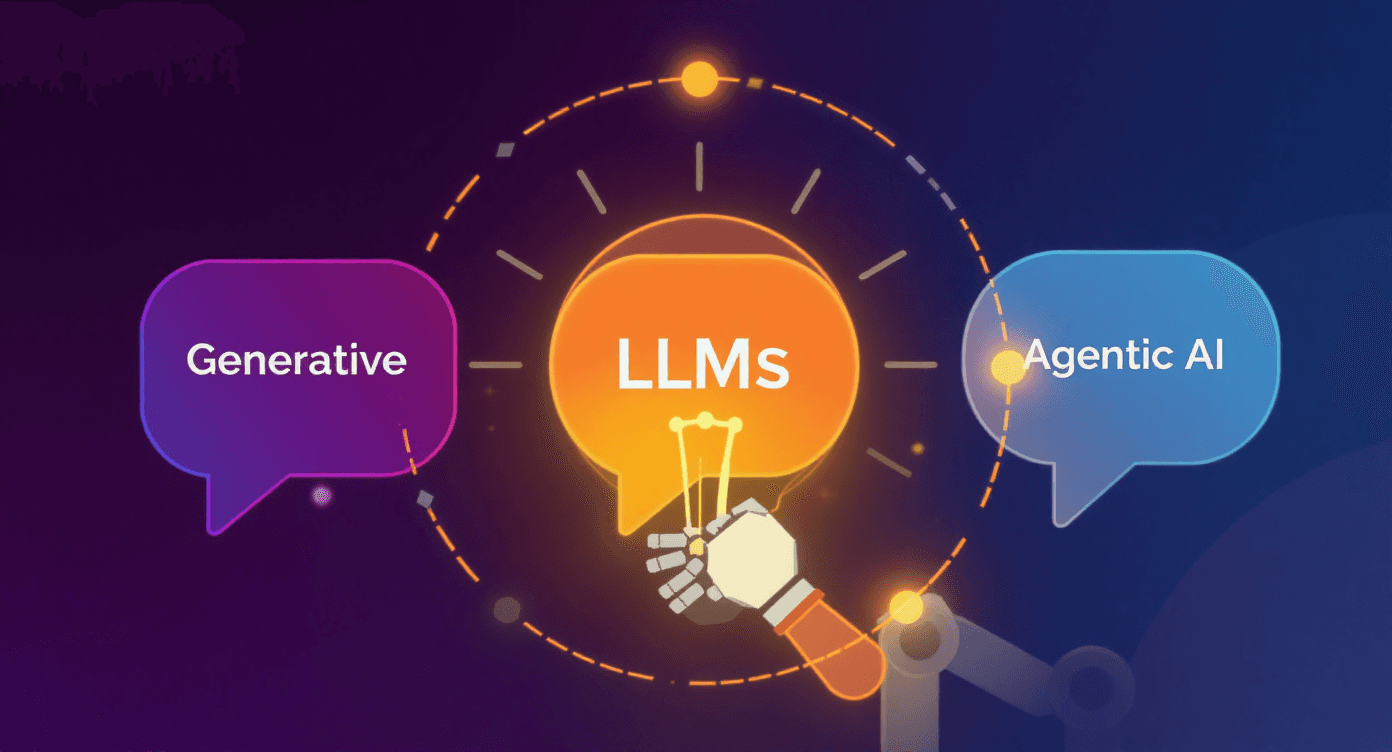
AI agents, by contrast, are more like skilled assistants with decision-making capabilities. Learn more about what AI agents are and how they work. Understanding the distinction between agentic AI, LLMs, and generative AI is crucial for leveraging the right technology for your business needs.
An AI agent is an autonomous software entity that:
Perceives its environment through data inputs and sensors
Reasons about situations using machine learning models and logic
Acts to achieve specific goals without constant human supervision
Learns from outcomes to improve future performance
Adapts to changing conditions and unexpected scenarios
Think of it this way: If traditional automation is a vending machine (press B3, get chips), then AI agents are like a skilled barista who remembers your usual order, notices when you seem stressed and suggests decaf, and can improvise when they're out of your preferred milk alternative.
The Three Pillars of AI Agents
1. Perception (Data Awareness)
Modern AI agents can process multiple data streams simultaneously:
Email and communication platforms
CRM and customer databases
Financial systems and invoices
Inventory and supply chain data
Market trends and competitor intelligence
Social media sentiment
IoT sensor data from physical operations
Marcus Chen, CTO of a logistics company, explains: "Our AI agent monitors 23 different data sources in real-time. It knows when a shipment is delayed before the tracking system updates, because it's learned to recognize patterns in port traffic data, weather systems, and historical shipping routes."
2. Reasoning (Intelligent Decision-Making)
This is where AI agents truly shine. Using advanced language models and machine learning algorithms, they can:
Understand context and nuance in communications
Evaluate multiple options against business rules
Prioritize tasks based on urgency and impact
Identify anomalies and potential issues
Make recommendations with confidence scores
Explain their reasoning process
3. Action (Autonomous Execution)
Once an AI agent decides on a course of action, it can:
Draft and send communications
Update databases and systems
Schedule appointments and allocate resources
Generate documents and reports
Process transactions within set parameters
Trigger workflows across multiple platforms
Escalate complex issues to humans with full context
Why AI Agents for Automation Matter Now?
The Hidden Cost of Manual Operations
Let me share some numbers that might make you uncomfortable.
Research from McKinsey's 2025 report on automation found that the average knowledge worker spends:
28% of their workweek managing email
19% of their time searching for information
14% of their time in unnecessary meetings
12% of their time on data entry and transfer between systems
That means 73% of the average workweek is spent on tasks that could be automated or significantly streamlined by AI agents.
For a company with 50 employees at an average salary of $60,000, that's approximately $2.19 million annually spent on automatable tasks.
But the real cost goes deeper than dollars.
The Innovation Deficit
Jennifer Park, founder of a marketing agency that implemented AI agents, puts it perfectly: "Before automation, my team had no bandwidth for strategic thinking. We were so busy executing tasks that we couldn't step back and ask if we were executing the right tasks. AI agents didn't just save us time—they gave us back our ability to innovate."
When your team is buried in operational tasks, you're not just losing efficiency. You're losing:
Creative problem-solving that drives breakthrough innovations
Strategic planning that positions you ahead of market shifts
Customer relationship building that creates loyal advocates
Employee development that builds organizational capability
Market opportunity identification that fuels growth
The Competitive Reality
Here's the uncomfortable truth: Your competitors are already automating.
A 2025 survey by Gartner found that 68% of businesses have deployed AI agents in at least one business function, up from just 22% in 2023. By 2027, analysts predict this will reach 89%.
The companies moving fastest on AI automation are seeing dramatic advantages:
40-60% reduction in operational costs
3-5x improvement in process speed
85-95% reduction in errors
24/7 operational capacity
Ability to scale without proportional headcount increases
The gap between automated and non-automated competitors is widening rapidly. The question isn't whether to automate; it's how quickly you can implement it. Beyond operational efficiency, AI agents are transforming how businesses create and distribute content. From AI avatars revolutionizing marketing campaigns to AI voice generators changing content creation forever, these technologies enable businesses to scale their content production while maintaining quality and personalization.
AI Agents for Automation Across Business Functions: A Deep Dive
1. Customer Service and Support: From Reactive to Proactive
The Traditional Approach: Most companies treat customer service as a cost center—a necessary expense to handle complaints and questions. Support agents spend their days fielding similar questions, escalating complex issues, and trying to keep response times reasonable.
The AI Agent Revolution:
Modern AI agents are transforming customer service from a reactive necessity into a proactive growth engine.
Real-World Example: TechStyle's Customer Service Transformation
TechStyle, an online fashion retailer, implemented an AI agent system that handles customer interactions across email, chat, social media, and phone channels.
Here's what happened:
Before AI Agents:
Average response time: 4.2 hours
Resolution rate: 67% on first contact
Customer satisfaction: 3.2/5.0
Support team: 45 agents
Cost per interaction: $8.50
After AI Agents:
Average response time: 2.3 minutes
Resolution rate: 89% on first contact
Customer satisfaction: 4.6/5.0
Support team: 12 agents (handling complex escalations)
Cost per interaction: $0.87
But the numbers only tell part of the story.
The AI agents do more than just answer questions. They:
Anticipate customer needs: When a customer asks about a delayed order, the agent automatically checks shipping status, identifies the cause, provides a specific delivery estimate, and offers a discount code for the inconvenience all in one response.
Personalize interactions: The agent remembers purchase history, preferences, and previous conversations. A customer who previously returned items for being too large receives size recommendations in future interactions.
Identify upsell opportunities: When appropriate, the agent suggests complementary products based on purchase patterns and trending items, increasing average order value by 23%.
Detect sentiment and escalate intelligently: If a customer's language indicates frustration or anger, the agent immediately routes to a human specialist with full context and suggested resolution options.
Learn continuously: Every interaction improves the agent's understanding of products, common issues, and effective solutions.
2. Sales and Lead Management: Never Miss an Opportunity
The Revenue Leak Problem
Studies show that 50% of sales go to the vendor who responds first. Yet the average company takes 42 hours to respond to a new lead. By that time, the prospect has likely moved on.
AI Agents for Sales Automation:
Case Study: IndustrialTech's Lead Response Revolution
IndustrialTech, a B2B software company, struggled with lead response times. Their sales team was skilled but overwhelmed by the time they contacted new leads, competitors had already started conversations.
Their AI agent solution includes:
Instant Lead Qualification: When a new lead comes in (web form, trade show signup, content download), the AI agent immediately:
Enriches the lead data from public sources
Scores the lead based on company size, industry, and behavior
Identifies the decision-maker and stakeholders
Checks for existing relationships or past interactions
Assigns to the most appropriate sales rep based on territory, expertise, and current pipeline
Intelligent Outreach: Within 3 minutes of lead capture, the agent:
Sends a personalized email referencing the specific content the lead engaged with
Includes relevant case studies from similar companies
Proposes specific meeting times based on the rep's calendar
Sets up follow-up sequences if no response
Ongoing Nurture: For leads not ready to buy, the agent:
Monitors engagement with sent content
Tracks company news and triggers (funding, expansion, leadership changes)
Sends relevant information at optimal times
Alerts sales reps when leads show buying signals
Results:
Lead response time: 42 hours → 2.7 minutes
Lead-to-opportunity conversion: 8% → 23%
Sales cycle length: 94 days → 67 days
Revenue per rep: +156%
3. Finance and Accounting: Accuracy Meets Speed
The Manual Accounting Nightmare
Accounting teams spend countless hours on repetitive tasks: data entry, invoice matching, expense categorization, reconciliation, and report generation. It's tedious work where a single error can cascade into major problems.
AI Agents Transform Financial Operations:
Invoice Processing Automation:
Traditional process:
Receive invoice (email, mail, portal)
Manual data entry into accounting system
Match to purchase order
Verify approval chain
Flag discrepancies
Schedule payment
Record transaction
Average time per invoice: 23 minutes Error rate: 3-7%
With AI Agents:
The agent automatically:
Extracts data from invoices regardless of format (even handwritten)
Validates against purchase orders with 99.7% accuracy
Checks vendor information and payment terms
Identifies duplicate invoices
Routes for approval based on amount and department
Schedules payment to optimize cash flow and capture early payment discounts
Updates GL codes and generates entries
Flags anomalies (unusual amounts, new vendors, changed bank details)
Average time per invoice: 47 seconds Error rate: 0.08%
Expense Management:
AI agents revolutionize expense reporting:
Employees photograph receipts → agent extracts all data
Auto-categorizes expenses using ML models
Checks policy compliance and flags violations
Matches to corporate card transactions
Submits reports automatically
Routes for approval with policy notes
Processes reimbursements
Financial Analysis and Reporting:
Beyond transaction processing, AI agents provide:
Real-time financial dashboards
Automated variance analysis
Cash flow forecasting
Budget vs. actual tracking
Anomaly detection (unusual spending patterns, potential fraud)
Regulatory compliance monitoring
Custom report generation
4. Human Resources: From Administrative Burden to Strategic Partner
The HR Opportunity
HR teams often spend 70% of their time on administrative tasks, leaving little capacity for strategic initiatives like culture building, talent development, and organizational design.
AI Agents for HR Automation:
Recruitment and Onboarding:
Resume Screening:
AI agents can process thousands of resumes in minutes
Identify qualified candidates based on skills, experience, and culture fit
Eliminate unconscious bias from initial screening
Rank candidates with detailed reasoning
Schedule interviews automatically
Candidate Communication:
Send personalized updates at each stage
Answer common questions about role, company, benefits
Collect required documents and information
Coordinate interview logistics
Provide feedback to candidates
Onboarding:
Generate customized onboarding plans
Send pre-boarding information and tasks
Coordinate equipment, access, and workspace setup
Schedule orientation sessions and training
Check in regularly during first 90 days
Identify onboarding issues early
Employee Support:
HR Help Desk: AI agents handle common employee questions:
Benefits information and enrollment
PTO policies and balance inquiries
Policy clarification
Payroll questions
IT access issues
Office logistics
Performance Management:
Schedule and coordinate review cycles
Send reminder notifications
Collect 360-degree feedback
Generate performance summaries
Identify development opportunities
Track goal progress
Learning and Development:
Recommend training based on role and career goals
Enroll employees in courses
Track completion and certifications
Identify skill gaps across organization
5. Marketing Operations: Precision at Scale
The Marketing Complexity Challenge
Modern marketing involves countless moving parts: content creation, campaign management, social media, email marketing, SEO, advertising, analytics, and more. Coordinating all these activities while maintaining consistency and measuring ROI is overwhelming.
AI Agents for Marketing Automation:
Content Operations:
Content Planning:
Analyze trending topics and search patterns
Identify content gaps in your library
Generate editorial calendars aligned to business goals
Suggest topics based on customer questions and pain points
Content Creation Support:
Draft initial content outlines
Suggest headlines and meta descriptions
Optimize content for SEO
Generate variations for A/B testing
Adapt content for different channels
Create social media snippets from long-form content
Content Distribution:
Schedule posts across channels at optimal times
Personalize content for different audience segments
Adjust distribution based on performance
Repurpose evergreen content
Monitor engagement and amplify high-performers
Campaign Management:
Email Marketing: AI agents transform email from batch-and-blast to personalized conversations:
Segment audiences based on behavior, preferences, and lifecycle stage
Personalize subject lines, content, and CTAs for each recipient
Determine optimal send times per individual
Trigger contextual emails based on actions
A/B test continuously and apply learnings
Clean lists and manage suppressions
Paid Advertising:
Monitor campaign performance in real-time
Adjust bids and budgets to maximize ROI
Pause underperforming ads
Generate ad variations
Identify new targeting opportunities
Prevent budget waste on irrelevant clicks
Social Media Management:
AI agents can:
Monitor brand mentions and sentiment across platforms
Identify trending topics relevant to your brand
Schedule posts for maximum engagement
Respond to comments and messages
Flag potential PR issues
Track competitor activity
Identify influencer opportunities
Analytics and Reporting:
Consolidate data from multiple sources
Generate automated performance reports
Identify trends and anomalies
Attribute revenue to marketing activities
Forecast campaign outcomes
Suggest optimization opportunities
6. IT and Cybersecurity: Proactive Protection
The Security Landscape
Modern businesses face constant cyber threats: phishing attacks, malware, data breaches, insider threats, and more. IT teams struggle to monitor all systems, respond to incidents, and maintain security while supporting business operations.
AI Agents for IT Operations:
Security Monitoring:
Monitor network traffic 24/7 for anomalies
Detect potential threats before they escalate
Identify compromised accounts based on behavior patterns
Scan for vulnerabilities and misconfigurations
Monitor compliance with security policies
Alert on suspicious activities with risk scores
Incident Response: When threats are detected:
Automatically isolate affected systems
Block malicious IPs and domains
Reset compromised credentials
Collect forensic data
Notify security team with full context
Initiate recovery procedures
IT Support:
Handle common help desk tickets (password resets, access requests)
Diagnose technical issues through conversation
Provide step-by-step troubleshooting guidance
Escalate complex issues with detailed context
Track and prioritize ticket resolution
System Maintenance:
Monitor system health and performance
Predict and prevent failures
Schedule and execute updates and patches
Optimize resource allocation
Generate compliance reports
Manage license tracking and renewals
7. Supply Chain and Operations: End-to-End Visibility
The Supply Chain Complexity
Modern supply chains involve hundreds of vendors, thousands of SKUs, multiple warehouses, and complex logistics. Managing inventory levels, preventing stockouts, optimizing shipping, and responding to disruptions requires constant attention.
AI Agents for Supply Chain Automation:
Demand Forecasting:
Analyze historical sales data
Factor in seasonality and trends
Consider external factors (weather, events, economic indicators)
Predict demand by SKU and location
Adjust for promotions and marketing campaigns
Generate procurement recommendations
Inventory Management:
Monitor stock levels in real-time
Trigger automatic reorders based on demand forecasts
Optimize safety stock levels
Identify slow-moving inventory
Prevent overstocking and stockouts
Coordinate between locations
Supplier Management:
Monitor supplier performance (quality, delivery times, pricing)
Flag potential issues (financial instability, capacity constraints)
Identify alternative suppliers
Negotiate contracts based on market data
Automate purchase order creation and tracking
Manage supplier communications
Logistics Optimization:
Select optimal shipping carriers and routes
Consolidate shipments to reduce costs
Predict and mitigate delays
Track shipments in real-time
Handle customs and documentation
Manage returns and reverse logistics
Implementation Strategy: How to Deploy AI Agents Successfully
Phase 1: Foundation and Assessment (Weeks 1-4)
Step 1: Identify High-Impact Processes
Don't try to automate everything at once. Start by identifying processes that are:
High volume: Repeated frequently (daily or weekly)
Rule-based: Follow clear, consistent logic
Time-consuming: Consume significant staff hours
Error-prone: Prone to mistakes in manual execution
Bottlenecks: Slow down other processes
If you're a startup looking to build AI automation into your product from day one, consider following an MVP development approach to validate your automation strategy before scaling. For established businesses ready to implement AI agents tailored to specific needs, our AI development services can help you build custom solutions that integrate seamlessly with your existing systems.
Exercise: The Process Audit
Spend one week having team members log their activities. For each task, record:
Task description
Time spent
Frequency
Complexity (1-5 scale)
Impact of errors (1-5 scale)
Current pain points
This creates a data-driven foundation for prioritization.
Step 2: Define Success Metrics
Before implementation, establish clear KPIs:
Efficiency metrics: Time saved, tasks completed, throughput
Quality metrics: Error rates, customer satisfaction, compliance
Financial metrics: Cost reduction, revenue impact, ROI
Employee metrics: Satisfaction, time to strategic work, burnout reduction
Step 3: Choose the Right AI Agent Platform
Key evaluation criteria:
Integration capabilities: Works with your existing systems
Customization: Adaptable to your specific processes
Scalability: Grows with your needs
Security: Meets your compliance requirements
Support: Quality of training and ongoing assistance
Pricing model: Aligns with your budget and usage patterns
Leading platforms in 2026 include:
Enterprise solutions: UiPath, Automation Anywhere, Blue Prism
Customer service: Intercom, Zendesk AI, Ada
Marketing: HubSpot AI, Marketo, Salesforce Einstein
Specialized agents: Custom builds using Claude, GPT-4, or open-source models
Phase 2: Pilot Program (Weeks 5-12)
Start Small, Learn Fast
Choose 2-3 high-impact, low-complexity processes for your pilot. For businesses ready to integrate AI agents into their existing workflows, our AI integration services ensure smooth deployment and seamless connectivity with your current technology stack.
Example Pilot: Email Triage and Response
Week 5-6: Setup
Configure AI agent with email access
Define categorization rules
Create response templates
Set escalation criteria
Establish monitoring dashboard
Week 7-10: Supervised Operation
Agent handles emails with human oversight
Team reviews all automated responses before sending
Collect feedback on accuracy and tone
Refine rules and templates
Measure time savings and quality
Week 11-12: Autonomous Operation
Agent operates independently on routine queries
Human review only for flagged items
Monitor performance metrics
Gather team and customer feedback
Document lessons learned
Key Success Factors:
Involve end users early: People who do the work daily understand nuances AI agents need to handle
Over-communicate: Share progress, successes, and challenges transparently
Expect iteration: First attempts won't be perfect; build in refinement cycles
Measure rigorously: Track actual vs. expected benefits
Celebrate wins: Share time savings, quality improvements, and success stories
Phase 3: Expansion (Months 4-12)
Based on pilot learnings, systematically expand automation:
Quarter 2: Adjacent Processes
Apply AI agents to similar workflows
Leverage templates and configurations from pilot
Continue measuring and optimizing
Quarter 3: Cross-Functional Integration
Connect AI agents across departments
Enable end-to-end process automation
Build sophisticated workflows
Quarter 4: Advanced Capabilities
Implement predictive analytics
Add decision-making complexity
Develop custom AI models for specialized tasks
The Expansion Framework:
For each new process:
Map current state: Document existing workflow
Design future state: Define automated workflow
Identify gaps: What needs to change?
Build and configure: Set up AI agent
Test thoroughly: Validate with real scenarios
Deploy gradually: Phased rollout with monitoring
Optimize continuously: Refine based on performance
Phase 4: Optimization and Scaling (Ongoing)
Continuous Improvement Cycle:
Monthly:
Review performance dashboards
Identify underperforming agents
Collect user feedback
Implement quick fixes
Quarterly:
Conduct comprehensive reviews
Benchmark against industry standards
Identify new automation opportunities
Update agents with new capabilities
Annually:
Assess technology landscape
Evaluate platform alternatives
Calculate realized ROI
Set next-year automation goals
Share success stories and lessons learned
The Future of AI Agents for Automation
Emerging Trends (2026-2028)
Many businesses also find that complementing AI agents with strong digital infrastructure improves overall performance. Whether you need web development for customer-facing platforms or mobile app development to extend your automation capabilities, having robust digital foundations ensures your AI agents can operate at peak efficiency.
1. Autonomous Decision-Making
Current AI agents mostly handle tactical execution. The next generation will make strategic decisions:
Budget allocation across marketing channels
Hiring decisions based on comprehensive candidate analysis
Product development prioritization based on market signals
M&A target identification and valuation
2. Multi-Agent Collaboration
Instead of isolated agents, we'll see agent ecosystems:
Sales agent identifies opportunity → hands off to proposal agent → coordinates with legal agent → schedules demo with calendar agent
Customer support agent identifies product issue → alerts engineering agent → creates ticket with project management agent → updates customer automatically
3. Emotional Intelligence
Advanced AI agents will better understand and respond to human emotions:
Detecting customer frustration and adjusting tone
Recognizing employee stress and suggesting breaks or support
Adapting communication style to individual preferences
Building rapport in negotiations
4. Predictive Automation
AI agents will anticipate needs before humans express them:
"I noticed your top client's contract renews in 60 days. I've prepared a renewal proposal with recommended updates based on their usage patterns."
"Your inventory data suggests you'll stock out of Product X in 18 days. I've identified three suppliers with the best pricing and created draft POs for your review."
5. Cross-Company Agent Networks
Agents from different companies will interact directly:
Your purchasing agent negotiates with vendor's sales agent
Your logistics agent coordinates with carrier's operations agent
Your marketing agent collaborates with agency's creative agent
Preparing for the Future
Actions to Take Now:
Build your data foundation: AI agents need clean, accessible data
Develop AI literacy: Train your team on AI capabilities and limitations
Start small, learn fast: Gain experience with simple implementations
Create governance frameworks: Establish ethical guidelines for AI use
Monitor the landscape: Stay informed about new capabilities and best practices
The Business ROI of AI Agents: Quantifying the Impact
Investing in AI agents isn't just about saving time or eliminating tedious tasks. It's about generating measurable, compounding returns across productivity, cost efficiency, and revenue growth. This section gives you the numbers, the frameworks, and the real-world benchmarks to make a confident business case for AI automation.
The Numbers That Make the Case
Before diving into the detail, here is the macro-level picture of what companies are achieving when they deploy AI agents across core business functions:

These aren't aspirational targets, they reflect reported outcomes from businesses that have moved beyond pilot programs to scaled deployment, consistent with 2025 Gartner and McKinsey research cited earlier in this guide.
ROI Benchmarks by Business Function
The table below summarizes typical ROI indicators across six core business functions. These ranges reflect real-world outcomes from mid-market companies in 2024–2026 and should be used as directional benchmarks, not guarantees.
Business Function | Avg. Time Saved / Week | Error Rate Reduction | Cost Reduction | Typical ROI Payback |
|---|---|---|---|---|
Customer Service | 18–24 hrs / agent | Up to 85% | ~70% | 3–6 months |
Finance & Accounting | 12–16 hrs / person | Up to 97% | ~65% | 2–5 months |
HR & Recruiting | 10–15 hrs / recruiter | Up to 60% | ~50% | 4–8 months |
Sales & Lead Mgmt | 8–12 hrs / rep | Up to 45% | ~40% | 3–7 months |
Marketing Ops | 14–20 hrs / marketer | Up to 55% | ~55% | 3–6 months |
Supply Chain & Ops | 20–30 hrs / manager | Up to 80% | ~60% | 4–9 months |
Note: Payback periods assume a mid-market SaaS platform cost between $2,000–$10,000/month, excluding custom development. Businesses with higher labor costs or larger teams will see faster payback.
The Hidden ROI: What Doesn't Show Up on a Spreadsheet
Quantitative metrics only capture part of the value. Three categories of ROI are routinely underestimated because they resist easy measurement, yet often prove the most durable advantages:
Employee satisfaction and retention When people stop spending their days on soul-crushing repetitive work, engagement rises. Sarah Martinez observed that employee turnover dropped to the lowest rate in company history after automation — and saved her company significant hiring and onboarding costs as a result.
Competitive agility A business running on AI agents can respond to market shifts, price changes, demand spikes, competitor moves in near real-time. A business still dependent on manual processes operates with a lag that compounds over time into a structural disadvantage.
Data and intelligence accumulation Every transaction an AI agent processes adds to your business's institutional intelligence. Over time, agents trained on your specific processes, customers, and outcomes become a proprietary asset that is extremely difficult to replicate, an increasingly durable moat.
Conclusion: The Automation Imperative
Remember Sarah Martinez from our opening story? Six months after implementing AI agents, her company's transformation went beyond efficiency gains.
Revenue increased 43% while headcount grew only 12%. Customer satisfaction scores reached all-time highs. Employee turnover dropped to the lowest rate in company history. Sarah's team launched three innovative products, something they'd never had bandwidth for before.
But the most striking change was cultural. As Sarah explains: "People aren't afraid of AI taking their jobs anymore. They're excited about what AI lets them accomplish. Our Monday morning meetings used to be people complaining about their workload. Now they're brainstorming ideas for growth. That shift in energy is worth more than all the cost savings combined."
The reality is stark: AI agents for automation aren't a future possibility, they're a present necessity. Companies that embrace automation are pulling ahead while those that hesitate are falling behind.
The good news? It's not too late. The technology is mature, accessible, and proven. The implementation path is well-documented. The ROI is clear and rapid.
The only question is: Will you be among the leaders who transform their operations, or the laggards who eventually have no choice but to catch up?
Your next step is simple: Pick one process. Just one. Automate it with an AI agent. Measure the results. Learn from the experience. Then scale.
Six months from now, you could be telling your own transformation story of efficiency gained, innovation unlocked, and competitive advantage secured.
The future of your business operations is automated. The only question is when you'll start building it.
How long does it take to implement AI agents?
What's the minimum company size for AI agent automation?
Can AI agents work with our existing software?
How are AI agents different from traditional automation tools?
Can AI agents respond to customer inquiries automatically?

Discover More Insights
Continue learning with our selection of related topics. From AI to web development, find more articles that spark your curiosity.

AI
Jul 31, 2026
How to Build an AI Voice Agent for Real Estate in 2026: Complete Guide
Agents spend enormous time on calls that could be handled automatically: qualifying leads, answering property questions, scheduling viewings, and following up on inquiries that arrive at midnight. An AI voice agent for real estate handles these conversations intelligently, around the clock, without compromising the quality of the interaction. This guide covers how to build one, from concept to production deployment.
AI
Jul 31, 2026
Generative AI for Sales: Use Cases and a Build Roadmap for 2026
Sales has always been a people business. But the administrative burden that surrounds modern sales, the outreach drafting, the CRM updates, the proposal writing, the follow-up sequencing, consumes so much of a salesperson's time that the actual human work of selling is squeezed into the margins. Generative AI for sales is changing this equation dramatically. This guide covers the most valuable use cases, how to prioritize them, and a practical build roadmap for implementing generative AI into your sales operation in 2026.
App Development
Jul 31, 2026
How to Build a Smart Calendar App in 2026: Complete Developer Guide
Building a smart calendar app in 2026 means going beyond storing appointments. It means building a system that actively helps users manage time intelligently. This guide covers the complete development process from concept through launch, including the AI features that separate smart calendars from digital scheduling books.

AI
Jul 30, 2026
Best Generative AI Use Cases for Businesses: A Complete Guide for 2026
This guide covers the best generative AI use cases for businesses in 2026, organized by function, with real examples, implementation guidance, and honest assessment of where the technology delivers genuine value versus where the hype exceeds the reality.

Tech
Jul 30, 2026
Top Features Every Custom CRM Should Have in 2026: The Complete Guide
Most CRM implementations fail not because of the technology but because businesses deploy a system that does not match how their sales team actually works. A custom CRM built with the right features changes everything: pipeline visibility improves, deal velocity increases, and sales managers finally have the data to coach effectively. This guide covers every feature a modern custom CRM needs in 2026, from fundamental contact management to advanced AI-driven sales intelligence.

Jul 29, 2026
How Much Does IT Staff Augmentation Cost in 2026? The Complete Guide
IT staff augmentation has become one of the most strategic workforce decisions technology companies make. Done right, it gives you senior technical talent exactly when you need it, at a fraction of the cost of full-time hiring, without the timeline of a recruitment cycle. Done wrong, it creates coordination problems, quality gaps, and costs that exceed what permanent hiring would have required.

Programming Language
Jul 29, 2026
Enterprise Software Development Services: Why Indian Software Development Agencies Are Leading the World
Enterprise software development is one of the most consequential investments a business makes. Choose the right software development agency and you build competitive infrastructure that scales with you for years. Choose wrong and you spend double to fix what should have been built correctly the first time. This guide covers everything a business leader, CTO, or procurement team needs to know about enterprise software development services, with specific focus on why India has become the world's most trusted destination for building enterprise-grade software.

AI
Jul 28, 2026
Best OCR APIs in 2026: Top 15 OCR APIs Compared for Accuracy, Pricing and Features
OCR APIs have quietly become one of the most critical infrastructure decisions for businesses handling documents at scale. Getting the wrong one costs you accuracy, integration time, ongoing costs, and sometimes the entire workflow it was supposed to automate. This guide compares the 15 best OCR APIs available in 2026, covering accuracy, pricing, supported document types, language support, and which use case each one actually serves best.
Tech
Jul 28, 2026
How Much Does It Cost to Build an MVP in 2026? Complete Guide
Building an MVP is the smartest first move for any product idea. But "how much will it cost" is the question every founder gets wrong before they have done it once. Too many teams either overbuild a product that costs five times what it needed to, or underbuild something so minimal it cannot validate anything real. This guide gives you the honest cost breakdown for MVP development in 2026, with real numbers, industry-specific estimates, and the framework to scope and budget your MVP correctly the first time.

Tech
Jul 27, 2026
How Much Does It Cost to Build a Fintech App? Complete Guide for 2026
The question every founder, enterprise product team, and bank executive asks before starting a fintech app project is the same: how much will this actually cost? The honest answer is more nuanced than any quick estimate can capture. This guide breaks down every cost factor in fintech app development, from basic MVP to enterprise-grade financial platform, with real numbers, India-specific context, and the framework you need to budget accurately for your specific project.

AI
Jul 26, 2026
How to Build an AI-Powered Mobile App: A Complete Guide for 2026
Building a mobile app was already complex. Building one powered by AI adds an entirely new layer of decisions around model selection, data architecture, privacy, and user experience. This guide walks you through the complete process of building an AI-powered mobile app in 2026, from the first product idea through launch and beyond, including how to choose the right mobile app development company to bring your vision to life.

AI
Jul 24, 2026
AI Chatbots vs Conversational AI: What Every Business Needs to Know
Most businesses use the terms AI chatbot and conversational AI interchangeably. They are not the same thing, and choosing the wrong one for your use case costs real money, real customer satisfaction, and real competitive ground. This guide explains the genuine difference between AI chatbots and conversational AI, when each approach makes sense, what the best platforms offer in 2026, and how to make the decision that actually fits your business needs.

Marketing
Jul 25, 2026
Best AI Tools for Digital Marketing 2026: The Complete Guide for Marketers Who Want Results
Every digital marketing team in 2026 is using AI tools. But most are using three tools when they should be using one, ignoring five that would transform their workflow, and paying for two that are not delivering real value. This guide cuts through the noise with an honest, comprehensive breakdown of the best AI tools for digital marketing across every major channel, with real use cases, pricing transparency, and guidance on which tools actually earn their subscription cost.

AI
Jul 24, 2026
Top 10 AI Agent Frameworks Compared: LangChain vs CrewAI vs AutoGen and More (2026)
Choosing the wrong AI agent framework can cost your team months of rework. In 2026, the ecosystem has matured to the point where there are genuine differences between frameworks that matter enormously depending on what you are building. This guide compares the top 10 AI agent frameworks side by side covering architecture, strengths, weaknesses, and which type of project each one actually serves best.

AI
Jul 23, 2026
Open-Source vs Closed-Source AI Models: Which Should Enterprises Choose?
This guide cuts through the noise with an honest, detailed comparison covering security, cost, performance, compliance, and strategic fit so enterprise decision-makers can choose the right approach for their specific situation.

Jul 22, 2026
Why Context Windows Matter More Than Model Size?
Model size dominates the marketing, but context windows decide whether an AI application actually holds together in production. This guide explains why, with real numbers and real stories.

AI
Jul 21, 2026
Single Agent vs Multi Agent Framework: Which Architecture Actually Wins?
Single agent or multi agent framework? This guide breaks down both architectures with real data, storytelling, and a practical decision framework for teams building AI agents in 2026.

UI UX
Jul 19, 2026
Best UI/UX Design Tools in 2026: A Complete Guide From Basics to Advanced Workflows
Choosing the right UI UX design tools in 2026 can make or break a product's speed to market. This guide walks through the platforms actually worth learning, why AI has changed the toolkit, and how to build a stack that fits your team.

SEO
Jul 17, 2026
How AI Overviews is changing Search on Google?
AI Overviews have quietly rewritten the rules of search. This guide explains what GEO Services in India actually involve, how they differ from traditional SEO, and how brands can earn a place inside AI generated answers, with an honest look at the leading players in the space.

E-commerce
Jul 15, 2026
Features Every E-commerce Website Must Have: The Complete Guide to E-commerce Web Development
Building an e-commerce website is not simply putting products on a page with a buy button. The difference between an online store that converts and one that bleeds traffic is almost always found in the features under the surface: how fast it loads, how easy checkout is, how trustworthy it feels, and how intelligently it serves each visitor.

Web Development
Jul 16, 2026
Best CSS Frameworks for Modern Websites in 2026: Complete Developer Guide
Every developer has been there: staring at a blank CSS file, knowing that dozens of hours of layout work stand between the current state and a polished, responsive website. CSS frameworks exist to solve exactly that problem.

Tech
Jul 14, 2026
How to Find Trending Keywords Before Your Competitors Do
Most brands find a trending keyword after it has already peaked. This guide by TechTose shows you how to find keywords early, using free tools, community signals, and a simple weekly process that anyone on your team can follow, even if you have never done keyword research before.

Social Media
Jul 13, 2026
Best Social Media Scheduling Tools in 2026: Complete Comparison (Features, Pricing and Performance)
Posting consistently on social media is one of the hardest operational challenges for any business or creator. The right social media scheduling tool eliminates the chaos of manual posting, ensures your content goes out at the right time every day, and increasingly uses AI to help you create, optimize, and analyze content too.

Tech
Jul 9, 2026
How AI Resume Builders Improve Your Resume: The Complete Guide for 2026
Most resumes never get read by a human. They are screened out by software before a recruiter ever sees them. AI resume builders are changing that by helping job seekers write resumes that pass automated screening, match job descriptions precisely, and communicate value clearly. This guide covers everything from how AI resume builders actually work to which tools are worth using and how to get the most out of them.

AI
Jul 7, 2026
How to Build an AI Agent: A Complete Step-by-Step Guide for 2026
This guide walks you through exactly how to build an AI agent, from understanding what one actually is, through choosing the right architecture, picking the right tools, and deploying something that works in the real world.

AI
Jul 5, 2026
Best AI Meeting Assistants in 2026: Complete Guide to Tools, Features and Pricing
Meetings consume more time than almost any other business activity. AI meeting assistants in 2026 are changing that by automatically transcribing conversations, generating summaries, extracting action items, and even attending meetings on your behalf. This guide covers everything from what these tools actually do to how to choose the right one, with honest comparisons across the best options available right now.

AI
Jul 3, 2026
AI Image Generation Tools in 2026: 15 Best Tools Compared (Features and Pricing)
AI image generation tools in 2026 have crossed a threshold that would have seemed impossible just three years ago. The output is photorealistic, commercially licensable, and generated in seconds.

AI
Jun 30, 2026
Best AI Coding Assistants in 2026: 15 Tools Compared (Features, Pricing and Performance)
The way developers write code has fundamentally changed. AI coding assistants in 2026 are no longer simple autocomplete tools. They debug, explain, refactor, generate entire functions, and even review pull requests. This guide compares 15 of the best tools available right now, covering features, pricing, performance, and which type of developer or team each one serves best.

App Development
Jun 23, 2026
How FinTech Apps Are Transforming Financial Services?
Financial services used to mean standing in a queue, filling out paperwork, and waiting days for approvals. FinTech apps changed all of that, and the transformation is far from finished. This guide explains how FinTech apps are reshaping banking, lending, payments, and investing, and what businesses need to know when choosing the right app development company to build their own FinTech product.

Marketing
Jun 21, 2026
How to Optimize Content for ChatGPT, Perplexity, Claude, and Gemini
Search is changing. People are no longer just typing into Google, they are asking ChatGPT, Perplexity, Claude, and Gemini for direct answers. If your content is not built for these AI engines, you are becoming invisible to a fast-growing share of your audience. This guide walks you through exactly what LLM optimization services do and how you can apply the same thinking to your own content, from the basics all the way to advanced technical strategy.

E-commerce
Jun 16, 2026
How E-commerce Brands Can Generate Product Ads with AI: The Complete Guide
Generating product ads with AI is no longer a luxury reserved for big brands with massive budgets. Today, any e-commerce business can use AI to create, personalize, and optimize ads faster and cheaper than ever before. This guide walks you through everything, from understanding what AI ad generation actually means to deploying advanced multi-channel campaigns that convert.

Marketing
Jun 17, 2026
Gen AI Advertising: How Generative AI is Completely Changing the Way Brands Advertise
Gen AI Advertising is no longer a future concept. It is happening right now, and brands that understand it early will have a serious edge. This guide walks you through everything, from what Gen AI Advertising actually means to how leading companies are using it to run smarter, faster, and more personal ad campaigns at scale.

AI
Jun 15, 2026
Best AI Tools for Sales Automation in 2026: The Complete Guide
AI tools for sales are reshaping how teams generate leads, follow up with prospects, and close deals. This guide covers the best AI sales automation tools in 2026, who they are best for, and how to pick the right one for your business.

AI
Jun 12, 2026
The Rise of Autonomous AI Agents in Modern Enterprises
Autonomous AI agents are no longer a future concept. They are running payroll, closing sales, debugging code, and managing supply chains right now.

AI
Jun 3, 2026
How to Build AI Agents Using Claude Code
Building AI agents is no longer reserved for large research labs. With Claude Code, any developer or business can create autonomous, intelligent systems that take action, make decisions, and complete complex tasks. This guide walks you through everything from first principles to production deployment.

Jun 1, 2026
Top AI Trends Every CEO Should Know in 2026
AI is no longer just an IT conversation. It is a boardroom conversation. This guide breaks down the top AI trends every CEO must understand in 2026, from autonomous agents reshaping operations to AI governance becoming a competitive advantage.

AI
May 29, 2026
Agentic AI vs AI Agents: What's the Basic Difference
Agentic AI and AI Agents sound almost identical, yet they represent two fundamentally different ideas. This guide cuts through the confusion with plain language, real examples, and practical insight for businesses ready to build with AI.

UI-UX
May 27, 2026
Why UI/UX Design Matters More Than Ever in 2026
In 2026, users decide within seconds whether to stay on your app or leave forever. This blog explores why UI/UX design has become the most powerful growth lever for businesses worldwide and how the right UI UX development company in India can help you win.
LLM
May 25, 2026
How to Optimize Your Website for LLMs?
Search is no longer just Google. In 2026, millions of people ask ChatGPT, Gemini, and Perplexity for recommendations before they ever visit a website. This guide teaches you exactly how to optimize your website for LLMs so your business shows up when AI answers questions about your industry.
AI
May 22, 2026
AI Features Businesses Can Add to Their Mobile Apps
Your mobile app is already competing against apps that think, learn, and adapt in real time. If yours is still running on static logic and fixed menus, you are not just behind on technology. You are losing users every single day to apps that feel smarter.

AI
May 18, 2026
How AI Can Help Small Businesses Compete With Large Enterprises?
Size used to be everything in business. The bigger your team, your budget, and your data infrastructure, the more you could accomplish. That era is over. AI has fundamentally rewritten the rules of competition, and small businesses that understand this are already outmaneuvering companies ten times their size. This guide explains exactly how.
Marketing
May 15, 2026
Marketing Trends in 2026: How the Creative Industry Is Reinventing Itself
The creative industry is being rewritten in 2026. This guide breaks down the 10 biggest marketing trends changing how brands create content, reach audiences, and drive growth, from AI workflows and social commerce to the death of third-party data.

AI
May 14, 2026
AI Hallucination: Why AI Sometimes Gives Wrong Answers
AI confidently gives wrong answers and calls them facts. This complete guide explains what AI hallucination is, why it happens, which industries it hits hardest, and the proven techniques used to detect and reduce it in real-world applications.

AI
May 11, 2026
How Brands Are Using AI for Customer Engagement | TechTose

May 8, 2026
How Generative AI Is Changing Instagram Marketing in 2026?
Generative AI is reshaping Instagram marketing at every level in 2026. From solo creators producing five Reels a week with no team, to Fortune 500 brands A/B testing hundreds of ad variants in minutes, this guide covers every major use case, tool, risk, and practical workflow you need to stay ahead.

AI
May 5, 2026
How Higgsfield AI Is Changing Image Generation in 2026?
Higgsfield AI is a multi-model generative AI platform that lets creators, marketers, and enterprises produce Hollywood-grade video and image content without a production budget or technical background. This guide covers everything from its founding story and core features to advanced use cases for brands and agencies in 2026.
May 1, 2026
Importance of UX/UI Design in Mobile App Success
An app that feels right is unforgettable. This guide breaks down exactly why UI/UX design is the single most powerful lever in mobile app success, from the psychology behind first impressions all the way to advanced design systems that scale with your product.

Tech
May 1, 2026
AI-Powered Personalization in Mobile Apps: The Next Growth Hack
AI is no longer just a feature inside your mobile app. It is the entire foundation. This guide walks you through how AI-powered personalization works, why it is becoming the biggest growth lever in mobile app development, and what your business needs to do right now to stay ahead.

E-commerce
Apr 30, 2026
Must-Have Features for Higher Conversion for E-commerce Sites
Most e-commerce stores bleed revenue silently, not because of bad products or poor marketing, but because their website is quietly pushing customers away. This guide covers every feature your online store must have in 2026 to turn browsers into buyers, first-time visitors into loyal customers, and traffic into real, measurable growth.

AI
Apr 29, 2026
Gen AI in Advertising: From Creatives to Full Campaign Automation
Advertising has always been about the right message to the right person at the right time. Gen AI in advertising makes that possible at a scale and speed no human team can match alone

Apr 24, 2026
How Marketing Agencies Can Use Claude to Deliver 10x Faster Results

SEO
Apr 21, 2026
Conversion Rate Optimization (CRO): The Complete Guide to Turning Visitors into Customers
You're spending lakhs on ads, publishing content every week, investing in SEO — but your website conversions are stuck at 1–2%. The problem isn't your traffic. It's what happens after the click. This in-depth CRO guide by TechTose, one of India's leading Digital Marketing Agencies, will show you exactly why visitors leave without converting — and the proven, data-backed strategies to fix it.

SEO
Apr 21, 2026
How to Do Keyword Research That Drives Real Traffic?
Most businesses guess at keywords and wonder why their traffic never grows. This in-depth guide by TechTose — a leading Digital Marketing Agency in India — reveals the exact keyword research process that separates top-ranking pages from pages buried on page 5. Whether you're a startup, an SME, or an enterprise, this guide will transform how you think about SEO.

AI
Apr 16, 2026
What Are AI Models and How Are They Trained?
AI models power everything from chatbots to medical diagnosis, but most people have no idea how they actually work. This guide breaks down what AI models are, how they learn from data, and what the training process really looks like, from total beginner to advanced concepts.

AI
Apr 16, 2026
Will AI Replace Jobs or Create More Opportunities? The Complete Guide for Workers and Businesses in 2026
AI is already changing the job market. This guide cuts through the noise with real data, honest industry breakdowns, and practical steps for workers and businesses navigating the biggest career shift of our generation

AI
Apr 10, 2026
How to Use Generative AI for Content Marketing?
Generative AI is changing how marketing teams create content. This guide shows you exactly how to use it for blogs, social media, email, and video without losing your brand voice or hurting your rankings.

Social Media
Apr 8, 2026
Social Media Trends in 2026: The Complete Guide for Brands, Marketers, and Businesses
Social media in 2026 has new rules. This guide covers the 10 biggest trends shaping platforms right now — from AI content and social commerce to community-led growth — with clear actions your brand can take today.
AI
Apr 9, 2026
Top Agentic AI Trends to Watch in 2026: From Basics to Enterprise Strategy
Agentic AI is no longer a pilot project — it's a production imperative. This guide breaks down the 10 trends every business leader needs to understand in 2026, backed by data from Gartner, McKinsey, NVIDIA, and Capgemini. From multi-agent orchestration to workforce redesign, here's what's actually happening at scale and what your organisation should be doing about it right now.

AI
Apr 7, 2026
Top AI Tools Every Web Developer Should Use in 2026
AI is no longer optional for web developers — it's a competitive edge. This guide covers the top AI tools in 2026 across coding, debugging, UI generation, and deployment, helping beginners and advanced developers build smarter and ship faster.

AI
Apr 7, 2026
Fine-Tuning vs Prompt Engineering: Which One Should You Use?
Not sure whether to fine-tune your AI model or engineer better prompts? This guide breaks down both approaches — from beginner basics to advanced techniques — helping you pick the right strategy for your use case, budget, and goals.

AI
Mar 27, 2026
How E-commerce Brands Can Use Agentic AI for Personalization
Personalization has always been the holy grail of e-commerce. In 2026, agentic AI is finally delivering it at scale. This guide covers what agentic AI actually is, how it powers next-level personalization, real-world brand examples, and a practical roadmap to get started, whether you run a startup or a mid-market operation.

AI
Mar 27, 2026
How Agentic AI is Transforming Businesses in 2026: A Developer's Inside Perspective
An in-depth look at Agentic AI in 2026 from an experienced AI developer. Explore how autonomous AI agents are transforming businesses, with real examples, implementation strategies, and expert insights from TechTose.

Tech
Mar 26, 2026
UX Research Methods Every Designer Should Know
Great design does not begin with pixels. It begins with understanding people. This guide walks you through the essential UX research methods every designer should know in 2026, from the fundamentals to advanced techniques, with real stories, proven data, and practical implementation tips.

AI
Mar 25, 2026
Top AI Automation Tools for Businesses in 2026
The AI automation landscape has never moved faster. This guide covers the top tools businesses are using in 2026 to automate workflows, cut costs, and scale smarter, with real examples, honest comparisons, and a clear path to getting started.
Ai
Mar 25, 2026
Top Real-World Applications of Natural Language Processing in 2026
Learn how NLP technology powers everything from voice assistants to medical diagnosis. This comprehensive guide explores 15 real-world applications transforming how machines understand human language, with practical examples and industry insights.
SEO
Mar 24, 2026
Latest SEO Trends You Can't Ignore in 2026
Explore the top SEO trends in 2026, including AI search, GEO, E-E-A-T, and zero-click strategies, with actionable insights to boost your online visibility.

Tech
Mar 20, 2026
Top Web Development Companies in 2026: The Definitive Guide for Businesses
Compare the best web development companies in 2026 by project type, pricing, and tech stack. Find the right agency partner for your business goals.

AI
Mar 19, 2026
Generative AI in 2026: Top Use Cases and Trends Every Business Should Know
Explore the latest Generative AI trends in 2026 and learn how businesses are using AI to automate tasks, improve efficiency, and scale faster.
AI
Mar 19, 2026
Best AI Tools for Mobile App Development in 2026: The Complete Guide
Mobile app development has changed faster in the last two years than in the decade before it. This guide covers every major category of AI tool available to mobile developers in 2026, from AI code assistants like GitHub Copilot and Cursor to no-code builders like FlutterFlow and Lovable, with real pricing, honest limitations.
AI
Mar 13, 2026
Top Use Cases of AI Agents in 2026: The Complete Guide
Learn how AI agents are being used in 2026 to automate business processes, enhance customer experience, and increase productivity across different industries.

SEO
Mar 10, 2026
Programmatic SEO: The Complete Guide to Scaling Organic Traffic in 2026
Learn programmatic SEO from basics to advanced strategy. Discover how to build thousands of high-ranking pages at scale, avoid common pitfalls, and drive serious organic growth.
Mobile App Development
Mar 10, 2026
How AI-Powered Mobile App Development Is Changing the Game in 2026
Mobile app development in 2026 has transformed with the rise of artificial intelligence, low-code platforms, cross-platform frameworks, and cloud technologies. Businesses can now build scalable and high-performance mobile applications faster and more cost-effectively than ever before.
Tech
Jan 29, 2026
MVP Development for Startups: A Complete Guide to Build, Launch & Scale Faster
Discover how MVP development for startups helps you validate your idea, attract early users, and impress investors in just 90 days. This complete guide walks you through planning, building, and launching a successful MVP with a clear roadmap for growth.

Tech
Jan 13, 2026
Top 10 Enterprise App Development Companies in 2026
Explore the Top 10 Enterprise App Development Company in 2026 with expert insights, company comparisons, key technologies, and tips to choose the best development partner.

AI
Dec 4, 2025
AI Avatars for Marketing: The New Face of Ads
AI avatars for marketing are transforming how brands create content, scale campaigns, and personalize experiences. This deep-dive explains what AI avatars are, real-world brand uses, benefits, risks, and a practical roadmap to test them in your marketing mix.

AI
Nov 21, 2025
How Human-Like AI Voice Agents Are Transforming Customer Support?
Discover how an AI Voice Agent for Customer support is changing the industry. From reducing BPO costs to providing instant answers, learn why the future of service is human-like AI.

AI
Nov 11, 2025
How AI Voice Generators Are Changing Content Creation Forever?
Learn how AI voice tools are helping creators make videos, podcasts, and ads without recording their own voice.

Sep 26, 2025
What Role Does AI Play in Modern SEO Success?
Learn how AI is reshaping SEO in 2025, from smarter keyword research to content built for Google, ChatGPT, and Gemini.

AI
Sep 8, 2025
How Fintech Companies Use RAG to Revolutionize Customer Personalization?
Fintech companies are leveraging Retrieval-Augmented Generation (RAG) to deliver hyper-personalized, secure, and compliant customer experiences in real time.

AI
Aug 28, 2025
How to Use AI Agents to Automate Tasks?
AI agents are transforming the way we work by handling repetitive tasks such as emails, data entry, and customer support. They streamline workflows, improve accuracy, and free up time for more strategic work.

SEO
Aug 22, 2025
How SEO Is Evolving in 2025?
In the era of AI-powered search, traditional SEO is no longer enough. Discover how to evolve your strategy for 2025 and beyond. This guide covers everything from Answer Engine Optimization (AEO) to Generative Engine Optimization (GEO) to help you stay ahead of the curve.

AI
Jul 30, 2025
LangChain vs. LlamaIndex: Which Framework is Better for AI Apps in 2025?
Confused between LangChain and LlamaIndex? This guide breaks down their strengths, differences, and which one to choose for building AI-powered apps in 2025.
AI
Jul 10, 2025
Agentic AI vs LLM vs Generative AI: Understanding the Key Differences
Confused by AI buzzwords? This guide breaks down the difference between AI, Machine Learning, Large Language Models, and Generative AI — and explains how they work together to shape the future of technology.

Tech
Jul 7, 2025
Next.js vs React.js - Choosing a Frontend Framework over Frontend Library for Your Web App
Confused between React and Next.js for your web app? This blog breaks down their key differences, pros and cons, and helps you decide which framework best suits your project’s goals

AI
Jun 28, 2025
Top AI Content Tools for SEO in 2025
This blog covers the top AI content tools for SEO in 2025 — including ChatGPT, Gemini, Jasper, and more. Learn how marketers and agencies use these tools to speed up content creation, improve rankings, and stay ahead in AI-powered search.

Performance Marketing
Apr 15, 2025
Top Performance Marketing Channels to Boost ROI in 2025
In 2025, getting leads isn’t just about running ads—it’s about building a smart, efficient system that takes care of everything from attracting potential customers to converting them.
Tech
Jun 16, 2025
Why Outsource Software Development to India in 2025?
Outsourcing software development to India in 2025 offers businesses a smart way to access top tech talent, reduce costs, and speed up development. Learn why TechTose is the right partner to help you build high-quality software with ease and efficiency.
Digital Marketing
Feb 14, 2025
Latest SEO trends for 2025
Discover the top SEO trends for 2025, including AI-driven search, voice search, video SEO, and more. Learn expert strategies for SEO in 2025 to boost rankings, drive organic traffic, and stay ahead in digital marketing.

AI & Tech
Jan 30, 2025
DeepSeek AI vs. ChatGPT: How DeepSeek Disrupts the Biggest AI Companies
DeepSeek AI’s cost-effective R1 model is challenging OpenAI and Google. This blog compares DeepSeek-R1 and ChatGPT-4o, highlighting their features, pricing, and market impact.
Web Development
Jan 24, 2025
Future of Mobile Applications | Progressive Web Apps (PWAs)
Explore the future of Mobile and Web development. Learn how PWAs combine the speed of native apps with the reach of the web, delivering seamless, high-performance user experiences

DevOps and Infrastructure
Dec 27, 2024
The Power of Serverless Computing
Serverless computing eliminates the need to manage infrastructure by dynamically allocating resources, enabling developers to focus on building applications. It offers scalability, cost-efficiency, and faster time-to-market.
Authentication and Authorization
Dec 11, 2024
Understanding OAuth: Simplifying Secure Authorization
OAuth (Open Authorization) is a protocol that allows secure, third-party access to user data without sharing login credentials. It uses access tokens to grant limited, time-bound permissions to applications.

Web Development
Nov 25, 2024
Clean Code Practices for Frontend Development
This blog explores essential clean code practices for frontend development, focusing on readability, maintainability, and performance. Learn how to write efficient, scalable code for modern web applications
Cloud Computing
Oct 28, 2024
Multitenant Architecture for SaaS Applications: A Comprehensive Guide
Multitenant architecture in SaaS enables multiple users to share one application instance, with isolated data, offering scalability and reduced infrastructure costs.
API
Oct 16, 2024
GraphQL: The API Revolution You Didn’t Know You Need
GraphQL is a flexible API query language that optimizes data retrieval by allowing clients to request exactly what they need in a single request.
Technology
Sep 27, 2024
CSR vs. SSR vs. SSG: Choosing the Right Rendering Strategy for Your Website
CSR offers fast interactions but slower initial loads, SSR provides better SEO and quick first loads with higher server load, while SSG ensures fast loads and great SEO but is less dynamic.

Technology & AI
Sep 18, 2024
Introducing OpenAI O1: A New Era in AI Reasoning
OpenAI O1 is a revolutionary AI model series that enhances reasoning and problem-solving capabilities. This innovation transforms complex task management across various fields, including science and coding.

Tech & Trends
Sep 12, 2024
The Impact of UI/UX Design on Mobile App Retention Rates | TechTose
Mobile app success depends on user retention, not just downloads. At TechTose, we highlight how smart UI/UX design boosts engagement and retention.

Framework
Jul 21, 2024
Server Actions in Next.js 14: A Comprehensive Guide
Server Actions in Next.js 14 streamline server-side logic by allowing it to be executed directly within React components, reducing the need for separate API routes and simplifying data handling.