
Gen AI Advertising: How Generative AI is Completely Changing the Way Brands Advertise
Gen AI Advertising: How Generative AI is Completely Changing the Way Brands Advertise
By Aakash Kumar · · 15 min read
Imagine you are the marketing manager of a mid-sized clothing brand. It is Sunday evening. Your team is off. A competitor just dropped a viral campaign and you need a response by Monday morning.
A year ago, that would have meant a panic call to your agency, an emergency design meeting, overnight copywriting, and a lot of cold coffee.
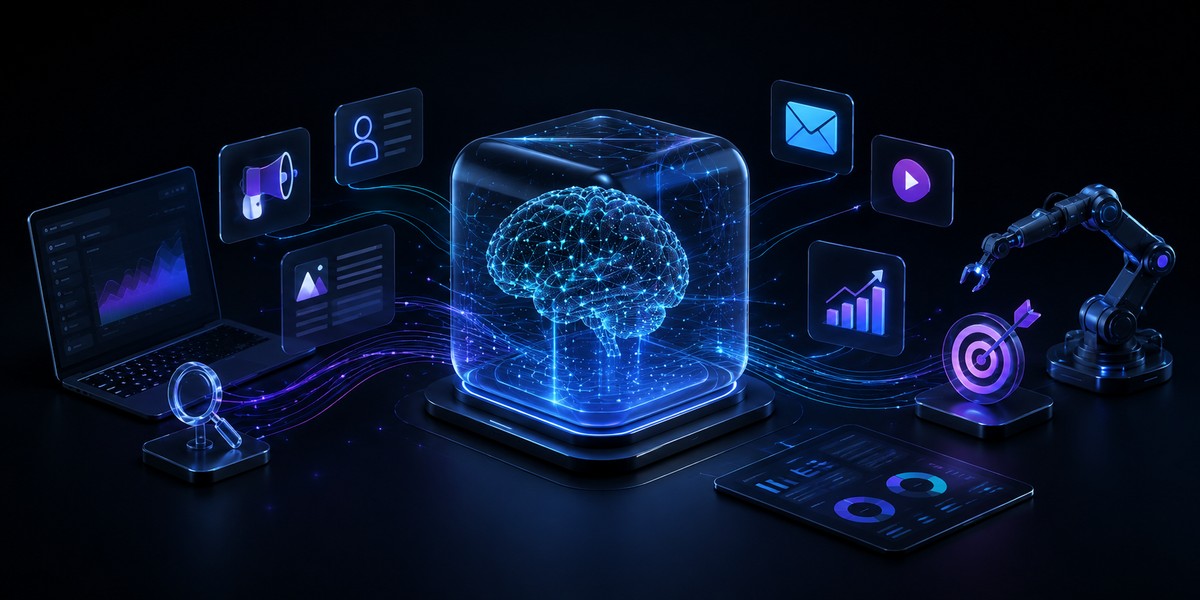
Today, you open your AI advertising platform, type a brief, and within minutes you have five ad copy variations, three image concepts, two video storyboards, and a targeting recommendation based on live audience data.
That is not science fiction. That is Gen AI Advertising in 2026.
The advertising industry has been transformed before. Television changed everything in the 1950s. The internet changed everything in the 1990s. Social media changed everything in the 2010s. Generative AI is the next shift, and it is moving faster than any of those before it.
According to research from multiple industry reports, the global AI in advertising market is projected to cross $107 billion by 2028. Brands that adopt Gen AI Advertising early are already reporting 30 to 50 percent reductions in production costs and significant improvements in campaign performance.
This guide is written for anyone who wants to understand Gen AI Advertising from the ground up, whether you are a business owner, a marketer, a developer, or just someone curious about where technology is taking the world of ads.
What Is Gen AI Advertising? (A Simple Explanation)
Gen AI Advertising refers to the use of Generative Artificial Intelligence to create, optimize, personalize, and deliver advertising content at scale.
Generative AI is a type of artificial intelligence that can produce new content. Text, images, audio, video, code. It learns from massive amounts of existing data and then generates brand new outputs based on that learning.
When applied to advertising, it means AI can:
Write ad copy that sounds natural and persuasive
Generate images and visuals that match your brand
Create video ads from a simple text prompt
Personalize ad messages for different audience segments automatically
Test hundreds of variations simultaneously to find what works best
Predict which creative will perform well before it is even published
The "Gen" in Gen AI Advertising stands for Generative, not just a generation of technology. It is fundamentally different from older AI tools that only analyzed data. Generative AI creates.
If you want a deeper understanding of how these AI models actually work under the hood, our team at TechTose has written a thorough guide on What Are AI Models and How Are They Trained that explains the foundation in plain language.
How Traditional Advertising Worked vs. How Gen AI Advertising Works
To truly appreciate what is happening, you need to see the contrast.
The Traditional Way
A brand wants to run a campaign. The process looks like this. Brief the agency. Agency does audience research. Creative team ideates for one to two weeks. Copywriters write headlines. Designers create visuals. Everything goes through multiple approval rounds. Final assets get sent to media buyers. Campaign launches. After four weeks, results come in. Team meets to review. Adjust next quarter.
Total time from idea to insight: two to three months. Cost: significant. Number of ad variations tested: maybe five to ten.
The Gen AI Advertising Way
A brand wants to run a campaign. They feed their brand guidelines, product information, and target audience into their Gen AI platform. The AI generates 50 copy variations, 20 visual concepts, and 10 video scripts in under an hour. The team selects the most promising ideas, AI refines them, and assets go live the same day. The AI tracks performance in real time and automatically adjusts which variations are shown to which audience segments.
Total time from idea to insight: days, sometimes hours. Cost: a fraction. Number of ad variations tested: hundreds.
This is not incremental improvement. It is a completely different operating model.
The Core Technologies Powering Gen AI Advertising
Understanding what makes Gen AI Advertising work helps you make smarter decisions about adopting it.
Large Language Models (LLMs)
These are the AI systems behind text generation. They are trained on vast amounts of written content and can produce high-quality ad copy, product descriptions, email subject lines, social captions, and more. Models like GPT-4, Claude, and Gemini fall into this category. Our blog on Agentic AI vs LLM vs Generative AI: Understanding the Key Differences is a great resource if you want to understand how these relate to each other.
Diffusion Models and Image Generation AI
Tools like Midjourney, DALL-E, and Stable Diffusion use diffusion models to create images from text prompts. In advertising, this means a brand can generate a product photo, a lifestyle image, or a banner graphic without a photoshoot.
Text-to-Video Models
This is the newest and most exciting frontier. AI can now create short videos from a written description. Sora, Runway, and similar tools are being integrated into advertising workflows to produce video content in a fraction of the traditional time.
Agentic AI Systems
These go further. Instead of just generating one piece of content, agentic AI systems can plan and execute an entire campaign workflow. They research the audience, generate assets, schedule publishing, monitor performance, and optimize in real time without human intervention at every step. You can read more about this in our detailed article on How Agentic AI is Transforming Businesses in 2026.
Predictive Analytics and Audience Intelligence
Gen AI Advertising platforms combine generative capabilities with predictive AI. They analyze historical campaign data, real-time signals, and audience behavior to predict which creative and which targeting combination will drive the highest return on ad spend.
Real-World Applications: What Brands Are Actually Doing
This is where things get genuinely exciting. Here are real use cases that show how Gen AI Advertising is being applied right now.
Coca-Cola's AI-Generated Campaign
Coca-Cola partnered with OpenAI and Bain to use generative AI for campaign creation. They created a "Create Real Magic" platform that invited consumers to generate their own Coca-Cola branded art using AI. The campaign generated enormous engagement and showed how brands can turn AI tools into interactive experiences.
Heinz's AI-Powered Brand Recognition Test
Heinz asked an AI image generator to simply produce "ketchup." The result was overwhelmingly red bottle imagery that looked unmistakably like Heinz. They turned this into a campaign, proving their brand is so culturally embedded that even AI knows what it means. That campaign cost a fraction of a traditional shoot.
Nutella's Unique Packaging
Nutella used an AI system to generate seven million unique jar designs based on patterns from Italian landscapes. Each jar was different. Every single one sold out. This showed how Gen AI Advertising can extend beyond digital into physical product marketing.
Performance Marketing at Scale
Performance marketing is being completely transformed. Brands are now using AI to generate hundreds of ad variations, run them simultaneously across Google, Meta, and programmatic channels, and let the algorithm identify winners automatically. Our article on Top Performance Marketing Channels to Boost ROI in 2025 covers how this connects to broader marketing strategy.
AI Avatars as Brand Spokespeople
Brands are creating digital human avatars powered by generative AI to appear in ads. These avatars can be multilingual, available 24/7, and consistent across all campaigns without scheduling conflicts or talent fees. Our piece on AI Avatars for Marketing: The New Face of Ads dives deep into this specific application.
How Gen AI Advertising Is Changing Each Ad Format
Gen AI Advertising does not look the same across every channel. Here is how it is changing different formats.
Search Ads
Google's Responsive Search Ads already used machine learning to mix and match headlines and descriptions. Gen AI takes this further. Tools can now generate entire campaigns from a product URL, write hundreds of variations, test them, and identify winning combinations. Advertisers who previously spent days writing copy now do it in minutes.
Social Media Ads
Social platforms move fast. A trend appears Monday and is irrelevant by Friday. Gen AI lets brands create campaign-relevant content in real time. You can now generate a Facebook ad, an Instagram reel concept, and a TikTok script for the same promotion within the same hour, all adapted to each platform's format and audience tone.
Display and Programmatic Advertising
Programmatic advertising already automated the buying process. Gen AI now automates the creative side too. Dynamic Creative Optimization powered by generative AI assembles banner ads on the fly, combining the right headline, image, call to action, and color scheme for each individual user impression. This connects directly to trends our team covered in Generative AI in 2026: Top Use Cases and Trends Every Business Should Know.
Video Advertising
This is perhaps the most dramatic change. Previously, a video ad required a camera crew, actors, location, editing, and post-production. Today, AI can generate a 30-second product video from a script in under an hour. Text-to-video tools are improving at a remarkable pace and are already being used for YouTube pre-rolls, social video ads, and even connected TV placements.
Email Marketing
AI-generated subject lines already outperform manually written ones in many documented tests. Gen AI now generates full email sequences, personalizes body copy for different audience segments, and adapts messaging based on where each subscriber is in the customer journey. Read more on how Generative AI is being used for Content Marketing in our dedicated guide.
Out-of-Home and Digital Signage
Even physical advertising is being touched. Digital billboards and screens can now pull live data, pass it to a generative AI system, and display contextually relevant ad content based on weather, time of day, local events, or trending topics.
Personalization at Scale: The Holy Grail of Marketing
For decades, marketers knew personalization was the answer. They just could not do it at scale. You could personalize an email blast to 1,000 subscribers. Personalizing a campaign to 10 million users with different messages for each segment was simply not practical.
Gen AI Advertising changes this completely.
Here is what modern personalization at scale looks like. A user visits an e-commerce site and browses running shoes. They leave without buying. The Gen AI advertising system analyzes their browsing pattern, purchase history, and demographic signals. It generates a personalized retargeting ad with a headline written specifically for their profile, an image showing the exact shoe they viewed, and a call to action tailored to where they are in the buying cycle. This happens automatically, for every single user, every single time.
This is not hypothetical. E-commerce brands are doing this right now. Our article on How E-commerce Brands Can Use Agentic AI for Personalization shows exactly how this is being implemented.
The result is advertising that feels less like advertising and more like a helpful recommendation. That shift in perception is enormously valuable. Click-through rates improve. Conversion rates improve. Customer acquisition costs fall.
The Top Competitors Ranking for "Gen AI Advertising" and What They Cover
If you want to outrank the competition, you need to know what they are doing. Here is an honest look at the top pages currently competing for the keyword "Gen AI Advertising" and where they have gaps.
Google's Official Blog and Think with Google Google frequently publishes content about its own AI advertising tools like Performance Max and Demand Gen. Their content is authoritative but often promotional rather than educational. They cover their own products well but do not give a full picture of the broader Gen AI Advertising landscape.
Salesforce Marketing Blog Salesforce covers AI in advertising from an enterprise CRM perspective. Their content is strong on data and personalization but light on creative generation applications. They focus heavily on their own Einstein AI tools.
HubSpot HubSpot covers AI marketing broadly and has good educational content. However, their Gen AI Advertising pieces tend to be surface-level introductions rather than deep technical guides. They do not cover advanced applications like agentic AI campaign management or text-to-video advertising.
Forbes and Harvard Business Review Both publish high-authority opinion and analysis pieces on AI advertising. These rank well due to domain authority but often lack practical how-to guidance. Readers learn that Gen AI Advertising matters but not how to actually implement it.
Advertising Week and AdAge Industry trade publications cover Gen AI Advertising from a news and trend perspective. They are good for current examples but not structured educational content. No comprehensive beginner-to-advanced guide exists on these platforms.
The Gap TechTose Can Own
None of the top competitors currently offer a single piece that covers Gen AI Advertising from first principles all the way through to advanced applications, with real brand examples, practical business guidance, ethical considerations, and India-specific context. That is exactly what this article does. When you combine original storytelling, complete topic coverage, and strong internal linking to related content, you create something that is genuinely more useful to readers than what currently ranks. Google rewards that.
Risks, Limitations, and the Ethical Side of Gen AI Advertising
Honest content builds trust. Any guide to Gen AI Advertising that only covers the positives is incomplete. Here are the real challenges businesses need to understand.
Brand Safety and Quality Control
AI can generate content quickly, but it does not always get things right. Without proper oversight, AI-generated ads can contain factual errors, inappropriate tone, or visuals that do not match brand guidelines. Human review remains essential, especially for high-stakes campaigns.
Copyright and Intellectual Property
Generative AI models are trained on existing content. Questions about who owns AI-generated content and whether training on copyrighted material is permissible are still being resolved legally in many jurisdictions. Brands need to understand the terms of service of the tools they use and stay updated on evolving regulations.
The Deepfake Problem
AI-generated video and audio can be misused to create fake celebrity endorsements or misleading content. This is already happening and several countries are introducing legislation to address it. Responsible use requires watermarking AI content, transparency with audiences, and strict internal governance policies.
Audience Fatigue from AI-Generated Content
If everyone uses the same AI tools to generate the same type of content, advertising becomes homogeneous. The brands that win will be the ones that use AI as an accelerator for genuinely original thinking, not as a replacement for it.
Data Privacy
Personalized Gen AI Advertising depends on data. The more personal the data, the more effective the personalization, but also the greater the privacy risk. GDPR in Europe, India's DPDP Act, and similar regulations require businesses to be thoughtful about what data they collect and how they use it.
The Authenticity Question
Consumers are increasingly aware that they are interacting with AI-generated content. Studies show that authenticity is among the top factors consumers use to evaluate brands. Brands that rely too heavily on AI without maintaining genuine human voice and values risk appearing hollow.
What Businesses in India Should Know About Gen AI Advertising
India represents one of the most exciting frontiers for Gen AI Advertising. Here is why.
India has over 900 million internet users. Digital advertising in India is growing at roughly 25 percent annually. The country has one of the youngest and most digitally active consumer bases in the world. And perhaps most importantly, India is home to a thriving startup ecosystem and a massive pool of AI talent.
But there are unique considerations for Indian businesses.
Language Diversity
India has 22 official languages and hundreds of regional dialects. Gen AI Advertising tools are now capable of generating ad content in Hindi, Tamil, Telugu, Bengali, Marathi, and many other languages. For brands trying to reach tier 2 and tier 3 cities, this is transformative. Previously, localizing a national campaign meant hiring translators and local copywriters for each region. AI can now do this automatically, maintaining cultural nuance in ways that were not previously possible.
Cost Sensitivity
Indian consumers are highly price-conscious. Gen AI Advertising allows smaller brands to compete with large companies by dramatically reducing content production costs. A local brand in Rewa or Indore can now run campaigns with the same production quality as a national brand in Mumbai.
Mobile-First Reality
Over 80 percent of Indian internet users access the web primarily through mobile devices. Gen AI Advertising tools are increasingly optimized for mobile-first formats, from vertical video scripts to thumb-stopping static ads sized for Instagram Stories and WhatsApp Status.
The Digital Marketing Opportunity
As AI adoption grows, there is increasing demand for businesses that understand how to deploy these tools effectively. TechTose's Digital Marketing services are designed to help Indian businesses navigate this landscape with strategy, not just tools.
Our broader exploration of Social Media Trends in 2026 also gives relevant context on how Indian consumers are engaging across platforms right now.
How TechTose Helps Businesses Navigate Gen AI and Smart Technology
At TechTose, we work with businesses that want to use AI not just as a buzzword but as a real competitive advantage.
Our AI development practice covers the full spectrum of what makes Gen AI Advertising possible. We build custom AI solutions that integrate with existing marketing stacks. We develop intelligent automation systems that handle repetitive tasks so marketing teams can focus on strategy and creativity. And we consult with businesses on how to build the right foundation for AI adoption, from data infrastructure to governance frameworks.
Our Explore AI section gives you a look at what is possible. From AI voice agents that are transforming customer support to AI automation tools for businesses, we cover the practical side of implementation that many tech blogs skip.
If you are thinking about how to build AI capabilities into your marketing or broader business operations, our consulting services are a good place to start the conversation. We offer free strategy calls to help you understand where AI can create real value for your specific situation. You can schedule a consultation here.
The Future of Gen AI Advertising: Where This Is All Heading
Where is all of this going? Here are the most important developments to watch over the next two to three years.
Hyper-Personalized Video at Scale
We are fast approaching a point where every viewer of a video ad will see a slightly different version, with personalized messaging, personalized visuals, and even a personalized spokesperson that matches their demographic preferences. This is technically feasible today and will become mainstream advertising practice within a few years.
Real-Time Creative Adaptation
Future Gen AI Advertising systems will adapt creative in real time based on news, weather, trending topics, or even individual user emotional state signals. An ad for a warm beverage might automatically shift its imagery when it detects rain in the user's city. A retail brand might automatically adjust its tone from aspirational to promotional when a user shows high purchase intent.
The Rise of AI-Native Advertising Platforms
We are already seeing a new generation of advertising platforms built with generative AI at their core, not added on top. These platforms will offer end-to-end campaign management from brief to optimization with minimal human intervention.
Multimodal Advertising Experiences
Future ads will combine text, image, audio, and video seamlessly, generated and adapted on the fly. An audio ad on a podcast app might pair with a synchronized visual on a connected display. The same AI system manages the entire experience coherently.
Synthetic Influencers and Brand Characters
Several brands are already experimenting with fully AI-generated influencers. These synthetic brand ambassadors are consistent, available in any language, and carry no reputational risk from off-brand behavior. As the technology improves, expect more brands to develop permanent AI personalities that front their campaigns.
For anyone building AI capabilities or wanting to understand where generative AI tools are heading, our guide on Top Agentic AI Trends to Watch in 2026 is required reading.
Final Thoughts
Advertising has always been about one thing: reaching the right person with the right message at the right time. For most of advertising's history, doing that at scale required enormous resources. Gen AI Advertising removes that constraint.
The brands that understand this early are not just saving money. They are building capabilities that compound over time. Better data. More testing. Faster learning. Sharper targeting. The gap between early adopters and late movers in Gen AI Advertising is widening every month.
For businesses in India especially, the opportunity is significant. The combination of a vast digital audience, growing AI infrastructure, and competitive pressure to differentiate means that Gen AI Advertising is not a future consideration. It is a present priority.
At TechTose, we believe that technology should serve human ambition, not the other way around. Gen AI Advertising is a tool, a very powerful one, but it still requires smart people asking the right questions, setting the right goals, and making the right judgments about what their brand stands for.
If you are curious about how AI can be applied to your marketing or your broader digital strategy, explore what we do at TechTose.com, browse our latest insights on AI, or get in touch with our team directly.
The future of advertising is being written right now. The question is whether you are writing it or watching from the sidelines.