
How AI Overviews is changing Search on Google?
AI Overviews have quietly rewritten the rules of search. This guide explains what GEO Services in India actually involve, how they differ from traditional SEO, and how brands can earn a place inside AI generated answers, with an honest look at the leading players in the space.
By Aakash Kumar · · 11 min read
Rohan runs a mid sized SaaS company out of Bangalore. For three years, his content team did everything right. They researched keywords, built backlinks, wrote long guides, and watched their rankings climb page by page until they finally sat at the top of Google for their most valuable search term.
Then one Tuesday morning, his traffic dropped by almost forty percent.
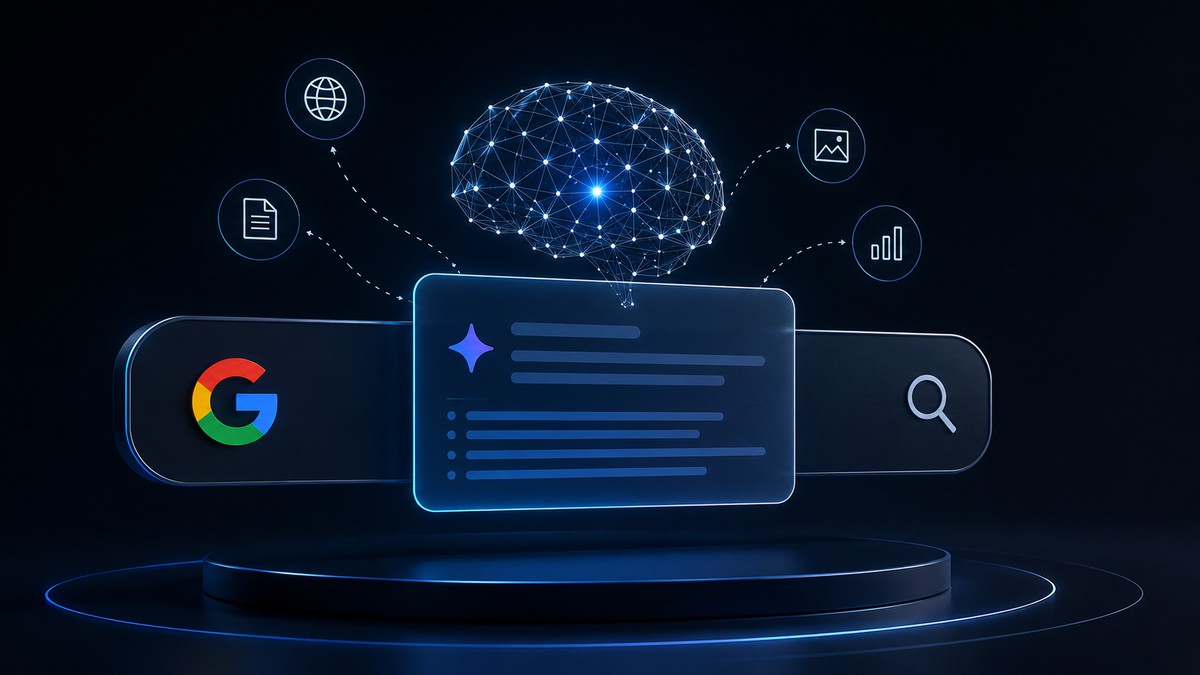
Nothing had changed in his content. Nothing had changed in his backlink profile. What had changed was Google itself. An AI generated summary now sat above his number one ranking result, answering the searcher's question directly, in full, without a single click required. His hard won position one had become invisible.
This is not a rare story anymore. It is happening to businesses across India and the world, and it is the reason a new discipline called Generative Engine Optimization, or GEO, has moved from a buzzword to a boardroom priority. If you run a business, manage marketing, or simply want to understand where search is headed, this guide will walk you through it from the ground up, the way a mentor would explain it over coffee rather than the way a textbook would.
What Exactly Is an AI Overview?
An AI Overview is the summarized, conversational answer that shows up at the top of a Google search results page, generated by artificial intelligence rather than pulled from a single webpage. Instead of showing you ten blue links and letting you click through to find your answer, Google now often writes the answer itself, drawing from multiple sources at once, and presents it before any traditional result appears.
Think of it like asking a well read friend a question instead of handing you a stack of books to research yourself. Your friend reads several of those books quickly, understands the core of what you need, and gives you a short, useful answer on the spot. That is essentially what an AI Overview does, except the friend is a language model trained on billions of pages of the internet.
This shift is not limited to Google. ChatGPT, Perplexity, Microsoft Copilot, and Gemini are all becoming places where people search for information the same way they once searched on Google. Search has quietly split into two lanes: traditional link based search, and generative, answer based search. Businesses that only optimize for the first lane are increasingly invisible in the second.
Why This Changes Everything About SEO
Traditional SEO was built around one simple goal: rank your page so people click on it. Every tactic, from keyword density to backlinks to meta tags, existed to serve that single click.
GEO flips that goal on its head. The new objective is not just to be clicked. It is to be cited, quoted, referenced, or directly recommended inside an AI generated answer, even if the user never visits your website at all. This is sometimes called a zero click outcome, and for years marketers treated it as a loss. Today, being the source an AI trusts enough to quote by name is often more valuable than a single click, because it builds brand recall at the exact moment a buyer is making a decision.
This is precisely why TechTose has been tracking this shift closely, and it connects to a lot of what we have already written about, including our deep dive on how AI is reshaping SEO in 2025 and our breakdown of the SEO trends businesses cannot ignore in 2026, where GEO first appeared on our radar as more than a passing trend.
GEO vs SEO vs AEO: Untangling the Alphabet Soup
Marketers love acronyms, and this space has produced a fresh batch of them. Here is the honest, simple difference.
SEO, or Search Engine Optimization, is the practice of ranking your webpage in traditional search results using keywords, backlinks, site speed, and technical structure.
AEO, or Answer Engine Optimization, focuses specifically on getting your content chosen as the direct answer to a question, often inside featured snippets or voice search results.
GEO, or Generative Engine Optimization, is the broader discipline of optimizing your brand's presence across all AI generated answers, including Google's AI Overviews, ChatGPT, Perplexity, and Copilot. GEO borrows heavily from both SEO and AEO but adds new layers such as structured data, entity clarity, and content designed specifically to be extracted and summarized by a language model.
If SEO is about being found, and AEO is about being the answer, GEO is about being trusted enough by an AI system to be recommended by name, across every platform where your customers are now asking questions.
Why GEO Services in India Are Booming Right Now
India has quietly become one of the most active markets for GEO services, and there are real, practical reasons behind it.
First, cost efficiency. Indian agencies typically deliver GEO strategy at a fraction of what US or European firms charge, without compromising on technical depth, since GEO leans heavily on skills India already has in abundance: structured data, schema markup, and content engineering. Indian agencies commonly charge 40 to 60 percent less than Western counterparts for equivalent GEO work, which makes serious AI visibility strategy accessible even to growing businesses rather than only enterprise budgets.
Second, talent depth. India produces well over a million engineering graduates every year, many of whom already understand how AI systems process and structure information, giving Indian GEO teams a natural edge in technical implementation.
Third, timing. Indian businesses, from D2C brands to SaaS startups to service companies, are realizing that their customers are now asking ChatGPT and Gemini for recommendations before they ever type a query into Google. A business that is invisible to these tools is quietly losing deals it never even knew it was competing for.
This mirrors a pattern TechTose has seen play out across the AI landscape more broadly, something we explored in detail in our guide on top agentic AI trends businesses need to understand in 2026.
The Building Blocks of an Effective GEO Strategy
Let's move from theory into the actual mechanics, because this is where most businesses get stuck. A strong GEO strategy usually rests on five pillars.
1. Entity Clarity
AI models do not understand your brand the way a human does. They understand entities: clearly defined people, places, products, and organizations connected by data. If your website, your Google Business Profile, your LinkedIn, and your press mentions all describe your company slightly differently, the AI struggles to build a confident picture of who you are. Consistency across every platform is not optional anymore, it is foundational.
2. Structured Data and Schema Markup
Schema markup is essentially a translation layer that tells search engines and AI crawlers exactly what your content means, not just what it says. FAQ schema, HowTo schema, Article schema, and Speakable schema all help AI systems parse your content accurately and pull it into generated answers with confidence. A page without proper schema is like a book with no table of contents. A human might still read it, but a machine trying to summarize it quickly will struggle.
3. Content Built for Extraction
AI systems favor content that answers a question clearly within the first few sentences, uses simple direct language, and is organized in digestible chunks. This does not mean writing robotically. It means leading with clarity before elaborating with depth, so both human readers and AI summarizers get value immediately.
4. Authority and Trust Signals
AI models are trained to favor sources that appear credible: original research, expert authorship, citations from reputable publications, and a consistent publishing history. This is the same E-E-A-T principle, Experience, Expertise, Authoritativeness, and Trustworthiness, that Google has emphasized for years, and it matters even more in a generative search world where the AI is effectively vouching for your brand when it cites you.
5. Multi Engine Visibility
A serious GEO strategy does not stop at Google's AI Overviews. It tracks and optimizes for how your brand appears across ChatGPT, Perplexity, Gemini, and Copilot as well, since each of these tools pulls from different data sources and weighs authority signals differently.
If your team wants a practical starting point on the content side of this, our guide on how to do keyword research that drives real traffic pairs well with GEO strategy, since strong topical research still forms the foundation everything else is built on.
Top GEO Companies and Agencies in India: An Honest Look
The GEO services space in India has grown quickly, and a number of agencies have built genuine expertise here. Below is an overview of the players businesses frequently compare when evaluating a GEO partner.
1. EZ Rankings has built a reputation around combining manual citation building with automation, and the agency integrates conversational optimization into its broader GEO approach rather than treating it as an add on service.
2. RankON Technologies focuses heavily on small and medium sized businesses, blending manual precision with smart automation to strengthen listing accuracy and keyword relevance for generative engines.
3. Vyapar Infotech, based out of Delhi, positions itself around AI powered content creation at scale, with a focus on visibility across Google SGE, Bing Copilot, and ChatGPT.
4. Briskon targets enterprise clients specifically, offering dedicated GEO and AEO capabilities designed for organizations that need scalable programs with structured support.
5. Searchonic operates as a specialized GEO agency built around semantic search, entity recognition, and conversational query optimization, blending traditional SEO experience with newer AI search techniques.
6. Digimark Agency typically bundles GEO with ongoing SEO retainers, with standalone GEO audits and growth plans aimed at brands that want AI visibility tracked alongside their existing search performance.
7. ZeroAdo brings a strong SaaS and startup focus, built around a proprietary framework that ties GEO, technical optimization, and topical authority together into one connected system.
8. TripleDart is well known in the B2B SaaS marketing world, with GEO offered as part of a broader growth marketing approach and a client base that spans India, the US, and parts of Europe.
9. GetCito splits its positioning between cost effective execution for SMEs and full service integration for larger enterprise clients.
10. Techmagnate, one of the more established digital marketing names in India, has expanded its long standing SEO practice to include GEO and AI SEO as core offerings rather than side projects.
What separates a genuinely capable GEO partner from one simply rebranding old SEO packages usually comes down to a few honest questions. Can they show a citation audit across at least four or five AI engines, not just Google's AI Overview and ChatGPT? Can they walk you through the specific schema types they implement on a typical page, by name, without hesitation? Do they treat entity authority as a dedicated workstream, or as an afterthought?
TechTose approaches GEO the same way we approach every technical discipline, by pairing deep AI development expertise with practical marketing execution. Since our team already builds AI systems for clients through our Explore AI practice, we understand how these language models actually process, weigh, and select information, which shapes a fundamentally more technical approach to GEO than agencies coming from a purely content marketing background.
How a Small Business Actually Implements GEO, Step by Step
Let's go back to Rohan for a moment, because the theory only matters if it translates into action.
After his traffic dropped, Rohan's team did not panic and abandon SEO. Instead, they audited every page against the five pillars above. They discovered their schema markup was outdated, their FAQ sections were thin, and their brand description varied slightly across five different platforms. They fixed the inconsistencies first, since that is the cheapest and fastest win available to almost any business.
Next, they restructured their top performing guides to answer the core question within the first two sentences, then expanded into depth afterward, so both human readers and AI crawlers found immediate value. They added FAQ schema to every major page, since FAQ formatted content is disproportionately favored by AI Overviews.
Finally, they began tracking their brand's appearance not just in Google, but by manually testing relevant prompts inside ChatGPT and Perplexity every month, treating those results the way they once treated a rank tracker.
Within four months, Rohan's brand started appearing inside AI generated answers again, not always as the clicked link, but as the named, recommended source. His close rate on inbound leads actually improved, because prospects arrived already trusting his brand as the AI recommended option, rather than as one of ten unfamiliar blue links they had to evaluate themselves.
Measuring Success in a World Without Guaranteed Clicks
One of the hardest mental shifts for marketing teams is accepting that a great GEO result might generate zero clicks and still be a massive win. So how do you actually measure it?
Brand mention tracking across AI platforms is becoming the new rank tracking. Tools and manual prompt testing that check whether your brand appears when someone asks an AI tool a relevant question in your category are now essential. Direct traffic and branded search volume often rise even when organic click through rate falls, because users remember the brand name the AI mentioned and search for it directly later. Share of voice within AI answers, meaning how often you appear compared to named competitors for the same prompts, is becoming a genuine KPI in its own right.
This measurement shift connects closely to something we unpacked in our guide on conversion rate optimization, since a visitor who arrives already trusting your brand because an AI recommended them converts very differently than cold organic traffic.
Where This Is Headed
AI Overviews are not a passing experiment. Google has continued expanding their presence across more query types, and competing platforms are racing to build similarly sticky, answer first experiences. The businesses that treat GEO as a bolt on tactic will keep losing quiet ground. The ones that treat it as a core part of their content and technical strategy, the way SEO became non negotiable a decade ago, will be the brands customers hear recommended by name, even in conversations they never see happen.
If you are exploring GEO Services in India and want a partner who understands both the AI systems doing the recommending and the marketing strategy behind earning that recommendation, TechTose brings both sides of that equation together. You can explore our full range of software development and consulting work, or simply schedule a call to talk through where your brand currently stands in AI generated search.