

The Power of Serverless Computing
Serverless computing eliminates the need to manage infrastructure by dynamically allocating resources, enabling developers to focus on building applications. It offers scalability, cost-efficiency, and faster time-to-market.
By Shweta Shrimali · · 4 min read
If you can't explain it simply, you don't understand it well enough. So, let’s break down the concept of serverless computing in the simplest, clearest terms while diving into how it works. By the end of this blog, you’ll not only understand serverless but also know why it’s such a revolutionary idea.
What is Serverless Computing?
The name serverless is a bit misleading. There are servers involved. You just don’t have to manage them.
Imagine this: You own a bakery, and customers keep coming to buy cookies. You could either hire a team to bake cookies all the time, just in case someone shows up, or you could bake cookies only when someone orders them. The second option is more efficient, right? You save money, time, and energy.
In the world of computing, traditional servers are like the first bakery setup. You rent a server, it runs 24/7, and you pay for it whether your mobile application or web application gets traffic or not. On the other hand, serverless computing is like baking cookies on demand — you run code only when needed. You don’t worry about servers, scaling, or maintenance.
How Serverless Works
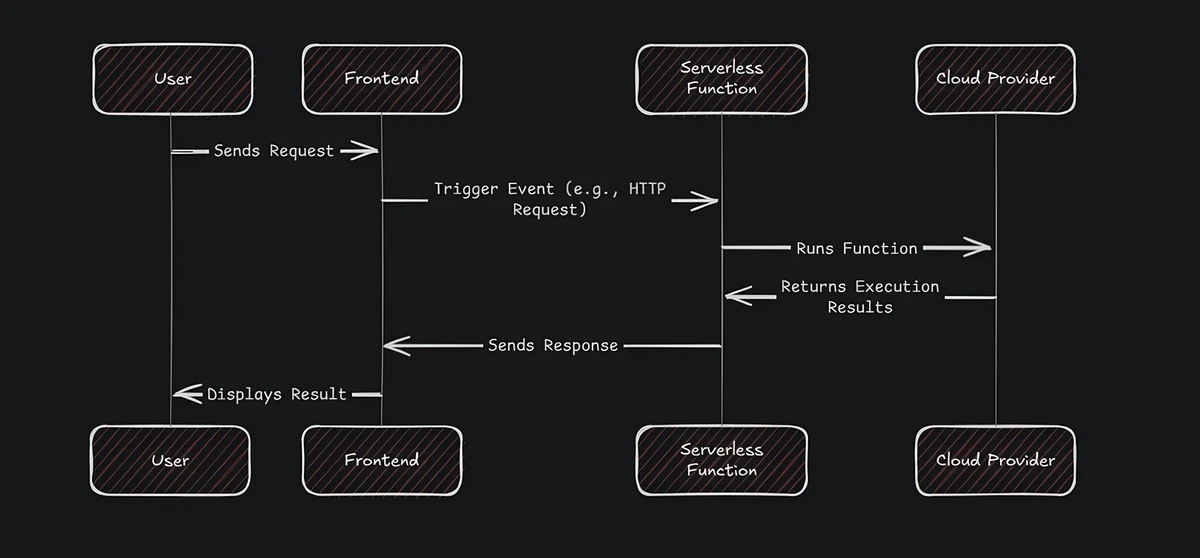
Serverless computing follows a simple flow:
You Write Code: You write a function (or a piece of code) that does something specific, like processing an image or responding to a user request.
Event Triggers Code: Your code is triggered by an event, like a user clicking a button, uploading a file, or visiting a URL.
Cloud Provider Executes Code: The serverless provider (like AWS Lambda, Azure Functions, or Google Cloud Functions) spins up a temporary server, runs your code, and then shuts down the server. You only pay for the milliseconds your code runs.
Response is Sent: Once the code finishes execution, the output is sent back to the user or stored somewhere.
Key Components of Serverless
Serverless architecture eliminates the need for managing servers by relying on cloud providers to handle infrastructure tasks. Key components include
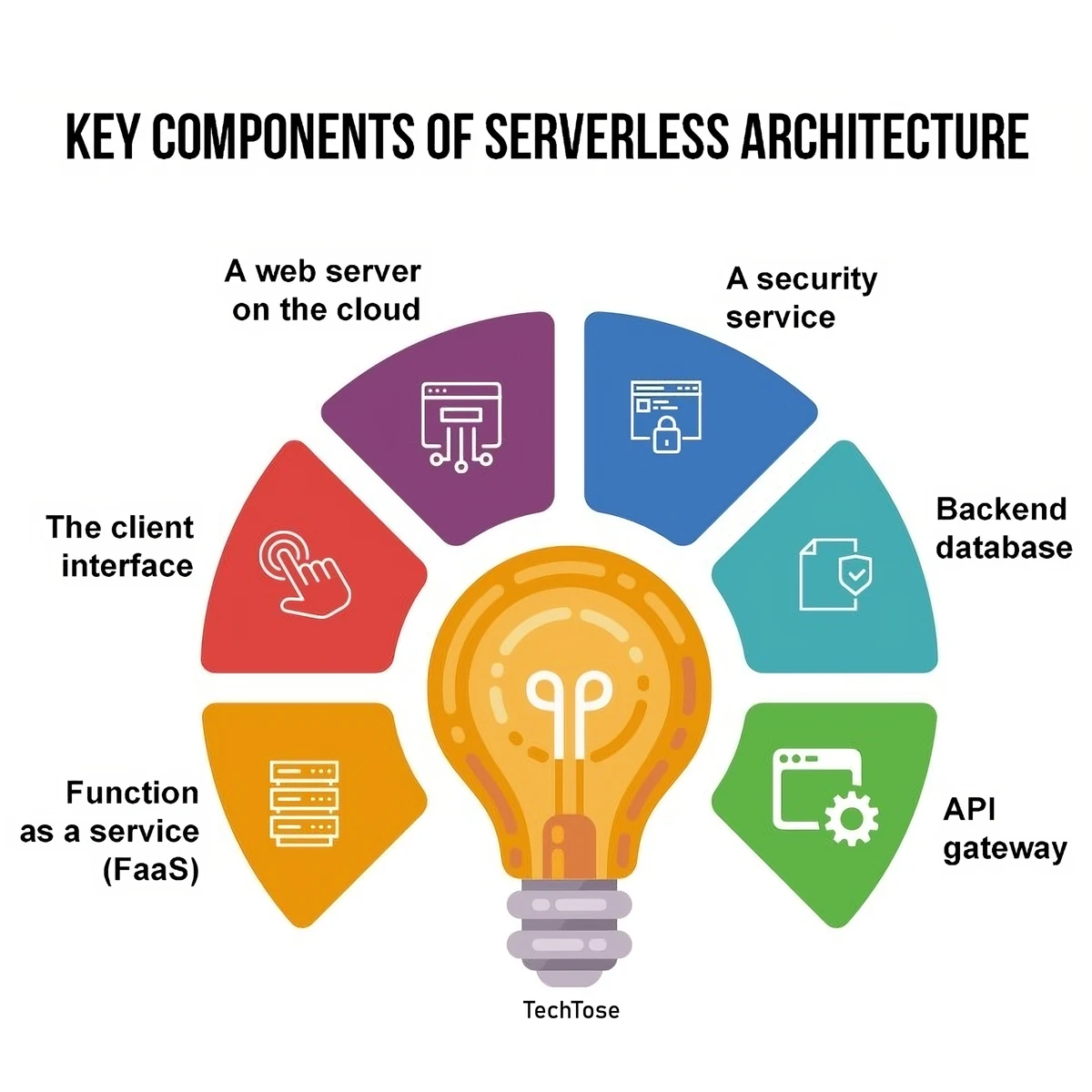
Functions-as-a-Service (FaaS): An idea at the code of serverless is breaking your backend into small, independent functions that perform a single task. For example:
Processing a payment
Sending an email
Resizing an image
Event-Driven Architecture: Serverless code doesn’t run continuously. It is triggered by events such as:
A user submits a form (HTTP request)
A file is uploaded to storage (e.g., AWS S3)
A new row is added to a database
Managed Infrastructure: You don’t provision or manage servers. The cloud provider takes care of:
Scaling the infrastructure
Managing server health
Ensuring availability
Benefits of Serverless Computing
No Server Management: You focus only on writing code. The cloud provider handles servers, scaling, and deployment.
Pay-As-You-Go Pricing: You are billed only for the exact duration your function runs. If no one triggers your code, you pay nothing.
Scalability: Serverless functions scale automatically. If 1,000 users request your function at the same time, the cloud provider runs multiple instances of your code.
Faster Development: Developers can deploy small, modular functions quickly without worrying about infrastructure.
Serverless vs Traditional Backend
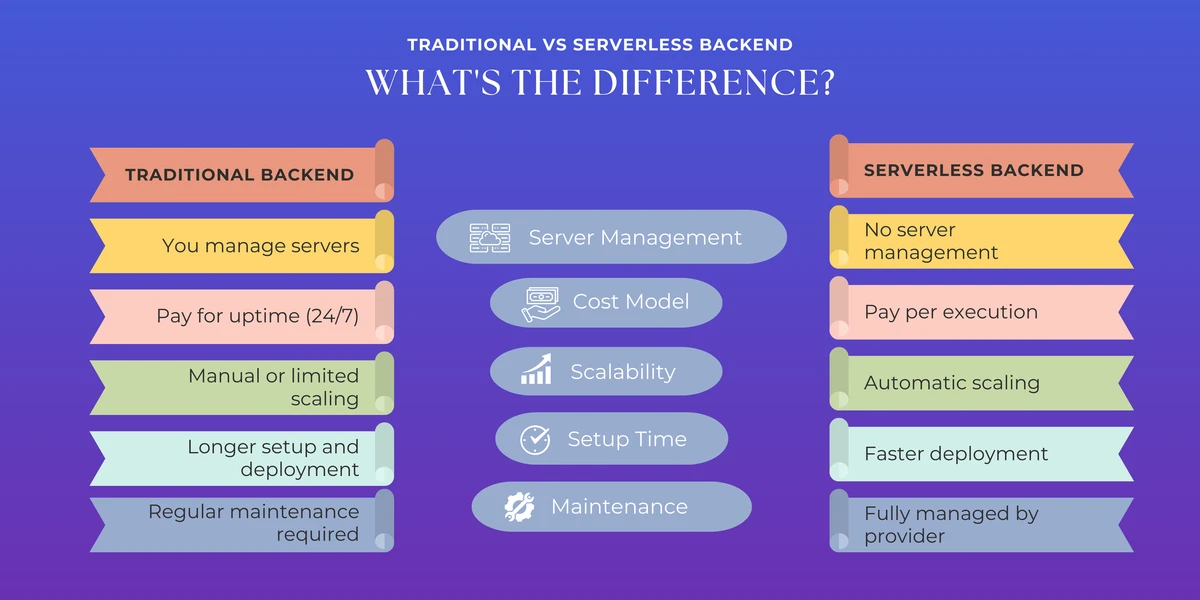
Serverless computing and traditional backends are two distinct approaches to backend management, each with its own set of benefits. Below is a comparison to help you understand their differences
Server Management
Traditional Backend: You are responsible for managing the servers, including updates, configurations, and scaling.
Serverless Backend: No server management is required as the cloud provider handles everything, allowing developers to focus on application logic.
Cost Model
Traditional Backend: You pay for server uptime, which is typically 24/7, regardless of usage.
Serverless Backend: Costs are based on the number of executions, making it more cost-efficient for applications with variable workloads.
Scalability
Traditional Backend: Scaling requires manual intervention or is limited to predefined configurations.
Serverless Backend: Automatic scaling ensures the application adapts to demand without manual effort, providing higher flexibility.
Setup Time
Traditional Backend: Setting up servers and deploying applications can take significant time due to the complexity involved.
Serverless Backend: Deployment is faster since there’s no need to configure infrastructure manually.
Maintenance
Traditional Backend: Regular server maintenance is required, including updates, patches, and monitoring.
Serverless Backend: Maintenance is fully managed by the cloud provider, reducing operational overhead.
Each approach suits different use cases, and the choice largely depends on your project requirements, budget, and scalability needs.
When to Use Serverless?
Serverless is a great fit for:
Event-Driven Applications: Like file uploads, user actions, or database updates.
APIs and Microservices: Small, independent functions for different tasks.
Scheduled Jobs: Automating tasks like sending emails or processing data periodically.
Prototyping: Quickly building and deploying applications without worrying about infrastructure.
However, it might not be suitable for long-running processes or applications requiring extremely low latency.
Conclusion
Serverless computing simplifies software development. It eliminates the hassle of managing servers, reduces costs, and scales automatically. Think of it as a pay-as-you-go model where your backend works only when needed.
For developers, serverless is a powerful way to build modern applications quickly and efficiently. It’s a smart abstraction that lets you focus on what matters: writing great code.